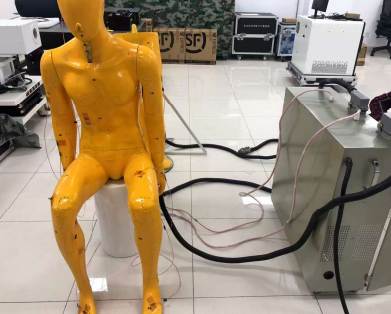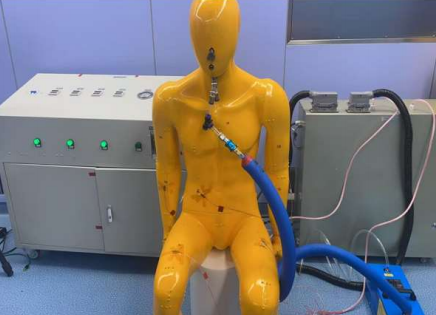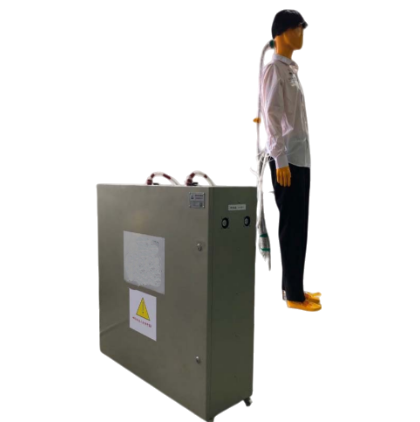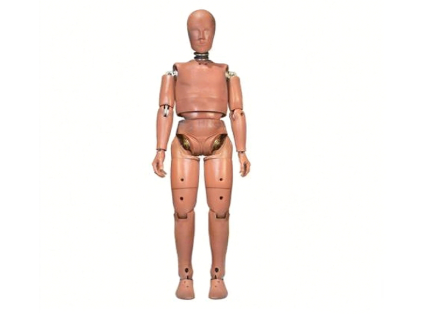
50th Percentile Male Crash Test Dummy (Standing)
Category:Manikin System
Factory Direct
Stable Performance
Intl. Standards
Tech Support
Fast Delivery
Global Shipping

Introduction
The 50th Percentile Male Crash Test Dummy (Standing) is a biomechanical surrogate designed for automotive frontal collision and related human impact testing. Based on anthropometric data of average adult males (50th percentile), it accurately simulates mass distribution, structural dimensions, and biomechanical responses in a standing posture. You can use it to capture and analyze acceleration, load, and displacement data at key human body locations during collision events.
Application
You can apply the 50th Percentile Male Standing Dummy in the following scenarios:
(1) Frontal occupant protection testing
(2) Pedestrian protection and standing human impact evaluation
(3) Active and passive safety system co-development and validation
(4) NCAP-related human injury analysis
(5) Regulatory compliance tests and full-vehicle safety performance verification
(6) Human impact studies for aerospace, high-speed rail, military, and special equipment
(7) Airbag, vehicle front-end structure, and protection system development testing
Standards
This dummy complies with the following national and international standards:
(1) GB 11551 – Protection of occupants in frontal collisions
(2) GB/T 29120 – Anthropomorphic test device general technical requirements
(3) GB/T 24550 – Frontal crash test methods
(4) GB/T 31467 – Vehicle pedestrian protection requirements and test methods
(5) UN R94 – Frontal crash occupant protection
(6) UN R137 – Full-width rigid barrier frontal collision
(7) FMVSS 208 – Occupant crash protection
(8) ISO 6487 – Road vehicles — Measurement techniques in impact tests
(9) SAE J211 – Instrumentation for impact tests
(10) Euro NCAP – Frontal crash and pedestrian protection test protocols
(11) C-NCAP – Frontal crash and pedestrian protection test protocols
(12) US NCAP / IIHS – Frontal crash and pedestrian test protocols
(13) J-NCAP / K-NCAP / ASEAN NCAP / ANCAP – Frontal crash and pedestrian test protocols
Parameters
Dimensions
| No. | Name | Dimension (mm) |
|---|---|---|
| A | Seated Height | 892 ±8 |
| B | Shoulder Pivot Height | 521 ±8 |
| C | H-Point Height (Reference) | 86.4 ±2.5 |
| D | H-Point to Seatback (Reference) | 137.2 ±2.5 |
| E | Shoulder Pivot to Backplane | 88.9 ±5.1 |
| F | Thigh Thickness | 147.3 ±7.6 |
| G | Elbow to Wrist | 297.2 ±7.6 |
| H | Head Rear to Backplane | 43.2 ±2.5 |
| I | Shoulder to Elbow | 337.8 ±7.6 |
| J | Elbow to Seat Plane | 200.7 ±10.2 |
| K | Knee Front to Backplane | 591.8 ±12.7 |
| L | Foot to Seat Plane | 442.0 ±12.7 |
| M | Knee Pivot to Floor | 492.8 ±7.6 |
| N | Lower Leg Rear to Backplane | 464.8 ±12.7 |
| O | Chest Thickness (No Clothing) | 221.0 ±7.6 |
| P | Foot Length | 259.1 ±7.6 |
| R | Foot Width | 99.1 ±7.6 |
| W | Hip Width | 363.2 ±7.6 |
| V | Shoulder Width | 429.3 ±7.6 |
| Y | Chest Circumference | 985.5 ±15.2 |
| Z | Waist Circumference | 850.9 ±15.2 |
| AA | Chest Reference Position | 431.8 ±2.5 |
| BB | Waist Reference Position | 228.6 ±2.5 |
Mass Distribution
| Component | Mass (kg) |
|---|---|
| Head Assembly | 4.54 ±0.05 |
| Neck Assembly | 1.54 ±0.05 |
| Upper Torso with Chest Skin | 17.19 ±0.36 |
| Lower Torso | 23.45 ±0.36 |
| Thigh (L/R) | 5.94 ±0.09 |
| Lower Leg (L/R, incl. feet) | 5.66 ±0.18 |
| Upper Arm (L/R) | 2.00 ±0.05 |
| Lower Arm/Hand (L/R) | 2.27 ±0.09 |
| Total Dummy Weight | 78.5 ±2.4 |
Sensor Configuration
| Location | Sensor Type | Channels | Requirement |
|---|---|---|---|
| Head | Accelerometer | 3×1 | ★★★ |
| Head | Angular Rate Sensor | 3×1 | ★ |
| Upper Neck | 6-axis Load Cell | 1×6 | ★★★ |
| Lower Neck | 6-axis Load Cell | 1×6 | ★ |
| Chest | Accelerometer | 3×1 | ★★ |
| Chest | Displacement Sensor | 1×1 | ★★★ |
| Thoracic Spine | 5-axis Load Cell | 1×5 | ★ |
| Lumbar | 6-axis Load Cell | 1×6 | ★ |
| Pelvis | Accelerometer | 3×1 | ★ |
| Lower Thigh | 6-axis Load Cell | 2×6 | ★★ |
| Lower Thigh | Single-axis Force Sensor | 2×1 | ★★★ |
| Knee | Displacement Sensor | 2×1 | ★★★ |
| Knee | 2-axis Force Sensor | 2×2 | ★ |
| Upper Tibia | 4-axis Force Sensor | 2×4 | ★★ |
| Lower Tibia | 4-axis Force Sensor | 2×4 | ★★ |
| Foot | Accelerometer | 2×2 | ★ |
Features
(1) Based on 50th percentile adult male anthropometric data, representing average body stature
(2) Standing posture design suitable for frontal collision and pedestrian protection scenarios
(3) Modular anatomical structure for easy maintenance and upgrade
(4) Accurately replicates mass distribution, joint stiffness, and biomechanical response
(5) Supports multi-sensor configuration for regulatory compliance and R&D testing
Maintenance Information
Check joints, structural components, and skin regularly for damage
Calibrate sensors periodically for accurate data collection
Store the dummy in controlled environmental conditions to prevent material degradation
Replace worn or damaged components promptly
FAQ
(1) What is this product?
It is a 50th percentile adult male crash test dummy designed for standing posture impact testing.
(2) What is this product used for?
You use it to evaluate injury risk and assess vehicle safety systems in standing occupant or pedestrian scenarios.
(3) How does this product work?
It simulates human mass distribution, joint stiffness, and damping, capturing acceleration, force, torque, and displacement during impacts.
(4) Why is this product important?
It ensures that standing occupants or pedestrians are considered in vehicle safety design and protection system development.
(5) Which industries is this product suitable for?
Automotive OEMs, crash test labs, regulatory testing agencies, safety research institutions, and academic research facilities.
If you're ready to take the next step, Leave your message below and we'll reply soon. 20+ years of manufacturing & export experience, a partner you can trust.