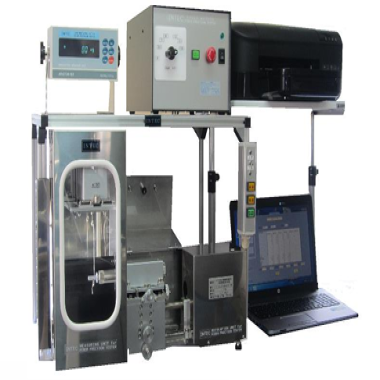
RIDER Method Single Fiber Friction Tester
Category:Other
Introduction
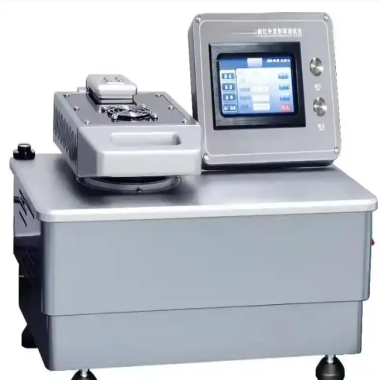
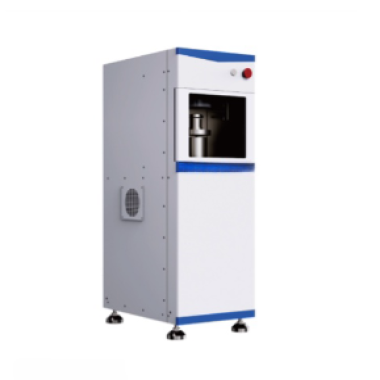
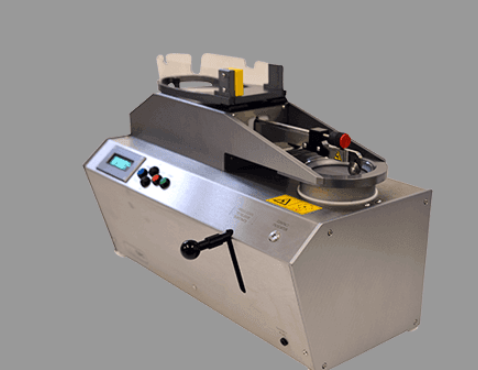
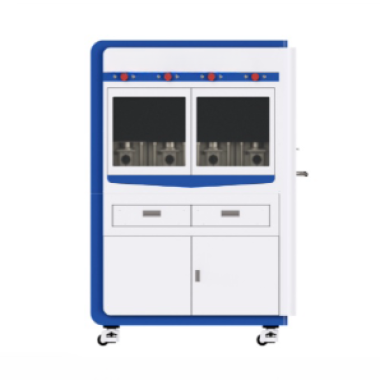
The RIDER Method Single Fiber Friction Tester is a high-precision instrument designed to measure the static and dynamic friction coefficients of single fibers. It is specially developed to comply with JIS standards for chemical fibers and general yarns, providing highly repeatable and accurate measurements regardless of operator experience.
This device features a dedicated high-capacity load sensor, automatic friction coefficient calculation, and versatile measurement capabilities for both fiber-to-fiber and fiber-to-solid interactions.
Standards Compliance
JIS L1015 – Chemical fiber binding test method
JIS L1095 – General yarn test method (friction coefficient)
Application Scope
Evaluation of friction properties of single fibers in research and development
Quality control in textile and chemical fiber production
Material testing for yarn processing and textile engineering
Determination of static and dynamic friction coefficients for fibers in industrial applications
Product Advantages
Efficient and Accurate Measurement – Provides reliable static and dynamic friction data.
Standard Compliant – Meets JIS L1015 and JIS L1095 friction coefficient testing requirements.
Superior Repeatability – Accurate and repeatable results independent of operator skill.
High Accuracy – Friction resistance data precision maintained at 0.1 mg.
Dedicated High-Capacity Load Sensor – Durable and reproducible, maximum value up to 100 mg.
Simple Operation & Automatic Zero – Easy-to-use interface with automatic zero calibration.
Automatic Friction Coefficient Calculation – Integrated system computes results instantly.
Versatile Measurement Types – Measures fiber-to-fiber and fiber-to-solid interactions.
Dynamic and Static Friction Testing – Measures both the force required to initiate motion and the force during sliding.
Technical Parameters
| Parameter | Specification |
|---|---|
| Model | IT-FMT |
| Measurement Items | Fiber vs. pear roller, Fiber vs. fiber / static and dynamic friction |
| Measuring Range | 0.1–100.0 mg |
| Display Mode | Digital (panel & P/C display) |
| Load Measurement Mode | Special load sensor mode |
| Sample Load | 100 mg (clamp load) |
| Friction Body Speed | 0.8 rpm (20 mm/min), 12 rpm (300 mm/min), 36 rpm (900 mm/min), 120 rpm (3000 mm/min), 180 rpm (4500 mm/min), 720 rpm (18000 mm/min) |
| Friction Body Type | Pear processing roller (8φ × 24 mm), yarn installation roller (8φ × 18 mm) |
| Friction Body Rotation Device | X-Y rolling micro function |
| Load Measuring Part Movement | Up/down with micro/medium speed switch, remote control |
| Data Items | Measured value (mg), friction coefficient, mean, standard deviation, CV%, Max, Min |
| Size & Weight | 650 W × 500 D × 660 H mm, ~50 kg (excluding P/C) |
| Power Supply | Single-phase 100V, 50/60 Hz (optional 220V) |
| Accessories | Data processing P/C (Windows 7 Japanese), printer, P/C rack |