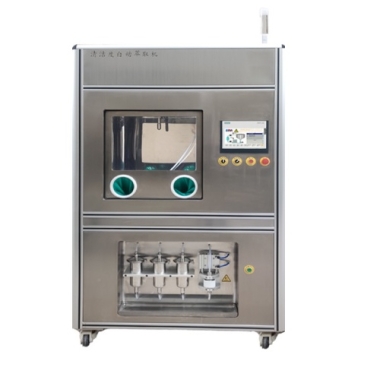
Cleanliness automatic extractor
Category:Other
Introduction
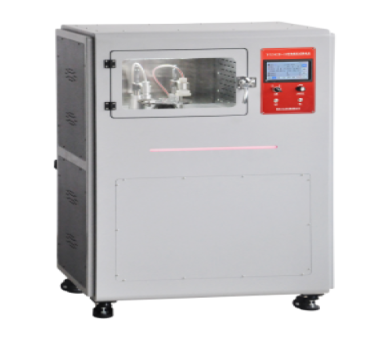
The Component Cleanliness Cabinet is a state-of-the-art automatic cleanliness extraction system designed for surface and cavity particle extraction from automotive components. It integrates high-pressure spraying, perfusion cleaning, and fine filtration to standardize cleanliness testing and improve efficiency compared to traditional manual methods. The system collects particulate contaminants on filter membranes for subsequent quantitative analysis, allowing precise measurement of particle load and compliance with international cleanliness standards.
Applications
Widely used in the automotive industry for cleanliness testing of parts such as:
Engine blocks and cylinder heads
Crankshafts, connecting rods, camshafts
Valves, pistons, rocker arms
Transmission shaft pins, oil pumps, water pumps, turbochargers
Oil pipelines and other assemblies
Applicable for particle extraction, sample preparation, and filter membrane analysis.
Compliant with ISO16232-2007, VDA19, GB/T3821-2005, and OEM-specific standards from Volkswagen, GM, Ford, Tesla, etc.
Meet the standards:
ISO16232, VDA19, ISO4406, DIN51455
OEM-specific cleanliness requirements (VW, GM, Ford, Tesla)
Operating Process
Prepare the filter membrane (default 5μm) by drying at 80°C for 30 minutes and cooling at room temperature.
Weigh the membrane (G1) using an electronic balance with 0.1 mg accuracy.
Mount the membrane in the filter holder of the JC1299 Cabinet.
Place the workpiece in the cleaning chamber, set the pressure (0–0.6 MPa) and cycle parameters.
Start automatic cleaning; the system performs pressure flush, filtration, and recovery of particulate matter.
After the cycle, remove the filter membrane, dry it at 80°C, cool, and weigh again (G2).
Calculate the particulate mass: G = G2 – G1.
Analyze particles using a cleanliness detection system.
Technical Parameters
| Parameter | Specification |
|---|---|
| Cleaning Chamber Size | 700 × 600 × 700 mm |
| Machine Size | 1250 × 900 × 2150 mm |
| Storage Tank Capacity | 25–30 L |
| Touch Screen | Full-color Siemens HMI |
| Filtration | 0.22 μm three-stage series cycle filtration |
| Filter Membrane | Automatic clamping, customizable specifications (847 mm, 850 mm) |
| Cleaning Pump | High-pressure special pump |
| Cleaning Chamber Material | 8K mirror-finished SUS304 stainless steel |
| Control System | Digital programmable controller |
| Spray Methods | Spray pen / Spray gun |
| Collection Pipe | Food-grade polished SUS304 seamless pipe |
| Door | Automatic lifting with uniform speed |
Key Advantages
Fully automated cleaning and extraction cycle reduces operator intervention and errors.
Real-time monitoring of cleaning status, pressure, and flow.
Multiple cleaning modes (spray, perfusion, high-pressure flush) for complex geometries (blind holes, cavities).
Online filtration and particulate recovery for immediate analysis.
Complies with international standards and OEM requirements, ensuring traceable results.
Optional ultrasonic cleaning module for small components.
FAQ
1. What types of automotive parts can be tested?
The JC1299 is suitable for engine components, transmission parts, turbochargers, oil pumps, water pumps, pipelines, and assemblies requiring surface and cavity particle extraction.
2. What filter membranes are used?
Default membranes are 5 μm, but specifications can be customized according to testing requirements.
3. Can the cleaning pressure and flow be adjusted?
Yes, the system allows adjustable pressure (0–0.6 MPa) and flow control for different parts and contamination levels.
4. Is the system compatible with international cleanliness standards?
Yes, it meets ISO16232, VDA19, ISO4406, DIN51455, and major OEM cleanliness standards (VW, GM, Ford, Tesla).
5. Does it support small parts or delicate components?
Yes, an optional ultrasonic cleaning unit can be added for delicate or small components.