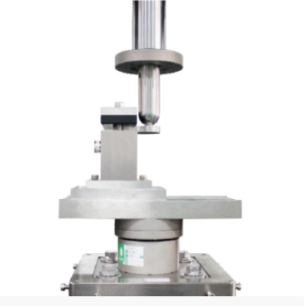
Tibial Tray Fatigue Testing Machine
Category:Other
Introduction
Product Introduction
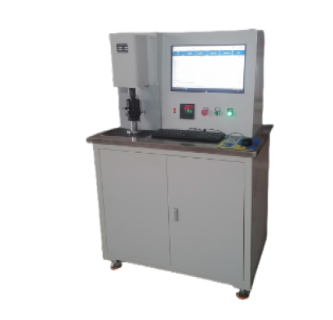
The Tibial Tray Fatigue Testing Machine is designed for evaluating the fatigue performance of tibial components used in total knee arthroplasty. By simulating cantilever loading conditions and physiological joint moments, it accurately assesses the durability and mechanical stability of tibial trays under long-term cyclic stresses, ensuring implant reliability and safety.
Application Scope
Applicable to tibial trays of total knee prostheses made from metal or polymer composites. Widely used in orthopedic implant R&D, quality control, and certification testing labs.
Applicable Standards
YY/T 0810 (China): Fatigue testing of tibial trays in total knee arthroplasty
ASTM F1800 (International): Fatigue testing protocols for tibial components under cantilever loading
ISO 14879-1: General fatigue testing of total knee joint prostheses
Product Advantages
High Precision Loading: Advanced cantilever actuator ensures uniform stress distribution per ASTM F1800.
Long-Term Endurance: Capable of completing 5 million cycles without calibration drift.
Dynamic Load Control: Closed-loop system maintains precise R=0.1 stress ratio during sinusoidal, square, or random loading (0.1–10 Hz).
Real-Time Crack Detection: AI-powered acoustic emission monitoring identifies micro-cracks at sub-millisecond resolution.
User-Friendly Operation: Large 21.5” touchscreen with gesture control and pre-loaded SOPs for multiple implant geometries.
Environmental Flexibility: Modular chambers allow testing under physiological (-20°C to +50°C) or corrosive conditions.
Safety and Reliability: Triple-redundant emergency stop, overload protection, and laser-based specimen breakage detection.
Technical Parameters
| Parameter | Specification |
|---|---|
| Max. Dynamic Force | ±3,000 N (6,000 N peak optional) |
| Frequency Range | 0.1–10 Hz (0.01 Hz increments) |
| Load Ratio (R) | 0.1–10 (adjustable) |
| Axial Displacement | ±20 mm (0.1 μm resolution) |
| Torque Capacity | ±20 Nm (0.01 Nm resolution) |
| Temperature Range | -20°C to +50°C (environmental chamber) |
| Humidity Control | 10–95% RH (non-condensing) |
| Data Sampling Rate | 100 kHz (synchronized across 16 channels) |
| Power Requirements | 220V/110V ±10%, 50/60Hz, 2,000W |
| Dimensions (W×D×H) | 1,500 × 1,000 × 2,000 mm |
| Weight | 750 kg (including environmental chamber) |
| Noise Level | <65 dB (A-weighted) |