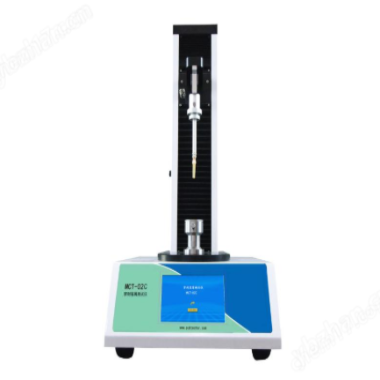
Cork Puncture and Chip Detection Instrument
Category:Medical Device Tester
Introduction
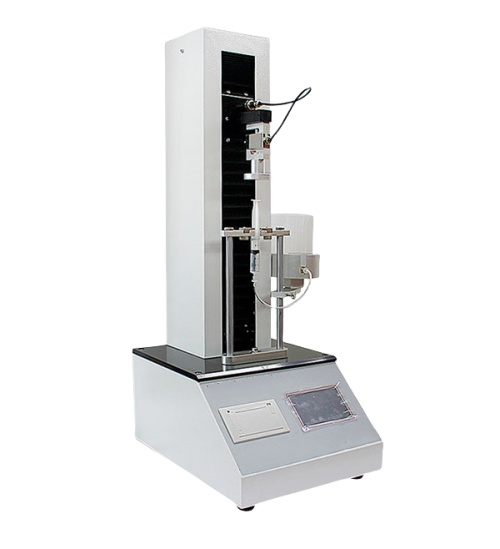
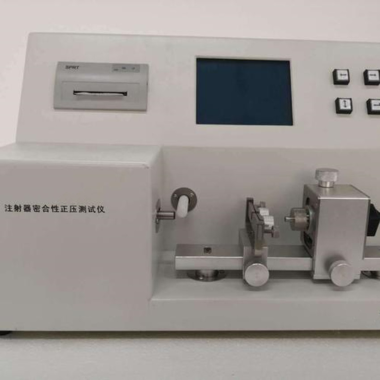
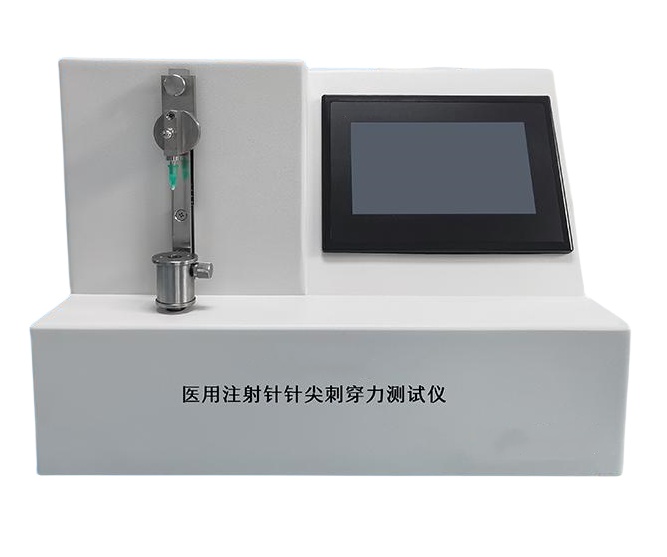
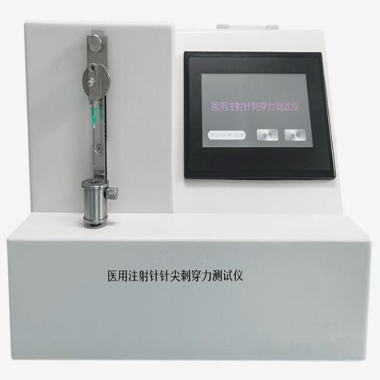
The rubber stopper puncture debris detector is a device specifically used to detect the number of debris generated during the puncture process and the puncture force of rubber stoppers (especially those for injectables).
Applications
The main purpose of the rubber stopper puncture debris detector is to evaluate the puncture debris – generating performance and puncture force of rubber stoppers to ensure they meet relevant standards and requirements. Through testing, rubber stoppers with puncture debris issues can be promptly identified and removed, preventing unqualified products from entering the market, thus safeguarding the safety and effectiveness of drugs. This device is widely used in the medical, pharmaceutical, and packaging industries, and is of great significance for ensuring drug quality and patient safety.
Standards
– YBB00332004 – 2015 Determination of Puncture Debris of Rubber Stoppers and Gaskets for Injectables
– YBB00322004 – 2015 Determination of Puncture Force of Rubber Stoppers and Gaskets for Injectables
– GB 8368 – 2018 (May involve relevant standards for packaging materials, but the specific details need to be determined according to the equipment’s intended use and the information provided by the manufacturer)
These standards specify in detail the test methods for the puncture debris and puncture force of rubber stoppers, specimen preparation, test conditions, etc., providing a unified standard for the use of the detector.
Technical Parameters
| Technical Parameter | Specification |
|---|---|
| Puncture Force Range | Generally, it can reach 0 – 200N (specific value varies by model/brand); covers testing needs for most rubber stopper puncture tests. |
| Control System | Mostly adopts PLC control system for precise control and data recording; features high stability/reliability to ensure testing accuracy and traceability. |
| Operation Interface | Equipped with a 7-inch touch-screen interface (supports Chinese-English switching). Enables operators to easily set parameters, monitor the process, and view test results. |
| External Dimensions | Approximately 500mm×500mm×450mm (varies by model/brand); compact design for easy placement/movement, applicable to different production sites and laboratories. |
| Puncture Speed | Arbitrarily settable within 0 – 100mm/min (design range up to 0 – 200mm/min). Different speeds simulate various conditions for comprehensive evaluation of rubber stopper puncture performance. |
| Test Materials | Applicable to puncture debris testing of rubber stoppers for vials, ampoules, cartridge vials, infusion bottles (etc.). Supports customized fixtures for different sample specifications. |
| Data Recording and Processing | Automatically records data and generates reports (facilitates quality traceability/analysis). Some models support remote data uploading and cloud storage for convenient data management. |
Features
• 7-inch color touchscreen with intelligent data processing capabilities provides a comfortable and smooth user experience.
• High-performance motor + ball screw drive for stepless speed adjustment.
• Simple and intuitive user interface, convenient user-defined testing functions, and comprehensive data analysis and reporting capabilities.
• Equipped with puncture fixtures, allowing for setting the number of tests.
• Automatic calibration and simple operation.
• Brand new UI design with an intuitive interface significantly enhances the user experience.
• Supports testing of various sample sizes; users can freely choose different needle sizes.
• Features automatic data storage and automatic memory function after power failure.
• The device has a powerful built-in data storage capacity, capable of storing over 50,000 data entries.
• The computer software complies with GMP requirements for computerized systems, featuring user management, access control, and data audit tracking functions.
Accessoriess
1. Dedicated injection vials (50mL/20mL optional): Uniform wall thickness, high transparency, suitable for autoclaving;
2. Standard puncture instruments (steel/plastic optional): Optimized design for consistent puncture depth and angle;
3. Manual capping machine: Small-batch, high-consistency sealing with excellent sealing;
4. High-precision filtration assembly: Equipped with ≥50μm particle identification filter paper, ensuring clear visibility of the filtrate;
5. Positive control rubber stopper pack: Validated for effective puncture and meets the requirements for control testing.
FAQ
1. What is this product?
Answer: It is a system for measuring the total static electricity generated by friction in materials, consisting of a friction device and a charge capture and collection unit.
2. What is this product used for?
Answer: It helps determine how much static electricity fabrics generate after friction movement, thereby assessing potential risks of electric shock or spark ignition.
3. How does this product work?
A: A mechanical roller charges the fabric. A Faraday cage then collects all the charge from the sample, converting it into a voltage signal that an instrument reads to measure the charge quantity.
4. Why is this product important?
A: It is a key testing item specified in mandatory national standards (such as anti-static clothing standards), directly impacting the safety of workers in flammable and explosive industries.
5. Which industries is this product suitable for?
Answer: It is primarily applicable to specialized labor protection equipment R&D, petrochemicals, power electronics, third-party quality inspection agencies, and textile fiber research laboratories.