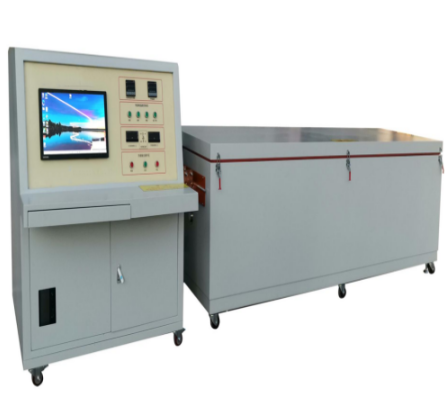
Automotive Wire AC/DC Current-Carrying Capacity Test System
Category:Static & Dynamic Load

Introduction
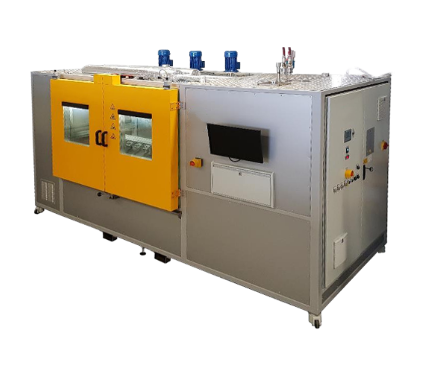
The Automotive Wire AC/DC Current-Carrying Capacity Test System is designed to evaluate the thermal and electrical performance of automotive wires and connectors under both alternating current (AC) and direct current (DC) conditions. It enables simultaneous monitoring of conductor temperature, current, and voltage drop, ensuring automotive wiring systems meet industry safety and performance standards.
Application
(1) Record conductor temperature changes in connectors under a specified current.
(2) Record the current that flows through a conductor at a preset conductor temperature.
(3) Monitor voltage drop across the conductor during testing.
(4) Perform cyclic testing for long-term performance assessment.
(5) Support research and development, quality assurance, and regulatory compliance of automotive wiring systems.
Standards
(1) JASO D609:2001 – Electrical performance of automotive connectors.
(2) QC/T 29106, QC/T 1067.1, QC/T 417.1 – Automotive wire testing standards.
(3) TICW15 – Industry-specific connector and wire test requirements.
Technical Parameters
| Parameter | Specification |
|---|---|
| Input Voltage | AC 380V ±10%, 50Hz |
| Load Power Supply | DC: Switching power supply; AC: Constant current source |
| Operating Current | AC: 0–1000 A, open-circuit voltage ≤10 V; DC: 10–1000 A, open-circuit voltage ≤10 V |
| Current Output Control | Computer programmable |
| Current Meter Accuracy | ±1% + 3 digits |
| DC Voltage Drop Measurement | 0.01 mV–199.99 mV / 0.1 mV–1999.9 mV (two ranges) |
| Timing Range | 0–9999.99 H/M/S, automatic cut-off at set time |
| Temperature Measurement | 8-channel standard, T1C, T2C, T3C, T1S, and ambient; Type-T 30AWG thermocouples |
| Temperature Control | Environmental chamber with 485 communication for monitoring and control |
| Chamber Effective Space | 3000 × 500 × 500 mm |
| Chamber Door | Top-hinged lever structure |
| Built-in Connection | Copper busbars for sample connection |
| Communication Interface | 485 interface, Excel report generation, storage, and printout |
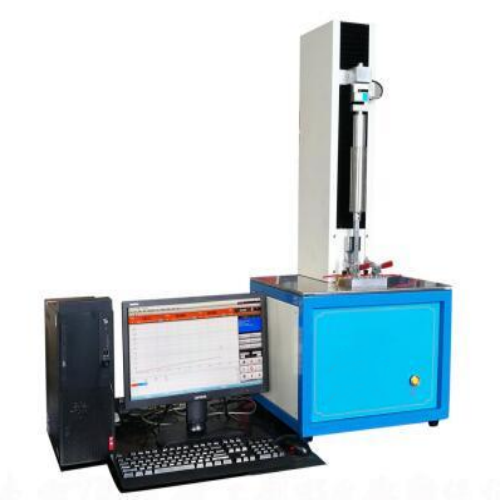
| Software | Data acquisition software for AC/DC testing, recording current, voltage, and temperature curves |
| Computer | Brand PC included |
Features
(1) Dual AC/DC testing capability with precise current and voltage control.
(2) Real-time recording of conductor temperature, current, and voltage drop.
(3) Cyclic testing function for evaluating long-term reliability.
(4) Thermocouple-based multi-channel temperature monitoring.
(5) Environmental chamber with precise temperature control and data communication.
(6) Software-enabled curve generation for current vs. temperature and temperature vs. time.
(7) Automatic cut-off at preset time for safety and test repeatability.
(8) Excel-compatible report generation for documentation and analysis.
Accessories
(1) Environmental chamber with copper busbar connections.
(2) Thermocouple sensors (T-type, 30AWG) for multi-point temperature monitoring.
(3) Brand PC with pre-installed test software.
(4) Data acquisition and analysis software for AC/DC current and temperature curves.
(5) Communication cable for 485 interface.
Maintenance Information
(1) Calibrate current sensors and thermocouples regularly.
(2) Inspect copper busbars and connection clamps to ensure reliable contact.
(3) Keep chamber clean and free of moisture to maintain accurate temperature control.
(4) Periodically check the software for updates and backups of test protocols.
(5) Verify AC/DC source output stability before each testing session.
FAQ
(1) What is this system?
It is a test system for measuring conductor temperature rise and voltage drop under AC/DC loads for automotive wires and connectors.
(2) What is it used for?
To assess thermal performance, voltage drop, and current-carrying capacity under real-world electrical conditions.
(3) What is the working principle?
The system applies AC or DC current to the sample, monitors temperature rise via thermocouples, and measures voltage drop while recording data in software.
(4) Why is it important?
Ensures automotive wiring can safely handle electrical loads without overheating or excessive voltage drop, improving vehicle reliability.
(5) What industries is it suitable for?
Automotive OEMs, wiring harness manufacturers, electrical component labs, and certification bodies.
If you're ready to take the next step, Leave your message below and we’ll reply soon. 20+ years of manufacturing & export experience, a partner you can trust.