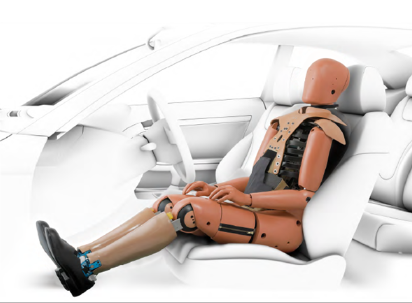
Car Crash Test Dummies(Hybrid iii Dummys)
Category:Manikin System
Introduction
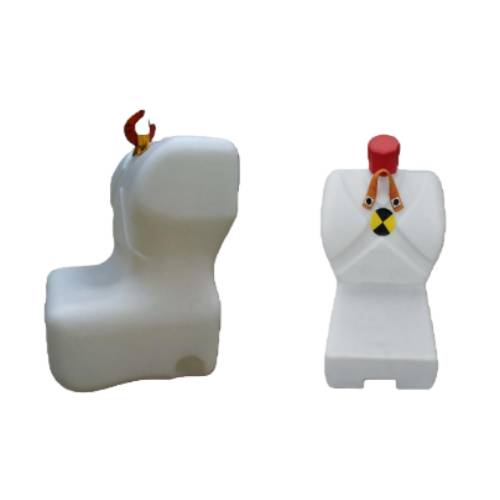
The “triple-collision dummies” do not refer to a single standardized type, but rather to advanced crash test dummies such as safety mannequins or new female dummies. These dummies can simulate human skeletal/organ structures and are equipped with numerous sensors to collect detailed injury data. They overcome the limitations of traditional male models, covering diverse occupants (adults, children, different body types) and collision scenarios (frontal/side impacts), thereby enhancing vehicle safety. These models replicate human skeletal and organ structures while gathering detailed injury data through extensive sensors. Compared to basic male models, they accommodate diverse occupants (adults, children, various body types) and collision scenarios (frontal/side impacts), thereby optimizing vehicle safety design.
Application
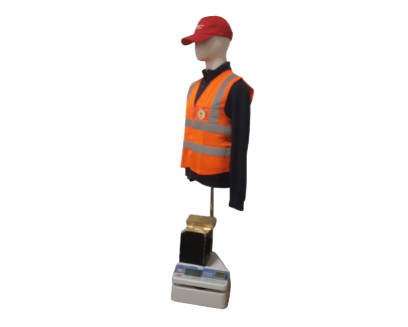
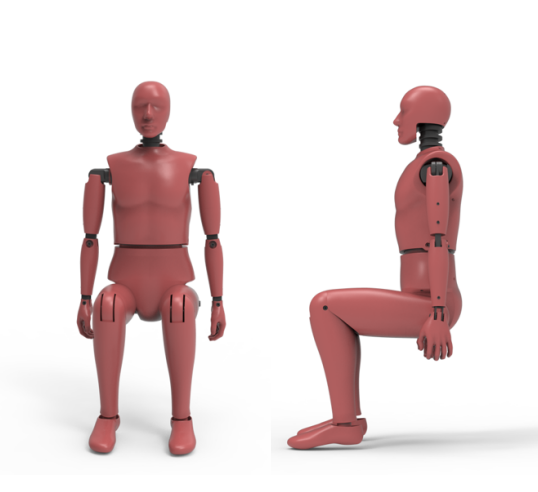
The Mixed Type III Crash Test Dummy – Adult Male 50th Percentile is widely used in frontal collision tests to evaluate automotive safety restraint systems. We develop this Mixed Type III dummy and other dummy types in compliance with ECE specifications. Designed with human biomechanical motion in mind, it features movable joints at the thigh, lower leg, ankle, and foot. The dummy is also suitable for testing non-automotive products such as aviation, high-speed rail, wheelchairs, medical equipment, and sports gear.
Standards
EN standard (Euro-American sign)
GB standard (Chinese/Asian sign)
Technical Parameters
1. Crash Test Dummy
| Item | Description |
|---|---|
| Composition | Head, neck, torso (with/without skin), upper/lower trunk, thigh (left/right), lower leg (left/right, including foot), upper arm (left/right), lower arm (left/right, including hand) |
| Posture | Maintainable in seated or standing position |
| Anthropometry | Matches 50th percentile adult male for all segments |
| Standing Height | 1750±10 mm (no sitting height data) |
| Sitting Height | 883.9±5.1 mm |
| Mass Distribution & Total Mass | Matches 50th percentile adult male; total mass 77.65±1.18 kg |
| Material | Aluminum alloy head, steel neck and chest components; rubber neck/lumbar; chest with simulated skin |
| Sensor Provision | Pre-installed sensor locations and wiring space at all segments |
2. Dummy Sensors
| Item | Description |
|---|---|
| Source | Optional, Chinese/US manufactured |
| Compliance | Meets SAE J211/1 requirements |
| Cable Length | 10 m signal cable per sensor |
| Certification | Each sensor must provide a calibration report/certificate from a third-party metrology institute |
| Responsibility | Responsible for sensor calibration and installation/commissioning on the dummy |
3. Sensor Types & Quantity
| Location | Sensor Type & Quantity |
|---|---|
| Head | 3 × Accelerometers |
| Upper Neck | 1 × 6-axis Force/Torque Sensor |
| Lower Neck | 1 × 6-axis Force/Torque Sensor |
| Chest | 3 × Accelerometers; 1 × Displacement Sensor |
| Lumbar | 0 × 6-axis Force/Torque Sensor |
| Knee Joint | Optional |
| Ankle/Foot | Optional |
4. Head & Chest Accelerometers
| Parameter | Specification |
|---|---|
| Range | 2000g |
| Sensitivity | 0.15 mV/g |
| Excitation Voltage | 2 ~ 10 VDC |
| Frequency Response | 0 ~ 5 kHz (±1/2 dB) |
| Nonlinearity Error | ±1% FS |
5. Upper Neck 6-Axis Force/Torque Sensor
| Parameter | Specification |
|---|---|
| Measurement Directions | Fx, Fy, Fz, Mx, My, Mz |
| Range | 9 kN (Fx, Fy), 13 kN (Fz), 280 N·m (Mx, My, Mz) |
| Excitation Voltage | 2 ~ 15 VDC |
| Nonlinearity Error | < 1% |
| Hysteresis Error | < 1% |
6. Lower Neck 6-Axis Force/Torque Sensor
| Parameter | Specification |
|---|---|
| Measurement Directions | Fx, Fy, Fz, Mx, My, Mz |
| Range | 13.3 kN (Fx, Fy), 13.4 kN (Fz), 454.6 N·m (Mx), 455.3 N·m (My), 453.7 N·m (Mz) |
| Excitation Voltage | 2.5 ~ 15 VDC |
| Nonlinearity Error | < 1% |
| Hysteresis Error | < 1% |
7. Chest Displacement Sensor
| Parameter | Specification |
|---|---|
| Range | ≥ 75 mm |
| Sensitivity | 1.0802 mV/mm |
| Supply Voltage | 5 VDC |
| Hysteresis Error | < 1% |
| Nonlinearity Error | < 2% |
8. Lumbar 6-Axis Force/Torque Sensor
| Parameter | Specification |
|---|---|
| Measurement Directions | Fx, Fy, Fz, Mx, My, Mz |
| Range | 15.08 kN (Fx), 15.08 kN (Fy), 20.1 kN (Fz), 602.7 N·m (Mx), 602.0 N·m (My) |
| Excitation Voltage | 2.5 ~ 15 VDC |
| Nonlinearity Error | < 1% |
| Hysteresis Error | < 1% |
Features
The manikin’s interior incorporates various metals, plastics, and rubber components, including a steel chest cavity, aluminum shoulder blades, plastic pelvic bones, and silicone skin. Additionally, numerous precision instruments such as accelerometers, potentiometers, and pressure sensors are installed throughout its structure to record the forces exerted on the manikin during collisions.
Head and Neck:
The skull and cranial vault are constructed as a single aluminum alloy unit, covered with either soft skin or hard synthetic resin. The neck combines rubber and aluminum alloy structures, with a central communication cable that simulates the dynamic structure, rotational flexibility, and extension feedback of the human neck.
Upper Torso:
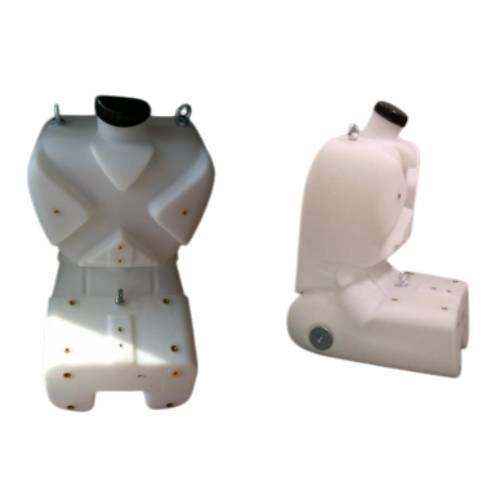
The high-strength six-rib steel cage in the chest cavity incorporates flexible elastic material to simulate human chest rebound characteristics under external force. The ribs include anatomically correct left and right ribs, with the sternum and spinal column riveted to the back.
The sternum connects the front ribs to a sternum bending/rotation potentiometer. The angle between the neck and upper torso determines the cervical spine curve assembly, which integrates a 6-axis neck sensor. Two clavicles and clavicle connectors secure the entire scapula and shoulder girdle linkage.
Lower Torso:
A cylindrical rubber lumbar spine assembly enables sitting and standing like a real human. An optional lumbar transport unit secures it to the pelvis. The skin covering the pelvic periphery and buttocks is made of infused soft rubber/ Polyurethane soft and elastic skin is applied to the pelvis periphery and buttocks. Leg bones with optional spherical joints that limit movement mimic human leg characteristics, enabling free flexion, extension, and rotation. Thigh bones, lower leg bones, and ankle bones can be fitted with detection instruments to predict leg bone fractures and assess knee ligament conditions and injuries. Feet and ankles simulate heel and ankle joints to achieve movement.
FAQ
1.Are crash test dummies accurate?
The model is based on a male only, and mimics human tissues and organs. This model is accurate for males in the 50th percentile, and it can not easily relate to three-year-olds when dealing with neck and head injuries, which are responsible for 57 percent of car crash fatalities.
2.Why are crash test dummies so expensive?
Many of the design elements of the dummies are patented and only a few manufacturers in the world produce dummies to the highest standard. As a result, it is logical that dummies are expensive – in fact, they are often the most expensive piece of equipment used in a crash test.
3.What is the leading cause of death in cars?
In the United States, the most common cause of car crash deaths is driving under the influence of drugs or alcohol. Other common causes include distracted driving, such as using a cellphone while driving, speeding, reckless driving, and not wearing a seatbelt.
4.Why are there no female crash test dummies?
The male body is often defined as the norm and serves as the primary object of study. In this case, crash test dummies were first developed in the U.S. to model the 50th percentile man. This means that the female part of the population was left out of the research discovery phase.
5.What did they use before Crash Test Dummies?
Believe it or not, before crash test dummies were invented, cadavers, chimpanzees, hogs, and other animals were often used in crash tests.