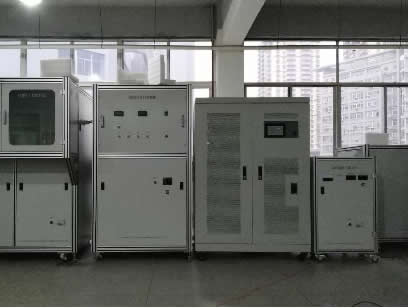
Combination Wave Test System
Category:Voltage Testing Equipment

Introduction
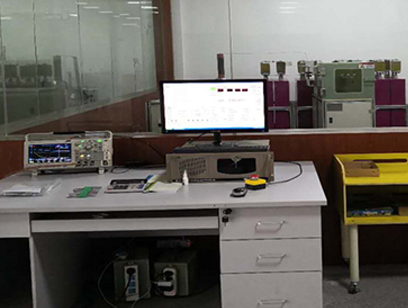
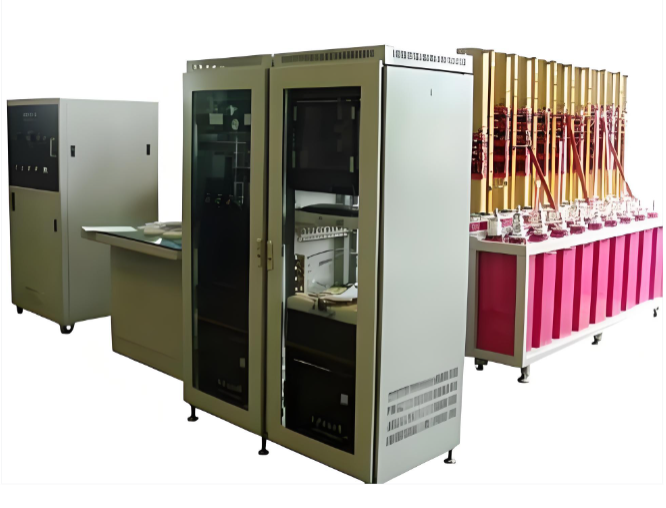
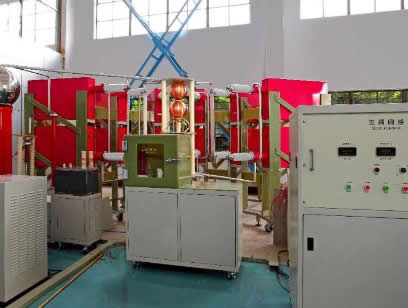
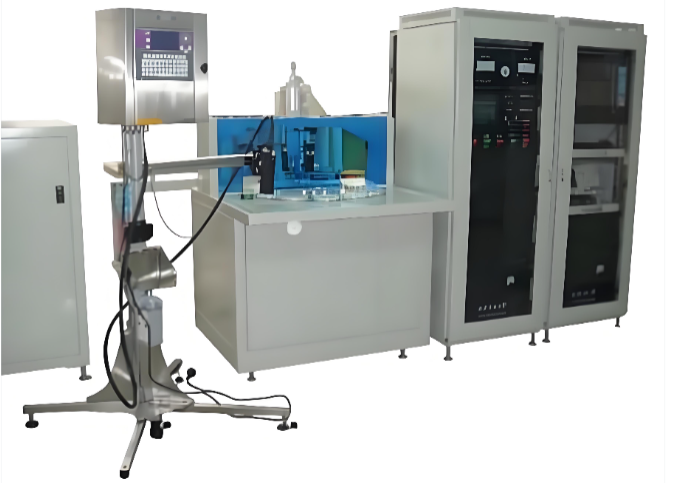
Combination Wave Test System is one of a special test machines, it can output 1.2/50μs open circuit voltage wave and 8/20μs short current wave. The test system is used for carrying VPR Test,Nominal Discharging Current Test, Operating Duty Test and so on. The test system contends the requirements of IEC 61643. IEC 61000-4-5 and UL 1449 standards.
Application
Consumer Electronics & Home Appliances:
Used to test the surge withstand capability of products such as TVs, refrigerators, and washing machines when exposed to power grid surge events.
IT & Office Equipment:
Protects internal circuits of computers, printers, servers, and other office devices from transient high-voltage damage.
New Energy & Automotive Electronics:
Performs immunity verification for photovoltaic inverters, electric vehicle (EV/PHV) onboard chargers, and charging stations.
Industrial Automation:
Ensures stable operation of variable frequency drives (VFDs), PLC control systems, and UPS power supplies under industrial electromagnetic environments.
LED Lighting & Power Supplies:
Validates the lightning surge resistance of outdoor LED drivers and various switch-mode power supplies (SMPS).
Standards
IEC61643.IEC61000-4-5.UL1449.IEC60060
Technical Parameters
| Combination Wave | Short Circuit Current | Open Circuit Voltage | Virtual Impedance | ||||
| Front Time | Duration Time | Peak | Front Time | Duration Time | Peak | ||
| 30kV/15A | 8μs ± 10% or (+1-2.5) |
20μs ± 10% or(+8-4) |
15kA ± 10% | 1.2μs ± 30% | 50μs ± 20% |
30kV(+10%,-5%) | 2±0.5Ω |
| 20kV/10A | 8μs ± 10% or(+1-2.5) |
20μs ± 10% or (+8-4) |
10kA ± 10% | 1.2μs ± 30% | 50μs ± 20% |
20kV(+10%,-5%) | 2±0.5Ω |
| 6kV/3A | 8μs ± 10% or(+1-2.5) |
20μs ± 10% or (+8-4) |
3kA ± 10% | 1.2μs ± 30% | 50μs ± 20% |
6kV(+10%,-5%) | 2±0.5Ω |
| Operating duty test | AC Source:0-1000V /5-100A. Phase tracking and control accuracy:0-360° ±5° DC Source:0-1500V /5-100A |
||||||
Features
Automatic Coupling/Decoupling Network (CDN):
Built-in or external CDN options allow surge pulses to be automatically injected into the power lines or communication/data lines of the Device Under Test (DUT) without interfering with normal power grid operation.
Multi-Dimensional Flexible Adjustment:
Supports automatic polarity switching (positive/negative), pulse phase synchronization (e.g., synchronization at any angle from 0∘0^\circ0∘ to 360∘360^\circ360∘), and adjustable pulse repetition frequency.
Wide Testing Range:
Output voltage typically ranges from several hundred volts to over ten kilovolts (e.g., 0.5 kV to 20 kV+), with a broad energy range suitable for testing from components to full system-level equipment.
High Safety and Automation:
Equipped with emergency stop switches, interlock systems, and protective enclosures for hardware safety. It also typically features an intuitive touchscreen interface, supporting automated testing and data report generation.
Maintenance Information
Regular Calibration:
To ensure test validity and compliance, the system’s output voltage, current waveform parameters, and generator peak values must be calibrated regularly (typically once a year) by a certified professional organization.
Discharge Tube and Switch Life Management:
The high-voltage switching components inside the generator (such as gas discharge tubes or semiconductor switches) are consumable parts. They must be replaced according to system alerts or the number of triggering cycles.
High-Voltage Relay Cleaning:
The coupling/decoupling network contains numerous high-voltage relays. Carbon dust or debris generated during long-term testing may reduce insulation performance or cause poor contact, so regular cleaning and inspection are required.
Safety Interlock Testing:
The system is typically equipped with high-voltage warning indicators and interlock protection devices. During maintenance, their circuits must be checked to ensure proper operation and operator safety.
Impedance Matching Inspection:
Inspect all ports and cables for aging or wear to ensure proper impedance matching and intact high-voltage insulation layers.
FAQ
1.What is this product?
You are using a Combination Wave Test System, a high-voltage surge testing device that generates a standardized combination waveform (typically 1.2/50 μs voltage and 8/20 μs current) to simulate lightning and switching surges for evaluating electrical equipment performance.
2.What is this product used for?
You can use it to test surge protective devices (SPDs), electronic components, power supplies, household appliances, and industrial equipment. It is used to evaluate insulation strength, surge immunity, and transient overvoltage withstand capability.
3.Why is this product important?
It allows you to reproduce real-world lightning-induced and switching surge conditions in a controlled laboratory environment. This ensures product safety, improves reliability, and helps manufacturers comply with international EMC and surge immunity standards.
4.What industries is this product suitable for?
You can use it in consumer electronics, electrical appliances, power distribution systems, renewable energy, telecommunications, automotive electronics, and EMC testing laboratories.
5.What types of this product are available?
You can choose from single-phase or three-phase combination wave systems, manual or fully automated models, and advanced versions with programmable voltage/current levels, built-in coupling/decoupling networks (CDN), and computerized test control and reporting systems.
If you're ready to take the next step, Leave your message below and we’ll reply soon. 20+ years of manufacturing & export experience, a partner you can trust.