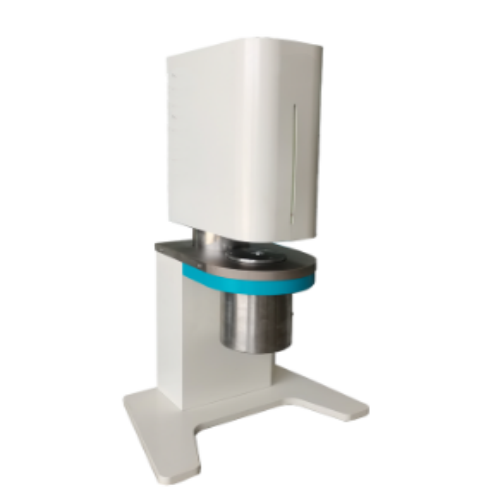
Computer-controlled Explosion-proof Capillary Rheometer
Category:Other
Introduction
The Computer-controlled Explosion-proof Capillary Rheometer is a laboratory rheological testing instrument used to determine the melt flow behavior and apparent viscosity of plastics and polymer materials under controlled temperature, pressure, and shear conditions. The system integrates servo-driven loading, precision capillary dies, uniform heating, and computer-based measurement and control, enabling stable, repeatable, and standard-compliant rheological characterization for thermoplastics and thermosetting materials.
Application
(1) Measurement of apparent viscosity and shear rate characteristics of thermoplastic materials under specified temperature and shear stress conditions.
(2) Rheological characterization of thermosetting polymer melts during controlled extrusion through capillary dies.
(3) Evaluation of melt flow behavior under constant pressure, constant speed, constant temperature, or variable heating rate conditions.
(4) Comparative analysis of polymer processing performance for extrusion, injection molding, and compounding processes.
(5) Research and development of new polymer formulations, additives, and modified materials.
(6) Quality control and batch consistency verification in polymer manufacturing.
(7) Rheological testing for academic research, industrial laboratories, and material certification institutions.
Standards
(1) HG/T 4300-2012 — Capillary Rheometer Test Method for Plastics
(2) ISO 11443 — Plastics — Determination of the Fluidity of Plastics Using Capillary and Slit-Die Rheometers
(3) ASTM D3835 — Standard Test Method for Determination of Rheological Properties of Thermoplastics Using a Capillary Rheometer
(4) DIN 54811 — Plastics — Determination of Flow Behavior Using Capillary Rheometers
(5) GB/T 21060 — Plastics — Determination of Melt Rheological Properties (Capillary Method)
Parameters
| Item | Specification |
|---|---|
| Temperature range | Room temperature to 400 ℃ |
| Heating rate | 1–10 ℃/min, continuously adjustable |
| Temperature resolution | 0.1 ℃ |
| Pressure range | 1–50 MPa |
| Pressure accuracy | ±0.5 % FS |
| Pressure resolution | 0.1 MPa |
| Maximum driving force | 10 kN |
| Speed range | 0.01–500 mm/min |
| Deformation measurement accuracy | ±0.5 % FS |
| Standard plug head diameter | Φ12 mm |
| Plug head area | 113.04 mm² |
| Capillary die specifications | Ø1 × 5 mm, Ø1 × 10 mm, Ø1 × 20 mm, Ø1 × 40 mm |
| Capillary die material | Tungsten carbide |
| Power supply | AC 220 V, 50 Hz |
| Rated power | < 1000 W |
Features
(1) Computer-controlled measurement and control system enabling automatic test parameter configuration and data acquisition.
(2) Single-column, single-indenter structure with explosion-proof design for safe operation.
(3) AC servo drive combined with precision ball screw transmission for accurate displacement and pressure control.
(4) Uniform barrel heating using integrated spiral heating wire to ensure temperature stability along the flow path.
(5) Supports constant pressure, constant speed, constant temperature, and variable heating rate test modes.
(6) Automatic generation of rheological curves with real-time display, storage, and printing functions.
(7) Modular and customizable design for temperature range, pressure capacity, indenter diameter, and die specifications.
(8) Intuitive software interface for parameter setting, test execution, and result analysis.
Accessories
(1) Standard tungsten carbide capillary die set
(2) Standard Φ12 mm plug head
(3) Temperature sensor and pressure sensor assembly
(4) Computer control and analysis software
(5) Data cable and power cable
(6) Operation manual and calibration documentation
FAQ
1. What is this product?
It is a precision rheometer that simulates industrial extrusion processes and measures material flow resistance by forcing material flow through a slender capillary tube via a plunger.
2. What does this product do?
It helps you map your material’s flow behavior. By observing whether the material becomes more viscous or less viscous under varying pressures and speeds, it guides you in setting optimal processing temperatures and extrusion rates.
3. How does this product work?
Its operation is based on the Poiseuille flow equation. Within a temperature-controlled barrel, a piston moves downward at a fixed speed, forcing material through a capillary die. By measuring the pressure difference and flow rate across the die, it calculates the material’s shear stress and shear rate, thereby determining its viscosity.
4. Why is this product important?
Actual processing (e.g., injection molding) occurs at extremely high speeds. Conventional tests (e.g., melt flow indexers) cannot reflect material behavior under such conditions. The capillary rheometer is the only tool capable of realistically simulating high-intensity production conditions in factories and predicting whether materials will “fail” (e.g., melt fracture).
5. Which industries is this product suitable for?
It is primarily suitable for polymer raw material manufacturers (PP/PE/PVC, etc.), modified plastic R&D, automotive interior component manufacturing, wire and cable extrusion processes, precision injection molding, and polymer material research institutions.