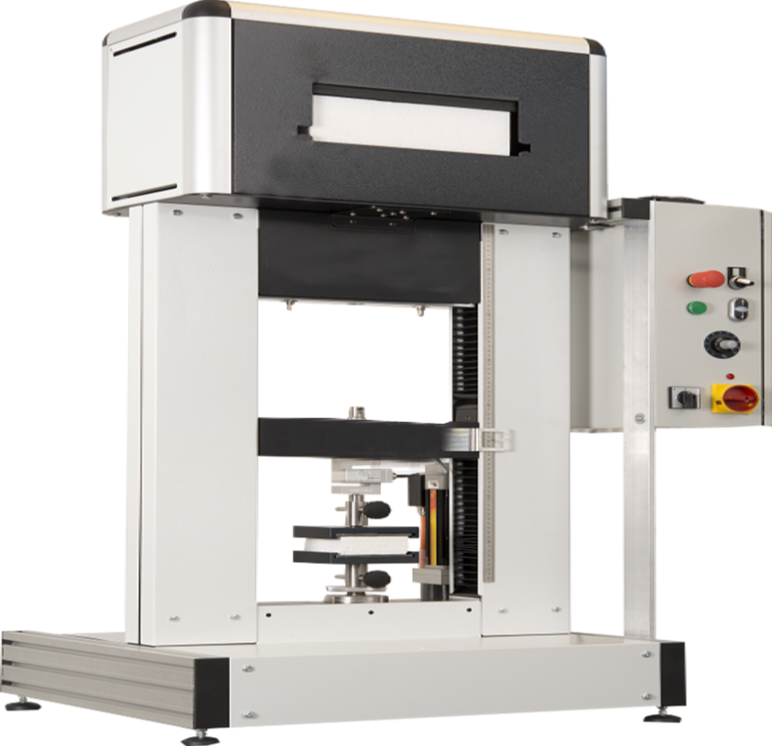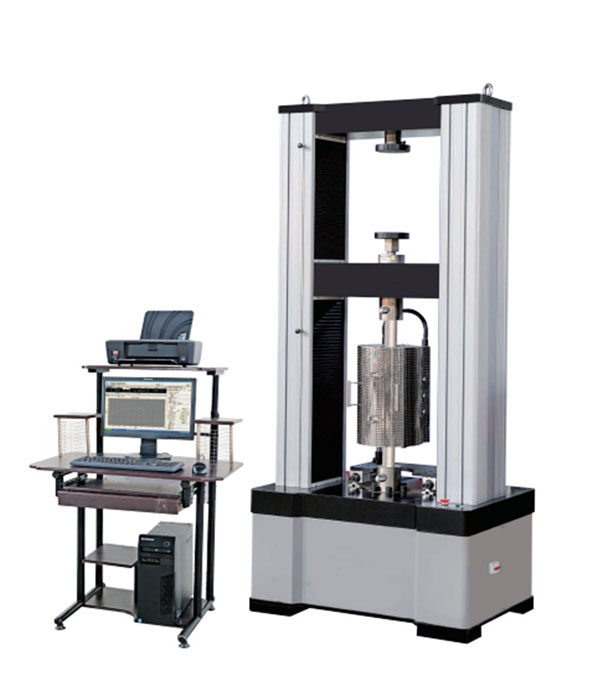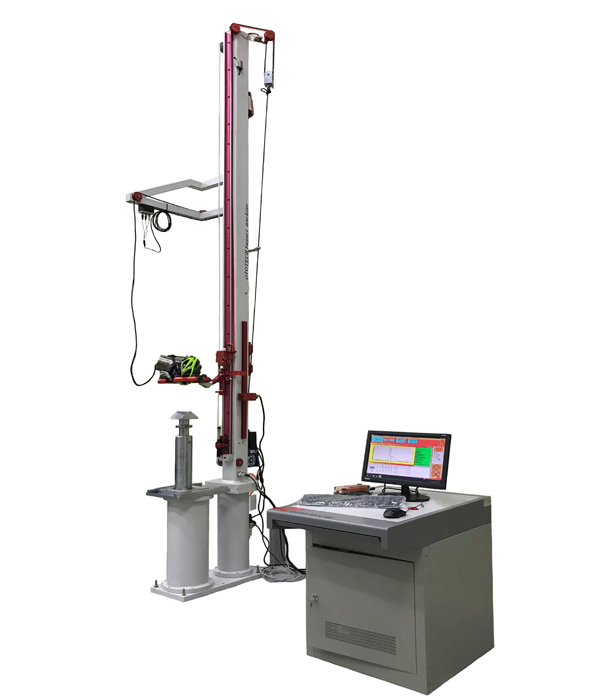
Computer-controlled Helmet Impact Tester
Category:Universal Strength Tester
Factory Direct
Stable Performance
Intl. Standards
Tech Support
Fast Delivery
Global Shipping

Introduction
A computer-controlled helmet impact tester is an instrument used to test the impact resistance and penetration resistance of helmets. It quantitatively measures the impact resistance and energy absorption capacity of helmets by simulating the impact of objects falling from a height. The core principle of the testing instrument is the law of conservation of energy and the momentum theorem. During testing, the impact hammer is raised to a specified height, released, and allowed to fall freely, converting potential energy into kinetic energy to deliver a sudden impact to the helmet sample.
Application
This testing instrument is applicable to the impact – energy absorption performance test of helmets. It is used to evaluate the impact – resistance performance and penetration – resistance of helmets.
Standard
(1)GB 811: Helmets for motorcycle and electric bicycle users
(2)GB 24429: Sports helmets – Safety requirements and testing methods for sports helmets for cyclists and users of skateboards and roller skates
(3)GB/T 38305-2019: Head protection—Rescue helmets
(4)GA 44: Helmets for firemen
(5)IS 4151 : Helmet Standard for India
(6)DOT FMVSS No. 218: Federal Motor Vehicle Safety Standard No. 218
(7)ECE R22.05: Uniform Provisions Concerning the Approval of Protective Helmets and Their Visors for Drivers and Passengers of Motor Cycles and Mopeds
(8)EN 1078: Helmets for cyclists and for users of skateboards and roller skates
Parameters
| System Component/Feature | Description |
|---|---|
| System components | Consists of a crash test stand and an analysis recorder |
| Crash test bench composition | Comprises a fall guidance device, head type, head type fixed frame, ball joint, anvil, anvil seat, release guidance system, and seat base, among other components |
| Impact height | Control interface setting, with guidance system, acceleration detection and calibration device (customizable from 1000 ~ 3000mm) |
| Base | Optimal solution is made of reinforced concrete; the instrument’s steel base is connected to the concrete base, with a mass not less than 1600kg |
| Test and Analysis Instrumentation System | Comprises acceleration sensors or impact sensors, amplifiers, and components for data processing, display, and recording, among others |
| Dimensions (LWH cm) | 9080450 (according to the set impact height) |
| Weight (kg) | 350 |
| Power supply | AC 220V 50Hz 500W |
| Environment | 10 ~ 35 ℃ |
| Operation | On the floor, connected to the concrete pedestal |
Feature
(1)High Precision: Utilizes a servo motor and hollow gear reduction system to ensure high accuracy and reliability of testing.
(2)Automation: Automatically lifts the fixture to a predetermined height, displaying height, peak acceleration, test curve, impact velocity, impact time, and impact energy in real time.
(3)Multifunctional: Employs a direct-drive transmission system with high positioning accuracy, long lifespan, low friction, and capable of high-speed and bidirectional rotation.
(4)Safe and Fast: Features a position limiting function, making tests with position limitations safer and faster.
(5)Wide Application Range: Offers a very wide measurement range, suitable for standards in multiple countries.
(6)Integrated Design: Adopts an integrated design principle; regardless of the host configuration, only the corresponding parameters on the computer need to be modified (parameters can be saved), eliminating the need for circuit adjustments.
Accessoriess
(1)Headform
(2)Impact hammer
(3)Penetration hammer
(4)Accelerometer
(5)Infrared speed sensor
(6)Control board
(7)Control box
(8)Main unit
(9)Dedicated computer and control software
FAQ
1. What is a Computer-Controlled Helmet Impact Tester?
This device is used to evaluate the impact protection performance of helmets under precise, programmable conditions using computer control for high repeatability and accuracy.
2. How does the computer-controlled impact test work?
The helmet is mounted on a standardized headform, and a drop-weight or pendulum impactor strikes it under pre-set conditions. Sensors record acceleration, force, and deformation, while the computer system controls and logs all test parameters.
3. What types of helmets can be tested?
It can test industrial safety helmets, construction helmets, bicycle helmets, motorcycle helmets, and other protective headgear designed to absorb impacts and protect the wearer.
4. What parameters are measured during testing?
The tester measures peak acceleration, impact force, energy absorption, and helmet deformation. Some systems also calculate head injury criteria (HIC) for advanced safety evaluation.
5. Why is computer-controlled impact testing important?
Computer control ensures highly repeatable, accurate, and standardized testing, allowing manufacturers to validate helmet performance, optimize designs, and comply with safety standards such as EN 397. ANSI Z89.1. or ISO.
If you're ready to take the next step, Leave your message below and we'll reply soon. 20+ years of manufacturing & export experience, a partner you can trust.