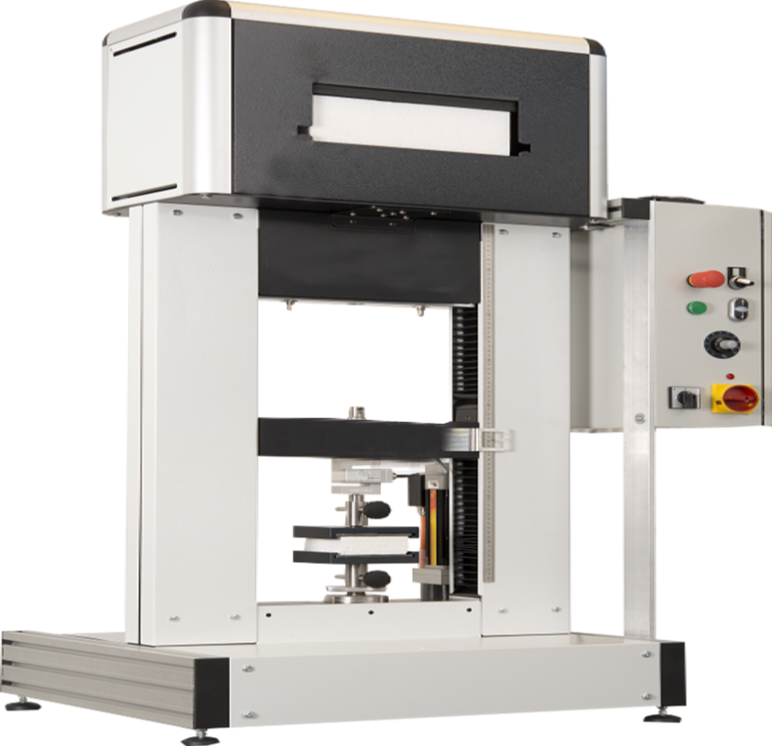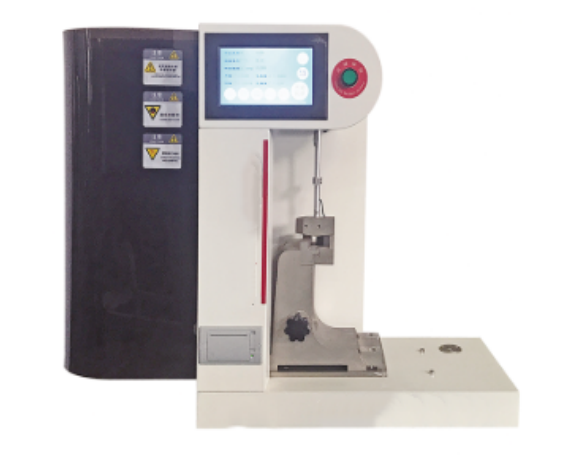
Computer Controlled Memory Impact Testing Machine
Category:Universal Strength Tester
Factory Direct
Stable Performance
Intl. Standards
Tech Support
Fast Delivery
Global Shipping

Introduction
Computer controlled memory impact testing machine is mainly used for hard plastics, reinforced nylon, glass steel, ceramics, cast stone, electrical insulation materials and other non-metallic materials impact toughness determination. The testing machine is an ideal test equipment for chemical industry, scientific research units, colleges and universities, quality testing departments, professional manufacturers laboratories and other units. It is a testing instrument with simple structure, convenient operation and accurate and reliable data.
Meet the criteria
(1)JB/T 8762-1998 “Plastic Simply supported beam Impact Testing Machine”
(2)JJG145-2007 “Verification Regulations of Pendulum Impact Testing Machine”
(3)GB3808 “Test of pendulum impact Testing Machine”
Standards
(1)GB/T 1043.1-2008 “Rigid plastic simple support beam impact test method”
(2)ISO 179-1993(E) “Plastics – Determination of impact strength of simply supported beams”
Technical indicators
1. Impact energy: 2J/4J(simply supported beam); 2.75/5.5J(cantilever)
2. Sampling rate: 10us
3. Resolution: 16 bits
4. Load measurement accuracy: ≤1%
5. Impact knife Angle: 30°
6. Pendulum torque: simple beam 2.1436N.m, 1.0718N.m, 0.5359N.m
7. Cantilever beam 2.9474N.m, 1.4737N.m
8. Pendulum prelift Angle: 150°
9. Simple support beam:
1) Impact speed: 2.9m/s
2) The distance from the center of the pendulum shaft to the center of the sample: 230mm
3) Blade Angle: 30°
4) Blade radius: 2mm
5) Support corner radius: 1mm
6) Front Angle of support: 5°
7) Rear Angle of support: 10°
8) Support span: 40. 60. 70mm
9) Sample type and size (length × width × thickness)mm3:80×10×4mm, 50×6×4mm, 120×15×10mm
10. Cantilever beam:
1) Impact speed: 3.5m/s
2) The distance from the center of the pendulum axis to the center of the sample: 335mm
3) Blade Angle: 75°
4) Blade radius: 0.8mm
5) Front edge Angle: 5°
6) Blade back Angle: 10°
7) Sample type and size (length × width × thickness)mm3:
80×10×4mm
63.5 * 12.7 * 12.7 mm
63.5 * 12.7 * 6.4 mm
63.5 * 12.7 * 3.2 mm
Accessories
(1)Optional tools or attachments that support machine operation.
(2)Examples: impact sensors, sample clamps, fixtures, software modules, protective equipment.
(3)Enhance testing accuracy, safety, and adaptability for different samples.
FAQ
1. What are the main functions of these instruments?
The Computer Controlled Memory Impact Testing Machine is used to evaluate a material’s impact resistance and energy absorption under controlled conditions, with automated data storage and analysis.The Dynamic Mechanical Torsional Braid Analyzer measures torsional mechanical properties of fibers and braided materials, including stiffness, damping, and dynamic response.
2. What types of materials can be tested?
The impact testing machine is suitable for plastics, metals, composites, and other solid materials.The torsional braid analyzer is designed for fibers, yarns, and braided structures, including textile and high-performance materials.Both instruments can be adapted for different sample geometries using appropriate fixtures.
3. What are the key features of computer-controlled operation?
Computer-controlled systems provide:
Automated test execution
Real-time data acquisition and visualization
Built-in data storage (memory function)
Advanced analysis and reporting capabilities
This improves testing efficiency, repeatability, and accuracy.
4. How do these instruments ensure precise and reliable results?
Accuracy is achieved through:
High-precision sensors (force, torque, angle)
Stable mechanical design and controlled loading conditions
Regular calibration procedures
Software-based error reduction and data validation
Proper sample preparation and environmental control also play a critical role.
5. What are the typical applications of these testing systems?
Impact Testing Machine: Quality control, material comparison, and safety evaluation in automotive, aerospace, and manufacturing industriesTorsional Braid Analyzer: Research and development in textiles, composites, cables, and advanced fiber materialsTogether, these instruments support comprehensive mechanical characterization of materials under both impact and torsional loading conditions.
If you're ready to take the next step, Leave your message below and we'll reply soon. 20+ years of manufacturing & export experience, a partner you can trust.