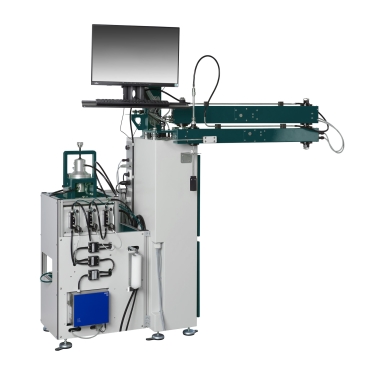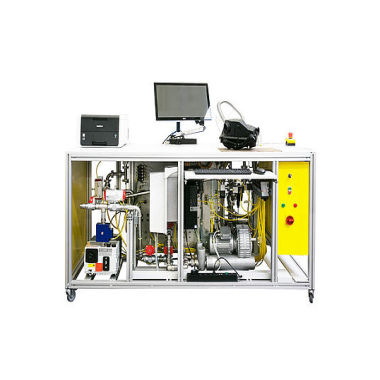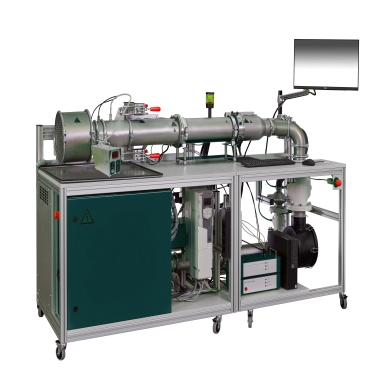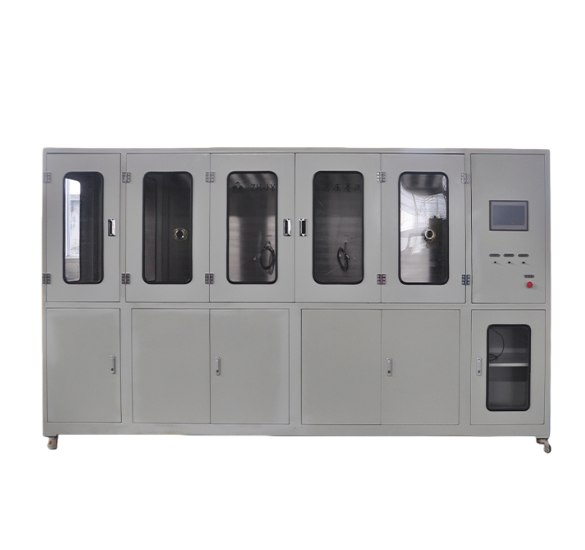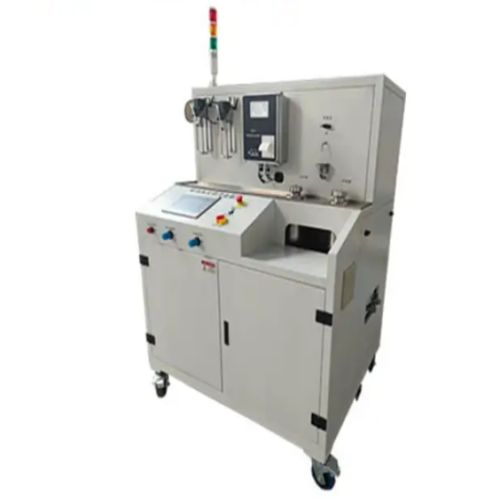
Diesel Water Ash Sulfur Mixing Tester
Category:Filter Cartridge Filtration Tester

Introduction
Analysis of water, ash, and sulfur content in diesel fuel is critical for quality control, compliance with specifications, and predicting fuel performance and emissions. Standard test methods for these parameters often require a homogeneous sample to ensure the measured value is representative of the entire batch. Free water can separate, and solid particulates (which contribute to ash and can contain sulfur) can settle.
While there isn’t a single, universally recognized instrument explicitly named a “Diesel Water Ash Sulfur Mixing Tester,” such a device would serve the function of vigorously and effectively mixing diesel samples under controlled conditions to disperse any settled water or solid contaminants. This prepared, homogeneous sample can then be accurately sampled for analysis using instruments like Karl Fischer titrators (water), furnaces (ash), and XRF or combustion analyzers (sulfur). The specific mixing method might vary, including mechanical stirring, shaking, or homogenization, potentially with temperature control to ensure the sample is in the correct state for mixing and subsequent analysis.
Applications
1. In diesel quality control, homogenization of samples provides representative, homogeneous samples for the analysis of water, ash, and sulfur content;
2. Meets the requirements for diesel sample pretreatment in standards such as ISO 16332. ISO 4406. and GB 19147;
3. Improves the accuracy and repeatability of analytical results by using equipment such as Karl Fischer titrators (for water content determination), combustion analyzers (for ash content determination), and X-ray fluorescence spectrometers (for sulfur content determination);
4. Standardized pretreatment of diesel samples in a laboratory environment assists in fuel quality compliance testing.
Standards
ISO 16332:2018:Diesel engines — Fuel filters — Method for evaluating fuel/water separation efficiency
ISO 4406:2021:Hydraulic fluid power — Fluids — Method for coding the level of contamination by solid particles
GB 19147-2016:Automobile diesel fuels
Technical Parameters
| Technical Specifications | Details |
|---|---|
| Test Oil | GB19147 diesel or calibration oil |
| Pollution Level Adjustment Range | Grade 17-25 |
| Water Content Adjustment Range | 1500-20000 ppm |
| Sulfur Content Adjustment Range | 10-2000 ppm |
| Test Particle Size Range | 10μm-100μm |
| Test Water Content Range | 0.1μg-350 mg |
| Main Fuel Tank Capacity | 100+5L |
| Dust Filling Tank Capacity | 1±0.2L |
| Dust Filling Rate | 10 mg/min-5 g/min |
| Water Filling Tank Capacity | 1±0.2L |
| Water Filling Rate | 20-400 mL/min |
| Diesel Filling Tank | 10+2L |
| Diesel Filling Flow Rate | 0.5-4 L/min |
| Sulfur Filling Tank Capacity | 1±0.2L |
| Sulfur Filling Flow Rate | 0.005-1 L/min |
| Operating Temperature | 5-40℃ |
| On-Site Humidity | 10-90%RH |
| Power Supply | AC220V/50Hz |
| Air Supply | 7-9 bar |
| Equipment Power | 3 kW |
| Dimensions | 1500×800×1600 mm (L×W×H) |
| Weight | 600 kg |
Features
Based on the likely requirements for mixing diesel samples for water, ash, and sulfur analysis:
Robust stirring or mixing mechanism suitable for diesel fuel viscosity (e.g., powerful magnetic stirrer with strong magnetic coupling, overhead stirrer with appropriate impeller, or a laboratory shaker).
Sample vessel holders or platforms capable of securing sample containers of various sizes (e.g., bottles, beakers).
Variable speed control for the mixing mechanism to adjust the mixing intensity based on sample volume and viscosity.
Accessoriess
1. Mixing chamber/container (sealed container suitable for diesel samples);
2. Mechanical stirring assembly (including stirring paddle and drive components);
3. Temperature control module (if with temperature control function);
4. Sample transfer tubing/connectors;
5. Operation control panel (including buttons and display unit);
6. Safety protection components (such as protective cover, emergency stop button);
7. Accompanying instruction manual, certificate of conformity, and other documents.
FAQ
1.What is this product?
It is a diesel sample mixing tester that prepares homogeneous samples for water, ash, and sulfur analysis.
2.What is this product used for?
You use it to evenly disperse water and solid contaminants in diesel samples, ensuring accurate and repeatable laboratory analysis.
3.How does this product work?
Mechanical stirring or homogenization disperses free water, particles, and sulfur additives under controlled conditions, producing a representative sample.
4.Why is this product important?
Accurate analysis of diesel water, ash, and sulfur content requires uniform samples. Homogenization reduces measurement errors and ensures compliance with fuel quality standards.
5.Which industries is this product suitable for?
Petroleum, fuel production, chemical laboratories, transportation, and quality control laboratories in automotive and diesel engine sectors.
If you're ready to take the next step, Leave your message below and we’ll reply soon. 20+ years of manufacturing & export experience, a partner you can trust.