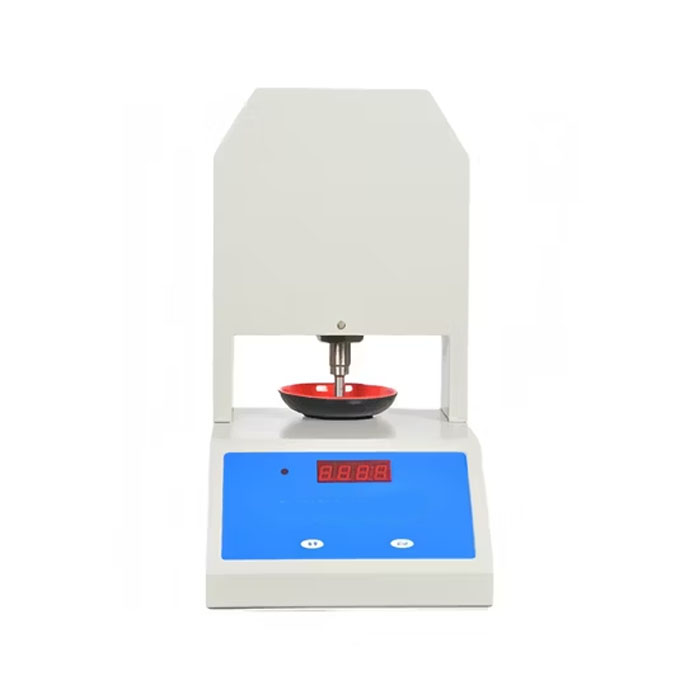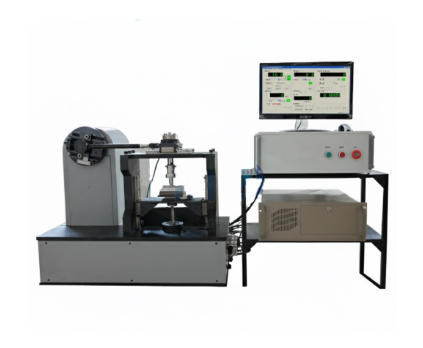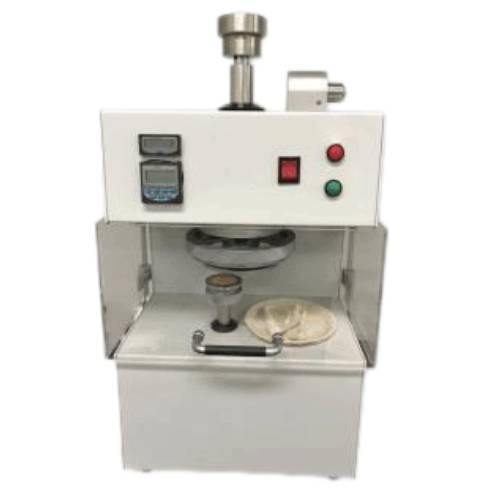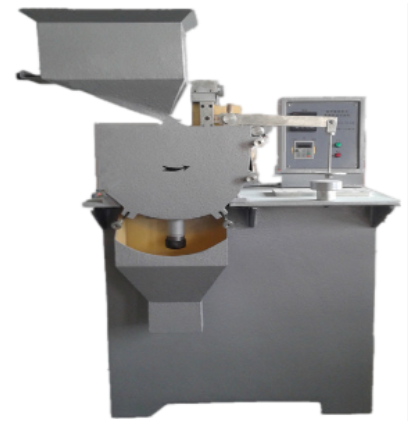
Dry Sand Rubber Wheel Wear Tester
Category:Abrasion Tester

Introduction
The dry sand rubber wheel abrasion tester is mainly used to test the abrasion resistance of materials. Its working principle is to use a clockwise rotating rubber wheel to drive abrasive (such as quartz sand) to wear the sample, thereby evaluating the abrasion resistance of the material.
Application
Dry and wet sand abrasive wear testing machine is mainly used to evaluate the wear resistance of materials in dry and wet sand abrasive environment. By simulating the wear environment of dry sand or wet sand in actual working conditions, the testing machine can quantitatively test the wear resistance of different materials. This kind of equipment has a wide range of application value in material research and development, product quality control, industrial production and other fields.
Specifically, the main uses of dry and wet sand abrasive wear testing machines include:
Material research and development; In the development process of new materials, wear-resistant parts are an important performance index. Dry and wet abrasive wear testing machines can help developers quickly and accurately evaluate the wear resistance of new materials, thereby guiding the optimal design of materials.
Industrial production: In industrial production, many parts need to have good wear resistance to ensure product stability and service life. By using dry and wet sand abrasive wear testing machines to test parts, it can help enterprises screen out materials and processes with good wear resistance, thereby improving product quality.
Quality control: Dry and wet abrasive wear testing machines are also widely used in product quality control. Through the wear resistance test of the products produced, the unqualified products can be found and treated in time to ensure that the products flowing to the market have good resistance.
Standard
ASTM G65: Standard Test Method for Measuring Abrasion Using the Dry Sand/Rubber Wheel Apparatus
JBT_7705:Test Method for Abrasive Wear with Loose Abrasive Grains – Rubber Wheel Method
Dry and wet abrasive wear testing machines usually need to follow certain standards and specifications when testing. Here are some common applicable standards:
ASTM Standards: Standards developed by the American Society for Materials and Testing (ASTM) include content related to dry and wet abrasive wear testing. For example, the ASTM G65 standard may specify specific methods and requirements for abrasive wear tests of dry-sand rubber wheels; The ASTM G105 standard may specify specific requirements for abrasion test methods for wet sand rubber and rubber wheels. These standards specify parameters and requirements such as loading methods, abrasive types, test cycles, and data recording during the test process.
B Ash standard: China’s machinery industry standard (B Ash) may also contain content related to dry and wet abrasive wear tests. For example, the JB/ 7705 standard specifies the rubber wheel method in the wear test method for loose abrasive particles, which can be used to evaluate the wear resistance of materials in dry sand environments. In addition, JB/T 9396 and other standards may specify the size of the sample, fixture design and other specific requirements.
When conducting dry and wet sand abrasive wear tests, it should be ensured that the selected standards are consistent with the test purposes and requirements, and the test methods and steps specified in the standards are strictly operated. At the same time, it is also necessary to pay attention to the calibration and maintenance of the testing machine to ensure the accuracy and reliability of the test results.
Parameters
|
Model |
Q-27 |
| Maximum load | 130 N |
| rubber tire | turn clockwise |
| Rubber wheel speed | 200 + 10 rpm |
| Rubber Wheel Diameter | 228.6 mm |
| Rubber Wheel Hardness | 60 (Shore hardness) |
| Size | 57*25.5 * 6mm |
| Dimensions (L * W * H) | 710*740*1600 (mm) |
| Weight | 420kg |
Feature
Its features include: Dry sand semi-free abrasive wear testing machine: such as the LGM-130 and MLG-130 models, conforming to ASTM G65 and JBT_7705-1995 standards, suitable for abrasion resistance testing of various metallic or non-metallic materials.
Wet sand semi-free abrasive wear testing machine: such as the LGM-225. conforming to ASTM G105 standard, suitable for wet sand abrasive wear testing.
Accessoriess
Transmission system, sample fixture, fixture adjustment device, hardness measuring device, etc.
FAQ
1. What is a Dry Sand Rubber Wheel Wear Tester?
The Dry Sand Rubber Wheel Wear Tester is a device used to evaluate the abrasion resistance of materials, coatings, or rubber products by simulating wear caused by dry sand particles under controlled conditions.
2. How does the wear test work?
A rubber wheel rotates against the test sample while dry sand is continuously fed between the wheel and the sample. The wear rate is determined by measuring mass loss, thickness reduction, or surface damage after a set number of cycles.
3. What types of materials can be tested?
It can test metals, coatings, rubber, plastics, ceramics, and composite materials used in automotive, industrial, and construction applications.
4. What parameters are measured during testing?
The machine measures weight loss, wear rate, surface roughness, and the number of cycles to failure. Some models also allow control of wheel pressure, sand feed rate, and rotation speed for precise testing.
5. Why is dry sand rubber wheel wear testing important?
Testing ensures materials can withstand abrasive conditions in real-world applications, helping manufacturers improve durability, select suitable materials, and predict product lifespan under harsh environments.
If you're ready to take the next step, Leave your message below and we’ll reply soon. 20+ years of manufacturing & export experience, a partner you can trust.