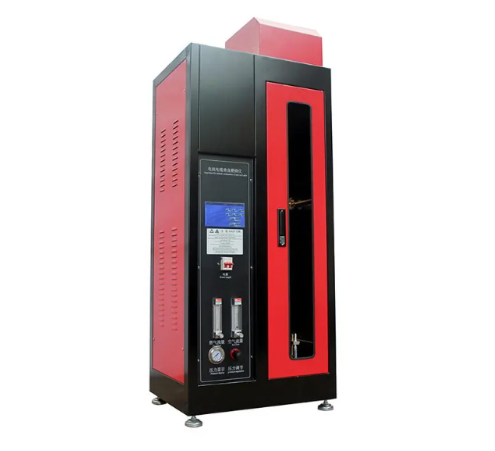
Electrical Bushing Flame Retardant Tester
Category:Flammability Tester
Introduction
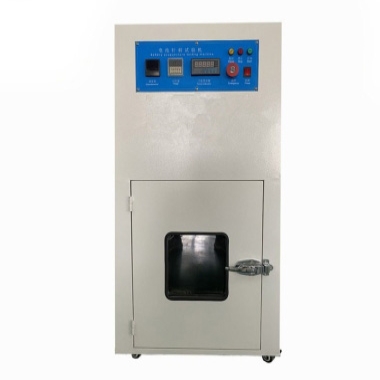
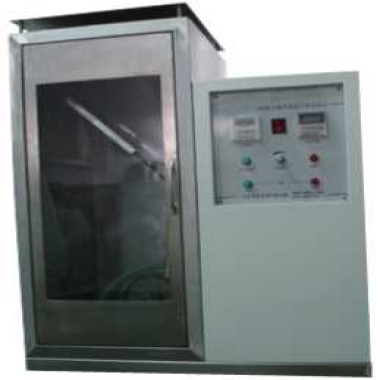
The flame retardant test instrument for electrical bushing is used to measure the flame retardant performance of PVC cold formed insulating electrical bushing and accessories for construction. The equipment conforms to the specification of 6.10.1 “Self-extinguishing test” of insulating electrical bushing for construction in JG3050-1998 standard
And due to the requirements of the standard for the performance of the electrical bushing combustion tester itself.
Application
Safety Protection in Electrical Engineering: Electrical conduits, as important protective materials in electrical engineering, have flame-retardant properties that directly relate to the safety and reliability of electrical systems.
Standard Testing: The electrical conduit flame-retardant performance tester complies with the requirements of the “Self-extinguishing Test” in Section 6.10.1 of the GB/T 13823.3 and JG3050-1998 standards for insulating electrical conduits.
Deep Learning Detection: The deep learning-based electrical conduit flame-retardant performance detection system and method accurately and efficiently determine the actual reasons affecting the flame-retardant performance of electrical conduits by analyzing temperature characteristics, smoke characteristics, and image characteristics.
Standard
GB/T 13823.3: hods for the calibration of vibration and shock pick-ups. Comparison (secondary vibration) calibration by sinusoidal excitation
JG3050-1998: Specification for electrical insulation conduits and fittings in building
Parameters:
| Description | Details |
|---|---|
| Studio size (W×H×D) | 300×1200×450mm |
| Outer box size (W×H×D) | 320×1400×600mm |
| Gas | Liquefied petroleum gas (user’s own) |
| Flame burning and extinguishing time timing | 0 – 999.9S, 0.1s (timing accuracy: 0.1S), can be continuously set, automatic record, manual pause |
| Bunsen burner tilt angle | 45°, adjustable within the 0 – 90° range |
| Standard power of burner | 1KW |
| Nozzle (Bunsen burner) inner diameter | 9mm |
| Flame height | 100mm; blue cone flame core height: 50mm |
| Working power supply | AC220V, 50Hz |
Feature
The electrical conduit flame retardancy tester uses a high-voltage igniter for automatic ignition, features a sophisticated design, and is resistant to smoke corrosion. Key components are imported, it features a digital time display, and the test procedure is automatically controlled, making it convenient and reliable to use.
Accessoriess
High-voltage igniter
Bunsen burner (including nozzle)
Gas supply line
Timer (for recording flame burning/extinguishing time)
Sample fixing clamp
Combustion chamber (with ventilation system)
Temperature sensor, etc.
Test Procedures
1. Connect the gas pipe to the gas inlet at the rear of the cabinet, and check the gas connection to prevent leaks (using a standard liquefied petroleum gas cylinder).
2. Turn on the power switch.
3. Test parameter settings: Set the burning time TA according to the test standard.
4. Press the gas button to turn on the gas supply, then increase the gas flow rate and press the ignition button to light the Bunsen burner.
5. When applying the flame to the casing, the top of the blue conical flame of the Bunsen burner should be in contact with the surface of the casing, and the distance from this contact point to the bottom of the casing should be 100 mm (adjust the gas flow rate and the air adjustment screw at the bottom of the Bunsen burner to obtain a flame with an inner flame of 50 mm and an outer flame of 100 mm). For accessory testing, the flame should be applied to the accessory.
6. Press the start button, and the Bunsen burner will automatically tilt 45° and move to the sample position.
7. After the flame application time is reached, the Bunsen burner will automatically return to the vertical position. The flame application time varies for different types of casings.
8. After the Bunsen burner returns, the afterglow time T will automatically start timing. When the flame of the sample goes out, press the timing button to stop the afterglow time T.
9. After performing 6 consecutive tests, the system will automatically display the save interface. If you have not completed 6 tests, you can press the save button to save the data.
10. After the test is completed, all components will reset, and the gas source and power supply will be turned off.
FAQ
1. What is this product?
A testing instrument for evaluating the flame-retardant performance of PVC electrical bushings and accessories.
2. What is this product used for?
To measure the self-extinguishing properties and afterglow time of electrical conduits under controlled flame conditions.
3. What is the working principle of this product?
The sample is exposed to a controlled flame, and the instrument automatically records burning and afterglow times, while adjusting flame position and tilt.
4. Why is this product important?
It ensures electrical bushings meet fire safety standards, reducing the risk of fire hazards in buildings and electrical installations.
5. What industries is this product suitable for?
Electrical engineering, construction, insulation material manufacturing, and safety testing laboratories.
If you're ready to take the next step, Leave your message below and we’ll reply soon. 20+ years of manufacturing & export experience, a partner you can trust.