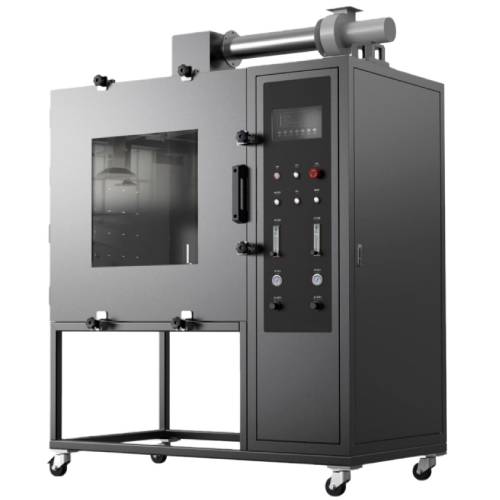
Engineering Smoke Toxicity Test Chamber
Category:Flammability Tester

Introduction
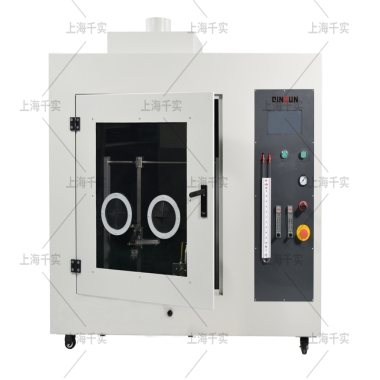
The Engineering Smoke Toxicity Test Chamber is a specialized fire testing instrument designed to evaluate the toxicity of combustion products generated by materials under controlled burning conditions. In accordance with the NES 713 standard, the chamber determines the smoke toxicity index produced after the combustion of a 100 g specimen. The system provides a controlled flame source, uniform smoke mixing, and multi-point gas sampling to support accurate assessment of toxic gases released during material combustion. It is widely used in industries with extremely high fire safety requirements, including marine engineering, rail transportation, and aerospace applications.
Application
The Engineering Smoke Toxicity Test Chamber is suitable for evaluating the combustion smoke toxicity of a wide range of materials, including but not limited to:
Marine engineering materials (interior panels, insulation materials, coatings)
Shipbuilding cables and cable sheathing materials
Rail transit interior decorative materials and flooring systems
Aerospace structural and cabin materials
Polymer composites and elastomer products
Fire-retardant materials and protective coatings
Typical test products include plastic sheets, rubber components, cable assemblies, composite laminates, and coated metal or non-metal substrates.
Standards
The equipment is designed and manufactured in compliance with the following standard:
(1) NES 713 – Determination of the Toxicity Index of the Products of Combustion from Small Specimens of Materials
Parameters
| Parameter | Specification |
|---|---|
| Flame height | 100–125 mm (blue flame) |
| Maximum hot spot temperature | 1150 ± 25 °C |
| Number of sampling ports | 12 |
| Exhaust capacity | ≥ 50 L/s |
| Gas supply | Compressed air, methane or natural gas |
| Power supply | AC 220 V, 50/60 Hz, 5 A |
| Equipment weight | Approx. 150 kg |
| Overall dimensions | 1.185 (W) × 700 (D) × 2.100 (H) mm |
Features
Rigid steel chamber with reinforced frame construction to ensure long-term structural stability
Large observation window with dark-coated inner walls to clearly observe the combustion behavior of specimens
Inner chamber walls treated with PTFE coating to reduce chemical corrosion caused by combustion gases
Built-in stirring fan to ensure uniform distribution of smoke and combustion gases inside the chamber
Top-mounted exhaust fan with stainless steel exhaust duct, automatically activated after test completion to discharge residual smoke
Integrated industrial design with panel-mounted structure, providing intuitive operation and ergonomic human–machine interface
High-voltage pulse automatic ignition system offering stable ignition performance and enhanced operational safety
Imported K-type thermocouples for accurate and reliable temperature measurement
Adjustable stainless steel specimen mesh tray allowing precise positioning relative to the flame
Imported precision rotameters for accurate control of gas and air flow rates
Branded pressure gauges, pressure regulators, and solenoid valves to control gas pressure and on/off status, ensuring safe operation
PLC and touchscreen control system enabling automatic control, detection, calculation, and data storage
Automatic waste exhaust mode to remove smoke upon test completion according to preset program logic
Manual and automatic test modes selectable to suit different testing requirements
Accessories
(1) Stainless steel adjustable specimen mesh tray
(2) K-type thermocouples
(3) Precision rotameters for gas and air control
(4) Pressure gauge and pressure regulating valve
(5) Stainless steel exhaust duct
(6) PLC controller with touchscreen interface
Maintenance Information
Regularly inspect gas pipelines, solenoid valves, and pressure regulators to ensure leak-free operation. Clean the specimen tray and inner chamber surfaces after each test to prevent residue accumulation. Periodically check the condition of the PTFE inner wall coating and replace or repair it if damage is observed. Verify calibration status of thermocouples and rotameters according to laboratory quality requirements. Ensure the exhaust system and stirring fan remain unobstructed and operate smoothly.
FAQ
What is the primary purpose of the NES 713 Engineering Smoke Toxicity Test Chamber?
The primary purpose of this chamber is to determine the smoke toxicity index generated by materials during combustion, as specified in the NES 713 standard. By burning a 100 g specimen under controlled conditions and analyzing the toxic gases produced, the equipment provides a quantitative assessment of potential hazards posed by combustion products. This information is essential for evaluating material suitability in environments where fire safety and human exposure risks are critical.
Why is uniform smoke mixing important during the test?
Uniform smoke mixing ensures that the concentration of combustion gases inside the chamber is consistent at all sampling points. The built-in stirring fan continuously circulates smoke throughout the chamber, reducing concentration gradients that could otherwise lead to inaccurate or non-representative gas sampling results. This uniformity is essential for reliable calculation of the smoke toxicity index.
Which gases can be analyzed using the sampling system?
The chamber supports sampling of common toxic combustion gases such as carbon monoxide (CO), hydrogen cyanide (HCN), and hydrogen chloride (HCl) using detector tubes or online analyzers connected to the 12 sampling ports.
Can the test be operated in both manual and automatic modes?
Yes, the system offers both manual and automatic test modes, allowing flexible operation depending on laboratory procedures and operator preferences.
If you're ready to take the next step, Leave your message below and we’ll reply soon. 20+ years of manufacturing & export experience, a partner you can trust.