EV Battery Vibration and Crash Test Dummy
Category:Manikin System
Introduction
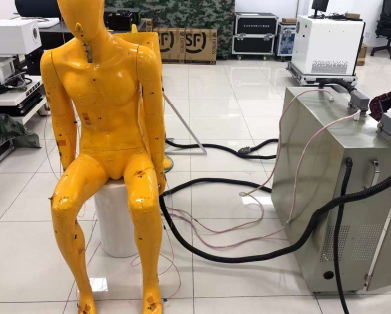
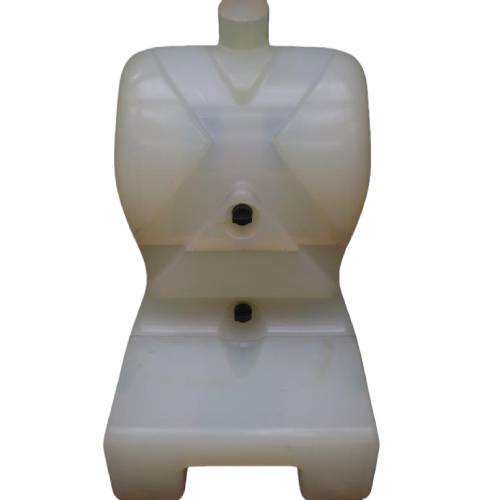
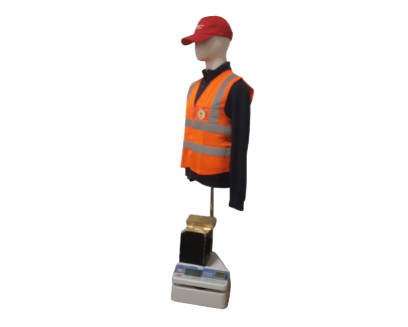
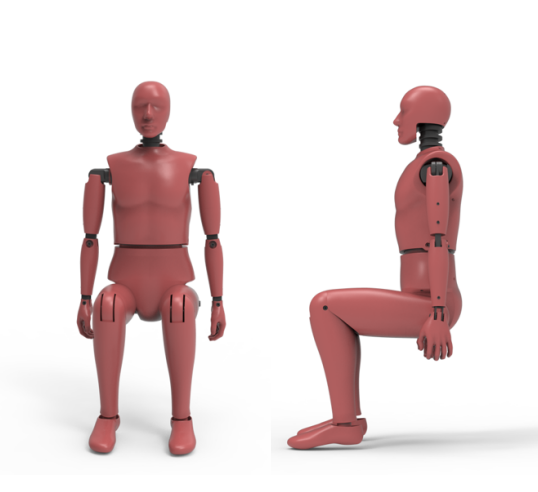
The EV Battery Vibration and Crash Test Dummy is a seated anthropomorphic test device designed to simulate the mass distribution and joint motion characteristics of a 50th percentile adult male. It is specifically developed for evaluating the safety of electric vehicle (EV) battery modules and full packs under vibration, collision, and gravitational acceleration conditions. The dummy features simplified skeletal structures while maintaining critical joint locking and damping functions, preventing component disassembly or scattering during testing.
Application
This dummy is suitable for the following applications:
Vibration reliability testing of EV battery packs and modules
Safety assessment of batteries during collisions, drops, rollovers, or impact events
Battery protection testing inside vehicle cabins and occupant safety simulation
Seated human body dynamics simulation in laboratory experiments
R&D and life-cycle evaluation of EV and energy storage battery systems
Testing on battery vibration tables, crash platforms, and extreme acceleration setups
High-level safety labs for evaluating occupant protection devices (seat belts, airbags) in conjunction with battery seating simulations
Standards
The dummy complies with and supports testing according to the following standards:
GB/T 31467.3-2015 – Safety requirements for EV traction batteries
GB/T 31484-2015 – Collision safety requirements for EV traction batteries
GB/T 18384.1-2017 – Crash test dummy requirements for passenger vehicles
ISO 17025 – Laboratory quality management system standards (data collection and calibration)
FMVSS 208 – U.S. Federal Motor Vehicle Safety Standards, crash and occupant protection
UN ECE R100 – EV traction battery crash safety regulation
ASTM F1566 – Anthropomorphic test device testing methods
Parameters
| Parameter | Technical Specification | Notes |
|---|---|---|
| Dummy Type | Seated test dummy | Seated only, not standing |
| Sitting Height | 883.9 ± 5.1 mm | Compliant with Western seated anthropometry |
| Total Weight | 77.65 ± 1.18 kg (customizable to 100 kg ±1.18 kg) | Mass adjustable per bone segment to match 50th percentile adult male |
| Head | Aluminum skull | Includes lifting ring |
| Neck | Optional rubber joint | Supports vibration and impact damping |
| Upper / Lower Torso | Alloy skeleton | Joints with locking and damping mechanisms |
| Limbs | Thighs, lower legs, upper arms, lower arms, hands, feet | Aluminum alloy / steel skeleton |
| Joint Structures | Neck, shoulder, clavicle, rib, elbow, knee, ankle | Anti-loosening and anti-scattering design |
| Sensor Options | Optional | Accelerometers, six-axis force sensors, displacement sensors |
Accessories
| Accessory / Consumable | Specification / Description | Function / Purpose |
|---|---|---|
| Accelerometers | Head 3, Chest 3, Pelvis 3 | Measures acceleration responses |
| Six-axis Force Sensors | Upper neck 1, Lower neck 1, Lumbar 1 | Measures forces and moments |
| Displacement Sensor | Chest 1 | Measures chest displacement |
| Data Acquisition System | Customizable hardware | Real-time recording of sensor data |
| Mounting Bracket | Dedicated support | Fixes dummy to vibration or crash platform |
| Connection Cables | Standard or customized | Transmit sensor signals |
Features
Seated-specific design compatible with EV battery cabins and test platforms
Accurate joint locking and damping structures ensure stability during vibration and impact
Aluminum skull and alloy skeleton provide durability and reduce handling burden
Customizable total weight up to 100 kg for realistic adult mass distribution
Modular structure with optional sensors for dynamic data acquisition
Integrated lifting rings facilitate safe experimental handling
Maintenance Information
Inspect joint locking and damping structures before each test to ensure functionality.
Periodically check aluminum and alloy components for wear or deformation.
Verify sensor calibration and cable integrity before use.
Clean the dummy surface with non-corrosive solutions; avoid water ingress to joints and sensors.
Store dummy in a stable environment to avoid extreme temperature or humidity.
FAQ
1. What is this product?
The EV Battery Vibration and Crash Test Dummy is a seated anthropomorphic test device simulating a 50th percentile adult male to evaluate battery safety and occupant cabin protection under vibration, crash, and gravitational acceleration.
2. What is this product used for?
It is used for battery vibration reliability testing, crash safety evaluation, cabin protection studies, R&D, and life-cycle testing of EV and energy storage batteries.
3. Why is this product important?
It provides realistic human mass distribution and joint response, preventing component scattering and ensuring accurate dynamic and crash testing data.
4. What industries is this product suitable for?
Electric vehicle and battery manufacturers
Automotive testing laboratories
Research institutions and safety evaluation labs
5. What types of this product are available?
Seated dummy for 50th percentile adult male (77.65 kg standard, customizable to 100 kg)
Optional sensors: accelerometers, six-axis force sensors, displacement sensors
Modular structure with adjustable weight per bone segment and customizable damping