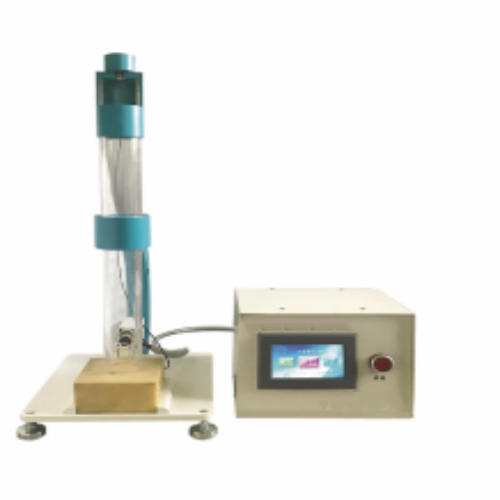
Falling Ball Rebound Instrument
Category:Universal Strength Tester
Factory Direct
Stable Performance
Intl. Standards
Tech Support
Fast Delivery
Global Shipping

Introduction
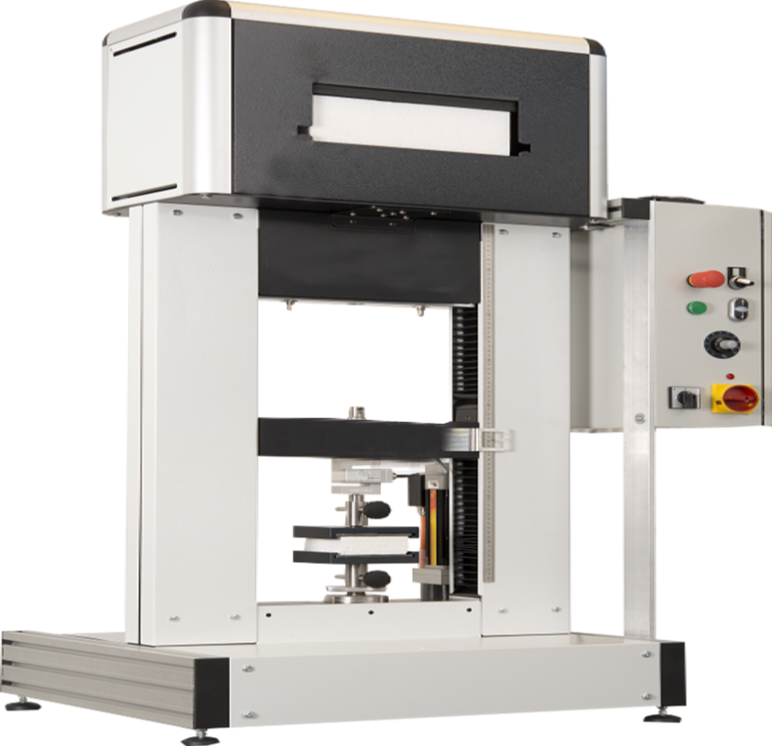
The falling ball rebound instrument is designed and manufactured according to GB/T6670-2008 or ISO8307 or ASMD3574. It is suitable for determining the falling ball rebound property of soft polyurethane foam. The instrument calculates the maximum rebound height of the steel ball and the percentage of the falling height of the steel ball by the steel ball with a given diameter and quality falling freely on the foam sample at a specified height, and the rebound rate represents the resilience of the foam.
Standards
Complies with international testing standards such as ASTM D2632. ISO 6272. and relevant national standards.
Meets calibration and measurement accuracy requirements for material impact testing.
Follows safety and quality guidelines for laboratory instruments.
Features
Computer-controlled operation for precise and repeatable testing.
High-resolution sensors for accurate rebound measurement.
Adjustable ball drop height to test different material types.
Digital data acquisition and storage with analysis software.
Compact, durable design with easy-to-use interface and safety protections.
Performance parameters
– Drop ball rebound accuracy: relative accuracy is less than 1.5%
– Steel ball falling height (mm) : 460±0.5%(GB/T6670-97)
-500 ±0.5%(ASTMD3574 and ISO8307)
– Plastic pipe diameter: 40±4mm
– Ball diameter: Φ=16±0.5
– Steel ball mass: 16.7±1.5g
– Measuring range: 10%——100%
– Reading mode: color crystal display
– Sample size: 100×100×50mm
Accessories
(1)Optional tools or attachments that support instrument operation.
(2)Examples: different types of balls, sample holders, protective shields, calibration weights, and software modules.
(3)Enhance measurement accuracy, adaptability, and safety during testing.
FAQ
1. What is a Falling Ball Rebound Instrument used for?
It measures the impact resilience and rebound characteristics of materials by dropping a ball onto the surface and recording the rebound.
2. How does the instrument work?
A ball is released from a fixed height onto the test sample, and sensors record the rebound height or energy to calculate material properties.
3. What types of materials can be tested?
Commonly used for plastics, rubbers, coatings, and other materials requiring assessment of elasticity or surface hardness.
4. How is test data recorded and analyzed?
Data is captured digitally, displayed on a screen, and can be stored or exported for detailed analysis using the instrument software.
5. What maintenance is required for the instrument?
Regular cleaning, inspection of moving parts, calibration checks, software updates, and careful handling of balls and sensors are recommended to ensure accurate results.
If you're ready to take the next step, Leave your message below and we'll reply soon. 20+ years of manufacturing & export experience, a partner you can trust.