Femoral Stem Neck Prostheses Fatigue Testing Machine
Category:Other
Factory Direct
Stable Performance
Intl. Standards
Tech Support
Fast Delivery
Global Shipping

Introduction
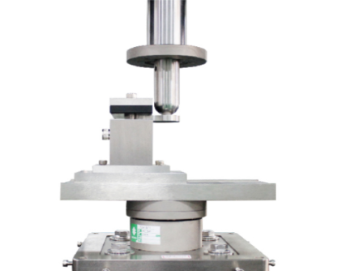
The Femoral Stem Neck Prostheses Fatigue Testing Machine is a specialized mechanical testing device designed to simulate long-term cyclic loading on femoral stem and neck components of hip prostheses. It evaluates the durability, structural integrity, and fatigue life of implant materials under conditions that mimic human gait and physiological stresses. The machine helps manufacturers and researchers ensure the reliability and safety of hip implants before clinical use.
Standard
(1)YY/T 0809.6 (China): Specifies neck fatigue testing for femoral stems in partial/total hip arthroplasty.
(2)ISO 7206-6 (International): Defines protocols for evaluating the fatigue strength of femoral head-neck junctions.
(3)ASTM F2023: Additional compliance for dynamic loading of ceramic femoral heads.
(4)Adaptive Protocols: Customizable for emerging standards in biomaterial fatigue testing.
Technical Parameters
| Parameter | Specification |
|---|---|
| Max. Dynamic Force | ±5.340 N (11.940 N peak optional) |
| Frequency Range | 1–30 Hz (0.1 Hz increments) |
| Load Ratio (R) | 0.1–10 (adjustable) |
| Axial Displacement | ±10 mm (0.1 μm resolution) |
| Torque Capacity | ±50 Nm (0.01 Nm resolution) |
| Temperature Range | -20°C to +50°C (environmental chamber) |
| Data Sampling Rate | 50 kHz (synchronized across 12 channels) |
| Power Requirements | 220V/110V ±10%, 50/60Hz, 1.500W |
| Dimensions (W×D×H) | 1.200 × 800 × 1.900 mm |
| Weight | 550 kg (including thermal chamber) |
| Noise Level | <70 dB (A-weighted) |
Advantages
(1)Electromagnetic Precision: M-Series actuator delivers ±0.1% force accuracy with sub-micron displacement control.
(2)10 Million Cycle Endurance: Proven capability to complete ISO 7206-6’s 10⁷-cycle fatigue test without drift.
(3)R=0.1 Load Control: Advanced servo-hydraulic system maintains specified stress ratios throughout testing.
(4)Real-Time Failure Detection: AI-driven algorithm identifies crack initiation at sub-millisecond intervals.
(5)Ergonomic Workflow: 15.6” touchscreen with multilingual interface (English/Chinese/German) and pre-loaded SOPs.
(6)Modular Test Chambers: Quick-swap environmental pods for simulated physiological testing (-20°C to +50°C).
Accessories
(1)Femoral Neck Test Fixture Kit:
Self-centering collet system (12/14 mm taper compatibility)
Laser-aligned loading anvils with wear-resistant coating
(2)Thermal Environmental Chamber:
15L capacity with rapid cooling/heating (10°C/min)
Corrosion-resistant 316L stainless steel interior
(3)TestMaster Elite Software:
Automated fatigue life prediction (S-N/ε-N curve generation)
21 CFR Part 11-compliant audit trail with blockchain timestamping
Remote monitoring via iOS/Android app
(4)Operator Kit:
Calibrated torque wrench set (0.5–25 Nm)
Specimen alignment gauges (ISO 7206-6 compliant)
(5)Calibration Bundle:
NIST-traceable force calibration weights
Temperature verification probe
(6)Safety Kit:
Laser safety curtains
Acoustic enclosure for noise reduction
Maintenance Information
(1)Routine Inspection: Check clamps, fixtures, load cells, and sensors for wear or damage before each testing session.
(2)Cleaning: Keep the machine, fixtures, and sensors free of debris, grease, or corrosion to ensure accurate measurements.
(3)Calibration: Periodically calibrate load cells, displacement sensors, and control systems to maintain testing accuracy.
(4)Lubrication and Safety Checks: Lubricate moving parts as recommended and verify emergency stop and safety interlocks function properly.
FAQ
1. What is the Femoral Stem Neck Prostheses Fatigue Testing Machine used for?
It is used to simulate long-term cyclic loading on hip prostheses to evaluate their fatigue life, structural integrity, and durability.
2. What types of tests can it perform?
The machine can apply axial, bending, and torsional cyclic loads to mimic physiological stresses experienced during walking, running, or daily activities.
3. How are test specimens prepared?
Femoral stem-neck prostheses are securely mounted in fixtures according to standard orientations to ensure consistent alignment and realistic load application.
4. What data does the machine collect?
It records cycles to failure, deformation, fracture points, load, and displacement, providing critical information on implant performance.
5. How should the machine be maintained?
Regular maintenance includes inspecting fixtures and sensors, cleaning moving parts, calibrating load cells and displacement sensors, and checking safety interlocks.
If you're ready to take the next step, Leave your message below and we'll reply soon. 20+ years of manufacturing & export experience, a partner you can trust.