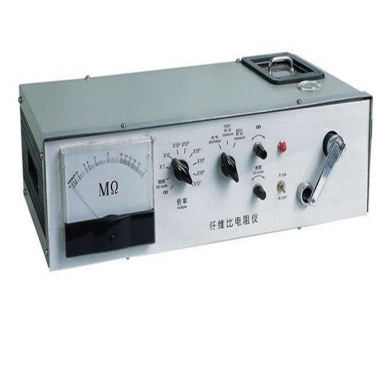
Fiber Blend Ratio Tester
Category:Fabric & Textile Tester
Factory Direct
Stable Performance
Intl. Standards
Tech Support
Fast Delivery
Global Shipping

Introduction
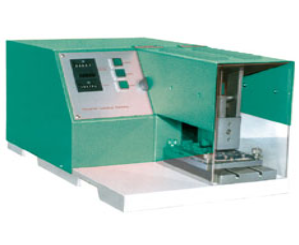
The Fiber Blend Ratio Tester is designed to measure the electrical resistance of a compacted fiber sample and convert it into the specific resistance of the fiber according to its filling density. It provides accurate, repeatable measurements for fiber quality evaluation, research, and production control, suitable for textile, nonwoven, and fiber material laboratories.
Application
(1) Testing specific resistance of synthetic staple fibers such as polyester, rayon, acrylic, and nylon in textile manufacturing.
(2) Quality control and R&D of fiber blends in nonwoven fabrics, yarns, and felts.
(3) Evaluation of cotton, wool, and blended natural fibers for electrical properties.
(4) Measurement of resistance in technical textiles used in automotive, aerospace, and medical applications.
(5) Assessment of fiber-based materials for smart textiles, conductive fibers, and anti-static fabrics.
(6) Comparative analysis of recycled fibers or fiber mixtures for product development.
Standards
(1) GB/T 14342-1993: Synthetic short fiber specific resistance test method.
(2) GB/T 14342-2015: Updated national standard for specific resistance measurement of man-made staple fibers.
(3) ISO 2060: Determination of the fineness of fibers by electrical resistivity (analogous methodology).
(4) ASTM D4496: Standard test method for electrical resistance of textile fibers.
(5) EN 1149-1: Protective clothing—Electrostatic properties—Test method for surface resistivity of fibers and textiles.
(6) JIS L 1020: Test method for electrical resistance of textile fibers.
Parameters
| Parameter | Specification |
|---|---|
| Fiber specific resistance range | 10^6Ω – 10^13Ω |
| Test sample weight | 15 g |
| Measurement voltage | 50V, 100V, deviation <5% |
| Working temperature | 20℃ ±2℃ |
| Working humidity | 65% ±10% RH |
| Zero drift | <4% over 1–8 hours |
| Basic measurement error | ≤±20% |
| Power supply | AC 220V |
| Overall size | 450 × 265 × 133 mm (L×W×H) |
Accessories
(1) Main unit
(2) Fiber compaction chamber
(3) Sample holder
(4) Power cable
(5) User manual
Maintenance Information
(1) Keep the compaction chamber clean to avoid residue affecting measurements.
(2) Check electrical connections regularly and ensure stable voltage supply.
(3) Calibrate periodically using standard resistors.
(4) Avoid exposure to moisture, dust, or corrosive substances.
(5) Store the instrument in a dry, controlled laboratory environment.
(6) Monitor zero drift periodically to maintain measurement reliability.
FAQ
1. What is the primary purpose of this tester?
It measures the proportion of different fiber types in a blended textile to determine the precise fiber composition.
2. Which materials can be tested using this device?
The tester is suitable for blended fabrics, yarns, and textile materials containing cotton, polyester, wool, nylon, or other natural and synthetic fibers.
3. How does the tester operate?
It separates or identifies fibers in a sample using chemical, optical, or mechanical methods and calculates the percentage of each fiber type present.
4. Which standards does this tester comply with?
It supports international textile testing standards, including ISO 1833. GB/T 2910. and ASTM D629.
5. Who typically uses this equipment?
Textile manufacturers, quality control laboratories, and R&D teams use it to verify fiber composition, ensure blend accuracy, and maintain consistent product quality.
If you're ready to take the next step, Leave your message below and we'll reply soon. 20+ years of manufacturing & export experience, a partner you can trust.