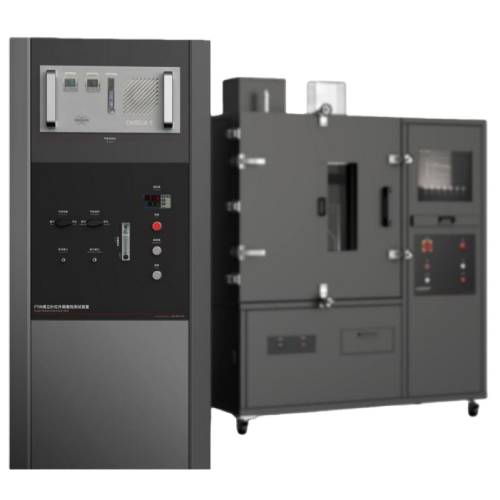
FTIR Fourier Transform Infrared Smoke Toxicity Test System
Category:Flammability Tester

Introduction
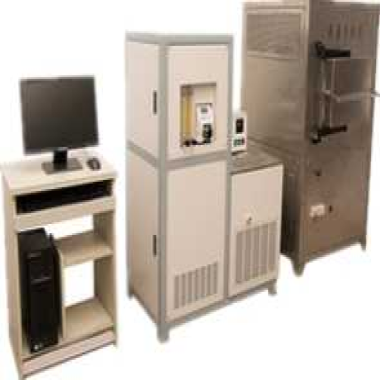
The FTIR Fourier Transform Infrared Smoke Toxicity Test System is an integrated gas analysis solution designed for real-time and quantitative measurement of toxic gas components in smoke. The system is equipped with a multi-pass gas cell featuring a 5-meter optical path and is fully integrated into a 19-inch standard industrial chassis. Based on Fourier Transform Infrared (FTIR) spectroscopy, the system enables stable, durable, and long-term operation for automatic gas monitoring and analysis. With high-reliability core components such as the interferometer, infrared light source, and diode laser, the system significantly enhances operational stability while reducing overall maintenance and operating costs, making it suitable for smoke toxicity testing and industrial gas analysis applications.
Application
The FTIR smoke toxicity test system is suitable for a wide range of gas analysis and fire testing applications, including:
Smoke toxicity index testing when combined with NBS smoke density test chambers
Toxic gas analysis in fire effluent and smoke research
Gas composition analysis for rail transit material fire performance evaluation
Performance testing of lithium-ion batteries when integrated with battery test systems
Continuous monitoring and quantitative analysis of industrial process gases
Scientific research involving multi-component gas detection and analysis
Standards
The system supports smoke toxicity testing and gas analysis in accordance with the following international and industry standards:
(1) DIN 5510-2 – Fire Behaviour and Smoke Toxicity of Materials Used in Railway Vehicles
(2) ISO 19702 – Guidelines for Sampling and Analysis of Toxic Gases and Vapours in Fire Effluents Using Fourier Transform Infrared (FTIR) Spectroscopy
(3) ISO 5659-2 – Plastics — Smoke Generation — Part 2: Determination of Optical Density by a Single-Chamber Test
(4) EN 45545-2 – Railway Applications — Fire Protection on Railway Vehicles — Requirements for Fire Behaviour of Materials and Components
Parameters
| Item | Specification |
|---|---|
| Quantifiable Gas Species | More than 300 compounds |
| Spectral Range | 4500–800 cm⁻¹ |
| Spectral Resolution | Better than 1 cm⁻¹ |
| Gas Analysis System | Multi-pass gas cell with 5 m optical path |
| Working Pressure | 0–15 bar |
| Maximum Working Temperature | Up to 191 °C |
| Dedicated Filter | Filters dust particles ≥ 2 μm |
| System Integration | 19-inch standard industrial chassis |
Features
Wide application flexibility, enabling gas measurements under different pressure and temperature conditions through appropriate accessories.
Optimized high-throughput optical design of the gas cell allows quantitative analysis of mixed gases even at concentrations as low as the ppb level.
No gas calibration is required; the system software automatically retrieves target gas concentrations using nonlinear fitting algorithms.
Effects caused by interfering gases and temperature variations are automatically compensated, ensuring accurate real-time qualitative and quantitative results.
Optical system employs a thermoelectrically cooled detector, CenterGlow™ infrared light source for stable high emission, and a RockSolid interferometer to ensure permanent optical alignment.
Equipped with dedicated sampling probes for gas extraction from pipelines or sealed chambers.
Independent and complete gas analysis software package with an intuitive graphical user interface.
Enables fast, continuous, and fully automated gas identification and quantification without requiring specialized user expertise.
Accessories
(1) Multi-pass gas cell with 5 m optical path
(2) Dedicated gas sampling probe
(3) Dust filtration unit (≥ 2 μm)
(4) Integrated interferometer module
(5) Infrared light source and detector assembly
(6) Industrial control and analysis software package
(7) 19-inch industrial chassis and mounting components
Maintenance Information
Routine inspection of the gas sampling probe, filtration unit, and gas cell is recommended to ensure stable sampling and optical performance. Dust filters should be replaced periodically based on operating conditions. Optical components such as the interferometer and infrared source are designed for long-term stability and require minimal adjustment. Regular software updates and data backups are advised to maintain reliable system operation and data integrity.
FAQ
1. What types of gases can be measured by this FTIR system?
The system is capable of quantitatively analyzing more than 300 different gas compounds. Using Fourier Transform Infrared spectroscopy and a long-path multi-pass gas cell, it can identify and measure a wide range of toxic and non-toxic gas components commonly found in fire smoke and industrial gas environments. This capability allows comprehensive gas composition analysis without the need for individual gas sensors or manual recalibration.
2. Is gas calibration required before measurements?
No gas calibration is required. The FTIR system uses advanced nonlinear fitting algorithms within its analysis software to automatically retrieve gas concentrations from measured infrared spectra. This approach eliminates the need for manual calibration gases and significantly simplifies operation. The system also compensates for temperature changes and interference from other gases, ensuring accurate and stable quantitative results during continuous monitoring.
3. Can the system be combined with other fire testing equipment?
Yes. The FTIR system can be combined with an NBS smoke density test chamber to perform smoke toxicity index testing. It can also be integrated with lithium-ion battery performance testing systems for gas analysis during battery testing.
4. What is the role of the multi-pass gas cell?
The multi-pass gas cell provides an effective optical path length of 5 meters, which significantly enhances detection sensitivity. This design allows accurate quantitative analysis even when gas concentrations are very low.
If you're ready to take the next step, Leave your message below and we’ll reply soon. 20+ years of manufacturing & export experience, a partner you can trust.