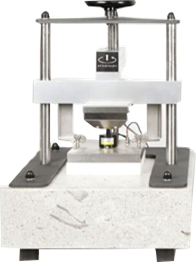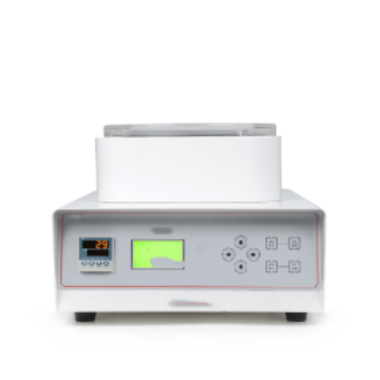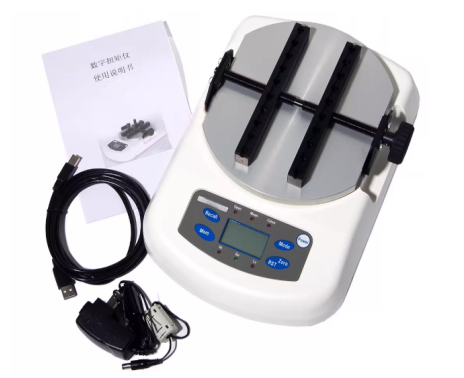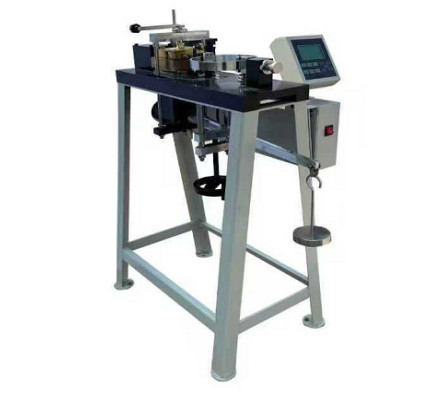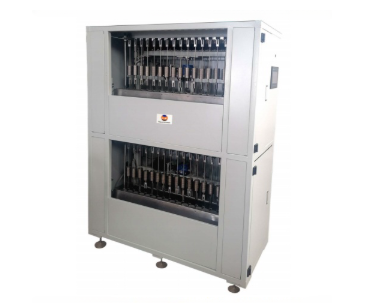
Geomembrane Environmental Stress Cracking Resistance Tester
Category:Material Strength Tester
Factory Direct
Stable Performance
Intl. Standards
Tech Support
Fast Delivery
Global Shipping

Introduction
In the field of materials science and engineering, environmental stress cracking testing machines are important testing equipment used to evaluate the durability of materials under specific environmental conditions.
Application
The stress cracking strength of polyolefin geomembrane was measured and evaluated by notch constant load tensile test. During the test, the dumbbell sample with notch prepared in advance is placed in the thermostatic surfactant under constant load tension, and the fracture time of the sample is measured and recorded. A series of test results under different stress levels can establish a relationship between the stress level and the fracture time on the logarithmic axis.
Standard
GB/T 17643- Appendix D-2011: Appendix D (Normative) of GB/T 17643-2011 – [Specific Test Method or Requirement]
ASTM D5397-1999: Standard Test Method for Evaluation of Stress Crack Resistance of Polyolefin Geomembranes Using Notched Constant Tensile Load Test
CJ/T 234- Appendix C-2006: Appendix C (Normative) of CJ/T 234-2006 – [Specific Test Method or Requirement]
Parameters
| Description | Details |
|---|---|
| Maximum tensile stress | 20MPa |
| Number of stations | 30 (can be customized) |
| Water bath temperature range | RT – 90°C |
| Temperature control accuracy | ±1°C |
| Switch sensitivity | 200g |
| Timing accuracy | 1s |
| Sample thickness | 0.75 – 3mm |
| Notch depth | 20% of the nominal thickness of the sample (6 – specified as an example value, if relevant) |
| Power supply | AC 380V 50HZ |
| Overall dimensions | 1420x640x1900mm |
| Weight | 380kg |
Accessoriess
1. Main unit: 1 set
2. Sampling mold: 1 piece
3. Cutting tool: 1 piece
4. Utility knife blades: 1 box
5. Hole punch: 1 piece
6. Eyelet punch set: 1 set
7. Eyelet rings: 1000 pieces
8. Counterweights: Several
9. Standard sample pieces: 30 pieces
10. Product packing list: 1 copy
11. Product manual: 1 copy
12. Product certificate of conformity: 1 copy
FAQ
1. What is a Geomembrane Environmental Stress Cracking Resistance Tester?
The Geomembrane Environmental Stress Cracking (ESC) Resistance Tester is a device designed to evaluate the susceptibility of geomembranes to environmental stress cracking, which occurs under long-term exposure to mechanical stress and environmental conditions.
2. How does the ESC test work?
The tester applies a constant tensile or bending stress to a geomembrane sample while exposing it to specific environmental conditions such as temperature, humidity, or chemical solutions. The time until cracks develop is recorded to assess the material’s resistance.
3. What types of geomembranes can be tested?
It is suitable for polymer-based geomembranes, including HDPE, LLDPE, PVC, and other synthetic liners used in landfills, ponds, reservoirs, and environmental protection applications.
4. What parameters are measured during testing?
The tester measures time to failure (crack initiation), crack propagation rate, elongation at failure, and environmental stress tolerance. Some models allow data logging for detailed analysis.
5. Why is environmental stress cracking resistance testing important?
Testing ensures geomembranes maintain structural integrity under long-term stress and environmental exposure. It helps manufacturers improve material durability, ensures regulatory compliance, and prevents leaks or failures in critical containment systems.
If you're ready to take the next step, Leave your message below and we'll reply soon. 20+ years of manufacturing & export experience, a partner you can trust.