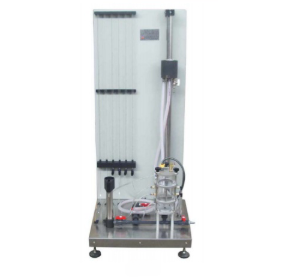
Geosynthetic Clogging Tester
Category:Material Strength Tester
Factory Direct
Stable Performance
Intl. Standards
Tech Support
Fast Delivery
Global Shipping

Introduction
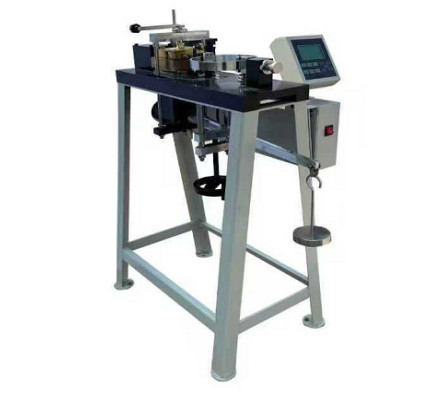
The geosynthetic material clogging test apparatus is a testing instrument used for testing geosynthetic filter layers. It is used to determine the permeability coefficient and permeability ratio of the soil-geotextile system and its interface under specific water flow conditions, as well as to determine the silt content of the geotextile, in order to assess whether the geosynthetic material, when used as a filter layer for a particular type of soil, will experience unacceptable clogging.
Application
The method of gradient ratio is used to measure the permeability coefficient and permeability ratio of soil and geotextile system and its interface under no-pressure conditions, and the mud content of geotextile is measured to determine whether the geosynthetic material is used as a filter layer of some soil, and whether the blockage is not allowed.
Standard
ASTM D5101-2006: Standard Test Method for Measuring the Soil-Geotextile System Clogging Potential by the Gradient Ratio
JTG E50 T1145-2006: Test Method for Clogging of Geosynthetics – Gradient Ratio Method (as part of JTG E50-2006)
SL 235-2012: Specification for Test and Measurement of Geosynthetics
Parameters
- Instrument type floor type
- The inner diameter of the test cylinder is 100mm
- The sample height is 100mm
- Head difference adjustment range 0——1050mm
- Head difference accuracy ±1mm
- Support net aperture 6mm
- Overall dimensions 450x400x980mm(LxWxH)
- Weight 75kg
Features
Suitable for all kinds of soil and geotextile;
Floor type design, stable fuselage structure, not easy to deformation:
Plexiglass test chamber can visually observe the silting process of geotextiles:
The seal of the specimen holding device in the test cylinder is good to ensure the feasibility of the test.
The height of the test cylinder is reasonable, and a certain space is reserved above the soil sample to make the water flow uniform and stable.
Manual rotary hand wheel drive, water level regulation, efficient and smooth:
6 pressure gauges for easy pressure observation and high measurement accuracy:
Easy to install, easy to operate.
Accessoriess
- Drain pipe.
- Water inlet balance tank.
- Water supply pipe.
- Time-controlled smart meter.
FAQ
1. What is a Geosynthetic Clogging Tester?
The Geosynthetic Clogging Tester is a device used to evaluate the susceptibility of geosynthetics, such as geotextiles and geomembranes, to clogging by fine particles or sediments. It helps predict filtration performance and long-term efficiency.
2. How does the clogging test work?
The tester passes a suspension of soil, silt, or fine particles through the geosynthetic sample under controlled flow and pressure. The reduction in permeability or flow rate is measured over time to assess clogging behavior.
3. What types of geosynthetics can be tested?
It can test woven, nonwoven, and knitted geotextiles, drainage composites, and other geosynthetic materials used in civil engineering, drainage systems, erosion control, and landfill liners.
4. What parameters are measured during testing?
The tester measures changes in flow rate, hydraulic conductivity, and permeability before and after exposure to particles. Some models also track time to clogging and sediment retention efficiency.
5. Why is clogging testing important for geosynthetics?
Testing ensures geosynthetics maintain filtration and drainage performance over time, preventing system failure due to sediment accumulation. It helps engineers select suitable materials for sustainable, long-lasting infrastructure.
If you're ready to take the next step, Leave your message below and we'll reply soon. 20+ years of manufacturing & export experience, a partner you can trust.