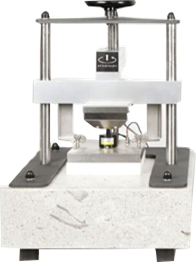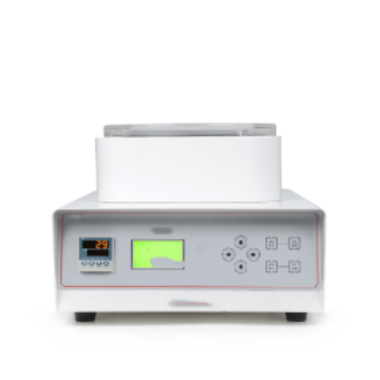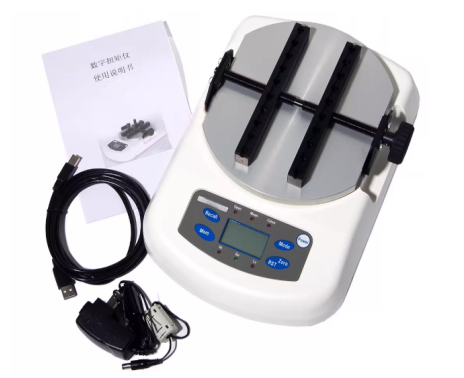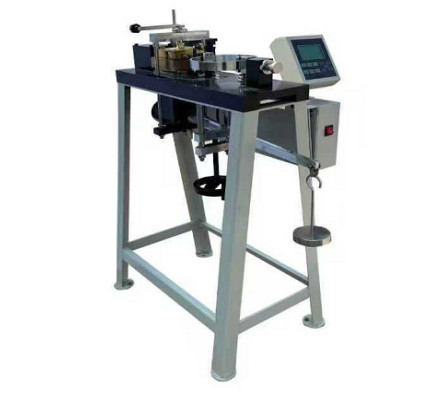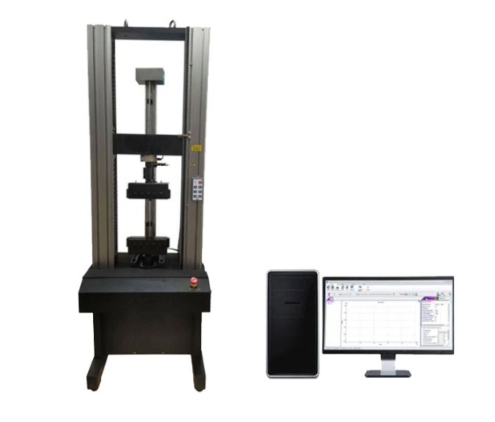
Geosynthetics Comprehensive Strength Testing Machine
Category:Material Strength Tester
Factory Direct
Stable Performance
Intl. Standards
Tech Support
Fast Delivery
Global Shipping

Introduction
The electronic geosynthetics comprehensive strength testing machine is a device used to test the flexural and compressive strength of building materials such as cement, mortar, and concrete. It features a compact structure, simple operation, and high precision, and is widely used in cement plants, construction engineering units, and product quality supervision and inspection stations.
Application
It is mainly used for testing and analyzing mechanical properties of metal materials and non-metal materials such as tensile, compression, bending, etc., with three closed-loop control methods of stress and strain displacement, it can calculate the maximum force, tensile strength, bending strength, compressive strength, elastic modulus, fracture elongation, yield strength and other parameters. Test and provide data according to GB and ISO, JS, ASTM, DIN and other international standards.
Standard
GB/T16491-2022: Electronic universal testing machines
GB/T15788-2017: Geosynthetics—Wide-width tensile test
GB/ T13763-2010: Geosynthetics – Determination of trapezoid tearing force
ASTM D4632M-a15: Test Method for Grab Breaking Load and Elongation of Geotextiles (Metric)
FZ/T01010: Coated fabrics – Determination of coating adhesion strength
CJ/T452-2014: Geonets drain for landfills
GB18173: Polymer water-proof materials – Part 1: Water-proof sheet
1-2012 and JC/T2112: Plastic board for drainage and protection
Parameters
| Specification | Details |
|---|---|
| Maximum test force | 10KN |
| Test machine accuracy level | 0.5 |
| Test force measurement range | 0.4%-100%FS (ungraded throughout) |
| Relative error of test force indication value | Within ±0.5% |
| Test force resolution | 1/±500000 of the maximum test force (unchanged throughout) |
| Deformation measurement range | 0.2%-100%FS |
| Relative error of deformation indication value | Within ±0.5% |
| Deformation resolution | 1/±500000 of the maximum deformation |
| Large deformation measuring range | 10-800mm |
| Relative error of large deformation indication | Within ±0.5% |
| Large deformation resolution | 0.008mm |
| Relative error of displacement indication | Within ±0.5% of the indication |
| Displacement resolution | 0.05um |
| Force control rate adjustment range | 0.01-5%FS/S |
| Relative error of force control rate | Within ±1% of the set value |
| Deformation rate adjustment range | 0.02-5%FS/S |
| Relative error of deformation control rate | Within ±1% of the set value |
| Beam speed adjustment range | 0.001-500mm/min |
| Relative error of beam speed | Within ±1.0% of the set value when speed < 0.01mm/min; within ±0.2% of the set value when speed ≥ 0.01mm/min |
| Constant force, constant deformation, constant displacement control range | 0.5%-100%FS |
| Constant force, constant deformation, constant displacement control accuracy | Within ±1% of the set value when set value < 10%FS; within ±0.1% of the set value when set value ≥ 10%FS |
| Effective drawing space (with fixture) | 850mm |
| Effective test width | 400mm |
| Host dimensions (L x W x H) | 700x510x1940mm |
| Power supply | 220V±10%, 750W |
| Weight of the machine | About 290kg |
Accessoriess
Geotextile narrow strip tensile testing fixture, geotextile wide strip tensile testing fixture, ring clamp, CBR puncture test fixture, electronic extensometer, dust cover, transmission components, etc.
FAQ
1. What is an Electronic Geosynthetics Comprehensive Strength Machine?
This machine is designed to evaluate the mechanical performance of geosynthetic materials (such as geotextiles, geomembranes, and geogrids) by measuring tensile, shear, peel, puncture, and other strength properties in a controlled electronic testing environment.
2. How does the machine test geosynthetic materials?
The machine applies controlled tension, compression, bending, or puncture forces to samples while recording stress, strain, and deformation electronically. It can perform multiple tests sequentially or simultaneously to provide a comprehensive strength profile.
3. What types of geosynthetic materials can be tested?
It is suitable for woven and nonwoven geotextiles, geomembranes, geogrids, geonets, and composite materials used in civil engineering, road construction, water retention, and erosion control applications.
4. What parameters can be measured during testing?
The machine can measure tensile strength, elongation, tear strength, puncture resistance, peel strength, shear resistance, and modulus of elasticity. Data is recorded electronically for accurate analysis.
5. Why is testing the comprehensive strength of geosynthetics important?
Comprehensive strength testing ensures that geosynthetic materials meet engineering design requirements, can withstand environmental and load stresses, and maintain long-term structural integrity, enhancing safety and reliability in construction projects.
If you're ready to take the next step, Leave your message below and we'll reply soon. 20+ years of manufacturing & export experience, a partner you can trust.