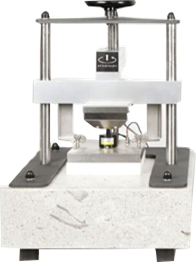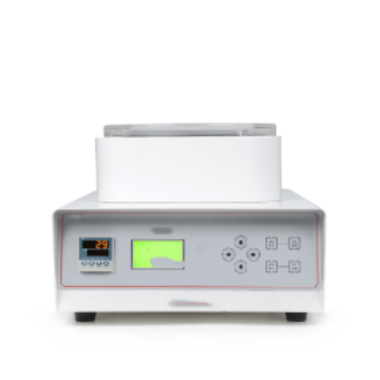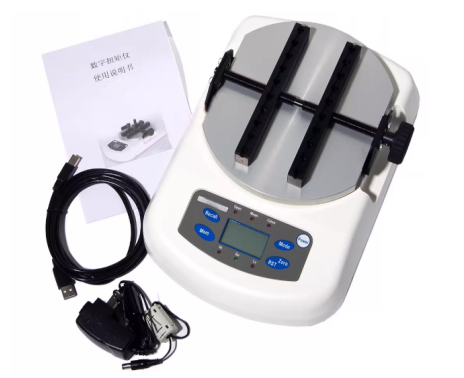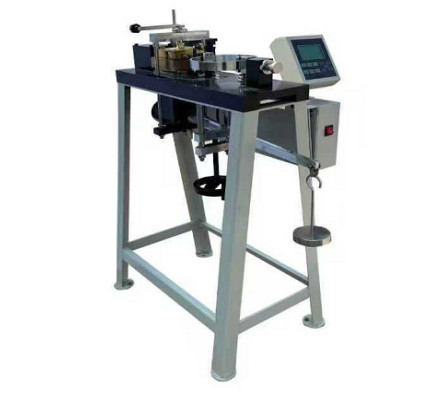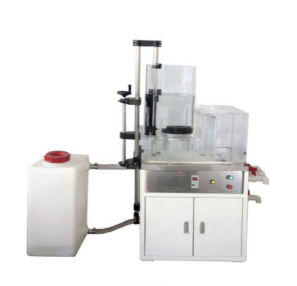
Geosynthetics Vertical Penetration Tester
Category:Material Strength Tester
Factory Direct
Stable Performance
Intl. Standards
Tech Support
Fast Delivery
Global Shipping

Introduction
The geosynthetic material vertical permeability tester is a horizontal constant-head testing instrument designed and manufactured according to the requirements of the newly published “Test Procedures for Geosynthetic Materials in Highway Engineering (JTG E50-2006)” by the Ministry of Transport. It is suitable for testing the vertical permeability performance of various permeable geotextiles and composite geotextiles under constant head conditions.
Application
Used to determine the vertical permeability of geotextile and its related products under constant water head method. The water head of the instrument can be adjusted (0-300mm), and can maintain a stable water head, the instrument is designed to reduce the loss of water head, using a box structure.
Standard
ISO 11058: Geotextiles and geotextile-related products – Determination of water permeability characteristics normal to the plane, without load
ASTM D4491: Standard Test Methods for Water Permeability of Geotextiles by Permittivity
GB/T 15789-2016: Geotextiles and geotextile-related products – Determination of water permeability characteristics normal to the plane, without load
SL/T 235-2012: Specification for Test and Measurement of Geosynthetics
Parameters
| Specification | Details |
|---|---|
| Sample diameter | 52mm, 100mm |
| Water head | 0——300mm adjustable |
| Sample thickness | 0.1——10mm |
| Dimensions (LxWxH) | 1200x500x1440mm |
| Weight | 170kg |
Features
Transparent design, easy to observe the test process;
Box structure, small head loss during testing:
The overflow lifting structure is used, which is easy to adjust the water head, and the water head is stable during testing.
Equipped with frequency conversion speed regulation flow system to ensure stable water head, and the maximum water head up to 300mm;
The use of plexiglass water tank can directly observe the test process of the sample;
The metering water tank has a scale line, which can directly observe the permeability of the sample and eliminate the steps and errors of the measuring cylinder.
Equipped with circulating water tank, water can be recycled to avoid the problem of large water consumption, energy saving and environmental protection;
Equipped with water recycling system, and frequency conversion speed regulation flow system;
The sample holder with two diameters of 52.100 mm avoids sample dispersion and is comparable with other early instruments.
Test program can be set, automatic test detection (DW1320S);
Test data can be calculated and saved by itself, historical data can be queried and exported, and multiple test results can be compared (DW1320S)。
Accessoriess
Penetration Cone: A sharp, high-strength cone used for vertically penetrating the sample.
Loading Device: Provides stable vertical force, including a force sensor and speed control module.
Clamping and Positioning Platform: Secures the sample and ensures vertical force application, with a transparent protective cover.
Displacement Sensor: High-precision measurement of penetration depth, with synchronous data feedback.
Data Acquisition System: Records force-displacement curves and automatically calculates parameters.
Safety Devices: Emergency stop button and overload protection to ensure safe operation.
Calibration Tools: Gauge blocks and weights for periodic equipment calibration.
Cleaning and Maintenance Tools: Soft brush and lubricant for equipment maintenance.
FAQ
1. What is a Geosynthetics Vertical Penetration Tester?
The Geosynthetics Vertical Penetration Tester is a device used to evaluate the puncture resistance of geosynthetics by simulating vertical loads, such as pressure from soil, rocks, or construction equipment.
2. How does the vertical penetration test work?
The tester applies a controlled vertical force to a probe or piston that penetrates the geosynthetic sample. The machine measures the force required to puncture the material and records the penetration depth and deformation.
3. What types of geosynthetics can be tested?
It can test woven, nonwoven, and knitted geotextiles, geomembranes, geogrids, and composite materials used in civil engineering, landfill liners, drainage systems, and road construction.
4. What parameters are measured during testing?
The tester measures puncture resistance (force at failure), maximum penetration depth, deformation, and energy absorption. These parameters provide insight into the geosynthetic’s ability to withstand vertical loading in real-world conditions.
5. Why is vertical penetration testing important?
Testing ensures geosynthetics can resist puncture and maintain structural integrity under vertical loads, preventing failures in construction, landfill, or erosion control applications. It helps engineers select materials that meet safety and durability requirements.
If you're ready to take the next step, Leave your message below and we'll reply soon. 20+ years of manufacturing & export experience, a partner you can trust.