Hydraulic Plastic Friction and Wear Testing Machine
Category:Abrasion Tester

Introduction
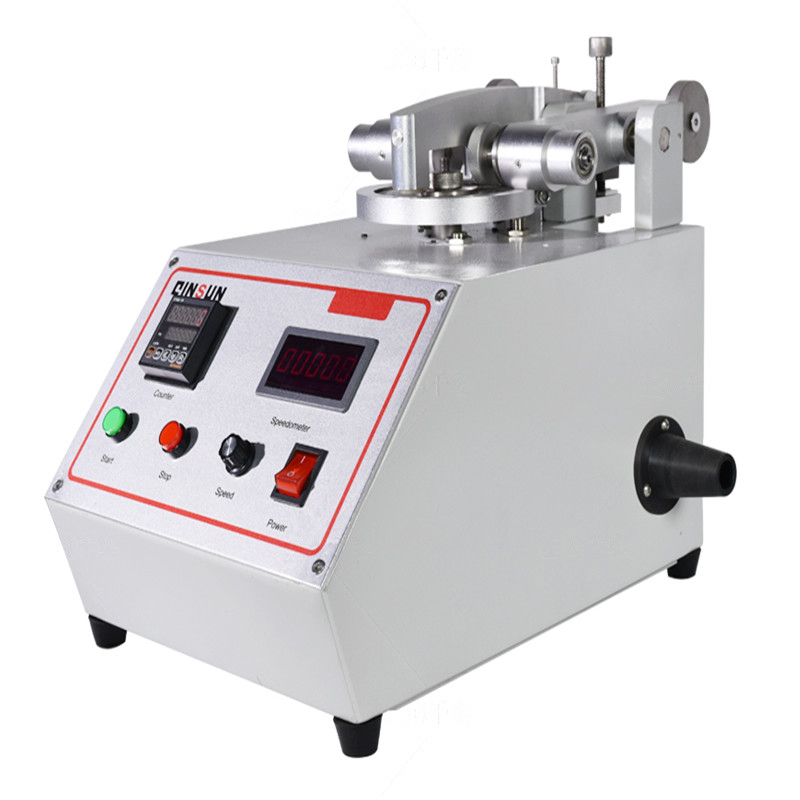
The hydraulic plastic friction and wear testing machine meets the standard “GB/T3960-2016 plastic sliding friction and wear experimental method”, which is suitable for measuring the sliding friction and wear properties of plastics and plastics and other composite materials, and can also measure the friction force and friction coefficient of the sample. The instrument adopts color crystal touch screen control, data processing and micro printing.
Application
This machine is primarily used to evaluate the wear resistance of materials in dry and wet abrasive environments. By simulating dry or wet sand abrasion environments encountered in actual working conditions, this testing machine can quantitatively test the wear resistance of different materials. This equipment has broad application value in material research and development, product quality control, and industrial production.
Specifically, the main uses of the dry and wet sand abrasive wear testing machine include:
Material Research and Development: In the development of new materials, wear resistance is an important performance indicator. The dry and wet sand abrasive wear testing machine can help researchers quickly and accurately evaluate the wear resistance of new materials, thus guiding the optimized design of materials.
Industrial Production: In industrial production, many components need to have good
wear resistance to ensure product stability and service life. By using the dry and wet sand abrasive wear testing machine to test components, companies can select materials and processes with good wear resistance, thereby improving product quality.
Quality Control: The dry and wet sand abrasive wear testing machine is also widely used in product quality control. By testing the wear resistance of manufactured products, unqualified products can be promptly identified and dealt with, ensuring that all products entering the market have good wear resistance.
Standard
(1)JB/T 9396: Specifications for Ring-Block Wear Testing Machines
(2)ASTM G65: Standard Test Method for Measuring Abrasion Using the Dry Sand/Rubber Wheel Apparatus
(3)ASTM G105: Standard Test Method for Conducting Wet Sand/Rubber Wheel Abrasion Tests
Parameters
| Feature/Specification | Details |
|---|---|
| Sample Size | (30 × 7 × 6 + 0.5) mm |
| Transmission Speed | 200 RPM ± 5% |
| Load | 20 KG ± 1% |
| Friction Ring | φ40 × 10 mm, HRC 40-45. Chamfer 0.5 × 45°; Concentricity deviation between outer surface and inner circle < 0.01 |
| Friction Torque | 0 – 4 N·m ± 2% |
| Equipment Weight | 52 kg; Weight after Packing: 82 kg |
| Equipment Size | Dimensions (L × W × H): 500 × 460 × 320 mm; Packaging Size: 650 × 600 × 550 mm |
Feature
(1)Simulating various working conditions: By changing parameters such as the rotational speed and normal pressure of the rubber wheel, various working conditions can be effectively simulated, making it suitable for wear-resistant material screening tests in various industries, including agricultural machinery, construction machinery, mining machinery, excavating machinery, and transportation machinery.
(2)Research purposes: It provides research departments with the means to study abrasive wear mechanisms and better simulate the abrasive wear process.
(3)Extending rubber wheel lifespan: By adding adjustment devices to the fixture and a timer or rotation counter, the lifespan of the rubber wheel can be extended.
(4)Automatic control: PLC automatic control is used to achieve automatic stopping at a set number of rotations or time, and automatic speed control.
Accessoriess
(1)1 main unit
(2)1 set of computer equipment
(3)1 instruction manual
(4)1 certificate of conformity
(5)1 calibration certificate
Basic configuration
1. a host
a Torque sensor
b A set of control system
c A micro printer
d lever
e-Pulley
2. a set of weights
3. a friction ring
FAQ
1. What is a Moisture Friction and Wear Testing Machine used for?
It evaluates the friction, wear, and lubrication performance of materials under wet or humid conditions.
2. How does the machine operate?
The machine simulates contact between surfaces under controlled load, speed, and moisture conditions, measuring friction and wear over time.
3. What types of materials can be tested?
Commonly used for metals, polymers, coatings, lubricants, and composites exposed to moisture.
4. How is test data recorded and analyzed?
Friction coefficients, wear depth, and other parameters are captured digitally, displayed on the interface, and can be exported for further analysis.
5. What maintenance is required for the machine?
Routine cleaning of test surfaces, lubrication of moving parts, calibration checks, inspection of sensors and electrical systems, and replacement of worn components.
If you're ready to take the next step, Leave your message below and we’ll reply soon. 20+ years of manufacturing & export experience, a partner you can trust.