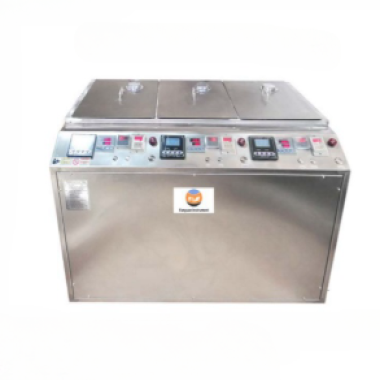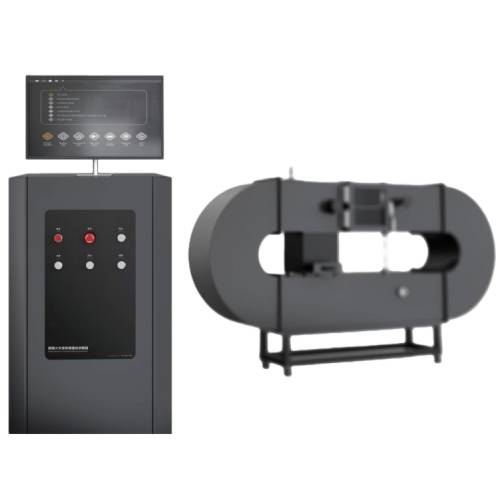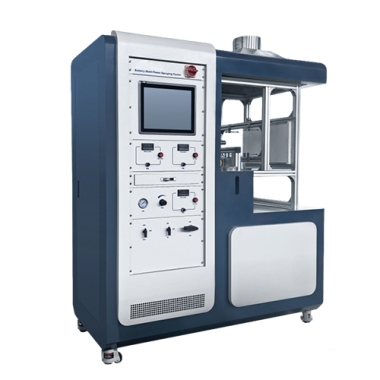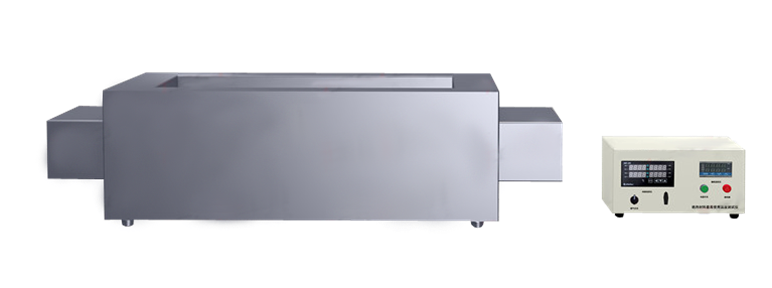
Insulation Material Maximum Use Temperature Tester
Category:Material Combustion Tester

Introduction
The Maximum Service Temperature Tester for Thermal Insulation Materials is designed to evaluate the highest allowable service temperature of insulation products under controlled laboratory conditions. By applying a defined thermal load and monitoring material performance changes, the instrument determines whether an insulation material can maintain its functional properties during use or after exposure to high temperatures. This evaluation is critical for product design, quality control, and safety verification of insulation materials used in industrial, construction, and energy applications.
Applications
The tester is suitable for evaluating the maximum service temperature of a wide range of thermal insulation products, including:
Loose-fill thermal insulation materials
Mineral wool mats and blankets
Insulation felts and quilts
Rigid insulation blocks and boards
Preformed insulation pipe sections
Prefabricated mineral wool pipe shells
High-temperature insulation panels for industrial furnaces
Insulation materials for HVAC systems
Thermal insulation used in power plants and petrochemical facilities
Standards
(1) GB/T 17430-1998 — Evaluation Method for Maximum Service Temperature of Thermal Insulation Materials
(2) ASTM C411-82 — Standard Test Method for Hot-Surface Performance of High-Temperature Thermal Insulation
(3) ASTM C447-85 — Standard Practice for Estimating the Maximum Use Temperature of Thermal Insulation Materials
(4) ISO 8142:1990 Annex A — Thermal Insulation — Determination of Maximum Service Temperature of Preformed Mineral Wool Pipe Sections
Technical Parameters
| Item | Description |
|---|---|
| Heating Power | 6 kW |
| Heating Plate Material | Stainless steel + silicon carbide |
| Heating Plate Test Area | 900 × 450 mm |
| Edge Protection Width | 80 mm |
| Heating Tube Material | SUS304 stainless steel |
| Heating Tube Length | 2000 mm |
| Heating Tube Diameter | 88 mm |
| Temperature Sensor Type | K-type thermocouples |
| Thermocouple Wire Diameter | 0.40 mm |
| Temperature Measurement Range | 0 – 1100 °C |
| Temperature Accuracy | ±0.5% |
| Temperature Uniformity | ≤5% or ≤15 °C between thermocouples |
| Thermocouple Arrangement | Center and diagonal positions, 150 mm from corners |
| Temperature Acquisition | PLC + temperature modules |
| Control System | PLC + touch screen |
| Data Processing | Automatic data storage and report output |
| Display | Real-time hot-face temperature curve |
| Auxiliary Tools | 1 m straightedge, feeler gauges (0.03 mm, 0.05 mm) |
| Software | Dedicated testing software |
| Computer & Printer | Included |
Features
(1) Stainless steel and silicon carbide heating plate with large effective test area
(2) SUS304 stainless steel heating tubes suitable for high-temperature operation
(3) K-type thermocouples with wide temperature range and high measurement accuracy
(4) Multiple thermocouple layout ensuring reliable temperature uniformity assessment
(5) PLC-based temperature acquisition with modular expansion
(6) Touch screen and computer control with real-time temperature curve display
(7) Automatic data storage and report generation
(8) Supplied with straightedge and precision feeler gauges for deformation evaluation
(9) Integrated testing software for standardized operation
FAQ
(1) What is this product?
It is a laboratory testing instrument used to determine the maximum service temperature of thermal insulation materials.
(2) What is it used for?
It is used to evaluate whether insulation materials maintain acceptable performance when exposed to elevated temperatures.
(3) Why is it important?
Determining the maximum service temperature is essential for material safety, durability, and compliance with international insulation standards.
(4) What products can it test?
Loose-fill insulation, mineral wool mats and blankets, insulation boards, blocks, felts, and preformed insulation pipe sections.
(5) What types are there?
The system supports multiple international standards and can be configured for different insulation forms and temperature requirements.
(6) How does it operate?
The specimen is placed on the heating surface, heated to a specified temperature profile, and monitored via thermocouples while the system automatically records and evaluates temperature and performance data.
If you're ready to take the next step, Leave your message below and we’ll reply soon. 20+ years of manufacturing & export experience, a partner you can trust.