Insulation Voltage Tester
Category:Other
Factory Direct
Stable Performance
Intl. Standards
Tech Support
Fast Delivery
Global Shipping
Introduction
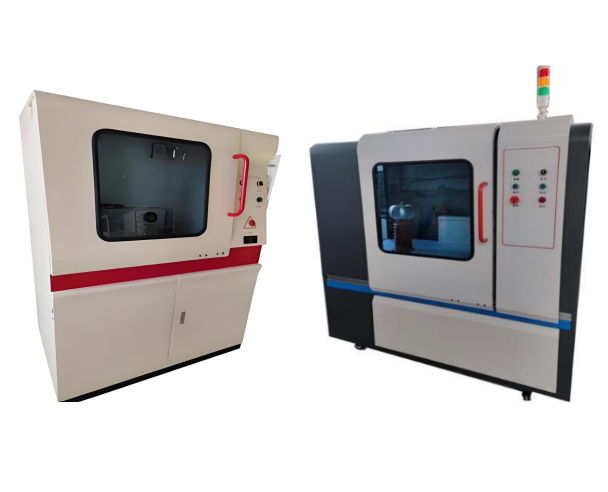
The Insulation Voltage Tester is controlled by a computer and operates through a human–machine interface to perform power-frequency voltage breakdown tests and power-frequency withstand voltage tests on insulating materials.It is suitable for testing the breakdown voltage, dielectric strength, and withstand voltage of solid insulating materials under power-frequency voltage conditions. Applicable materials include insulating varnishes, resins and adhesives, impregnated fiber products, laminated products, mica and its derivatives, plastics, film composite materials, as well as ceramics and glass.
Standards
(1) Applicable Standards (for Solid Materials):
GB 1408-2016 – Test Method for Electric Strength of Solid Insulating Materials
GB/T 1695-2005 – Test Method for Power-Frequency Breakdown Strength and Withstand Voltage of Vulcanized Rubber
GB/T 3333 – Test Method for Power-Frequency Breakdown Voltage of Cable Paper
HG/T 3330 – Test Method for Breakdown Strength of Insulating Varnish Films
GB 12656 – Test Method for Power-Frequency Breakdown Voltage of Capacitor Paper
ASTM D149 – Standard Test Method for Dielectric Breakdown Voltage and Dielectric Strength of Solid Electrical Insulating Materials
(2) Applicable Standards (for Liquid Materials):
GB/T 507-2002 – Test Method for Breakdown Voltage of Insulating Oil
DL 429.9-91 – Test Method for Dielectric Strength of Insulating Oil
Parameters
| Maximum Output Voltage | 5–50 kV | 100 kV |
| Transformer Capacity | 3 kVA | 10 kVA |
| Booster Capacity | 3 kVA | 3 kVA |
| Operating Voltage | Single-phase AC 220V ±10%, 50Hz ±1% | Single-phase AC 220V ±10%, 50Hz ±1% |
| Control System | Siemens PLC (Germany) | Siemens PLC (Germany) |
| Test Modes | AC/DC Test: 1. Uniform voltage rise 2. Step (gradient) voltage rise 3. Withstand voltage test | Same as left |
| Test Medium | Air / Insulating oil (standard detachable oil bath device) | Same as left |
| Voltage Boosting Device | Advanced contactless components for smooth voltage rise, replacing traditional mechanical regulators | Same as left |
| Voltage Rising Speed | 0.1–5.0 kV/s (adjustable) | 0.1–5.0 kV/s (adjustable) |
| Withstand Time | Software setting, >10 hours | Software setting, >10 hours |
| Test Accuracy | ≤1% | ≤1% |
| Leakage Current Range | 0–150 mA | 0–150 mA |
| Communication Interface | RS-232 / RS-485 / Ethernet | Same as left |
| Control Mode | Optional wireless / wired control | Optional wireless / wired control |
| Breakdown Detection Method | Voltage / Current | Voltage / Current |
| Discharge Method | Automatic discharge | Automatic discharge |
| Transformer Ratio | 1:500 | 1:1000 |
| Data Acquisition | Standard Siemens wireless acquisition | Same as left |
| Test Environment | Solid / Liquid; optional high-temperature oil bath | Same as left |
| Breakdown Judgment | High voltage detection / leakage current detection | Same as left |
| Discharge Method (End of Test) | Automatic discharge after test completion | Same as left |
| Dimensions (L×W×H) | Approx. 1100 × 700 × 1460 mm | Approx. 1600 × 920 × 2000 mm |
| Indicator Light | Three-color tower light included | Three-color tower light included |
Product Advantages
(1) Equipped with a German-imported Siemens CPU central processing unit, ensuring the highest data acquisition accuracy and stability. It eliminates the interference issues associated with traditional circuit board control systems, which often affect measurement precision and cause frequent system crashes.
(2) Wireless control design eliminates distance limitations and enables human–machine separation, making operation more convenient. This innovative approach also significantly enhances operator safety.
(3) Dual-direction voltage and current interference suppression technology prevents loss of control and communication port damage caused by current interference at the moment of breakdown.
(4) New software with self-diagnostic and early warning functions, featuring dual-direction current and voltage judgment, and supporting wireless safety control.
(5) Built-in leakage protection shield and automatic arc pressure relief system ensure safer operation during testing.
(6) Test electrodes are equipped with a bearing slide rail system, enabling automatic vertical positioning and ensuring accuracy within 0.05 mm.
(7) Compared to other manufacturers whose equipment is limited to solid materials, this tester is capable of testing both solid and liquid insulating materials, offering broader application capabilities.
(8) Built-in fuse protection and leakage protection devices effectively disconnect power under overcurrent or overload conditions, protecting both the control system and high-voltage components. Replacement is simple and convenient.
(9) Test results can be automatically filtered, with selective data retention options.
(10) Remote maintenance and alarm functions enable more efficient after-sales support.
(11) Unlimited storage capacity for test result data.
(12) Software supports wireless cloud protocol upload, allowing third-party data editing and management.
Software Function Overview
(1) Software Platform: Windows-based operating platform with an intuitive interface for easy operation.
(2) Curve Display: Test curves can be displayed dynamically in real time during the experiment.
(3) Data Export: Test results can be exported to Excel spreadsheets.
(4) Test Report: Report names can be customized, and test reports can be printed.
(5) Test Modes: Flexible selection between DC testing and AC testing according to requirements.
(6) Test Methods: Users can select different methods such as breakdown voltage test, withstand voltage test, and step (gradient) test as needed.
(7) Parameter Settings: Parameters can be flexibly configured based on different test modes and methods.
(8) Sample Settings: Sample parameters can be flexibly set according to different standards.
(9) User Management: Usernames and passwords can be set. Different operators can log in to perform independent tests without interference.
(10) Standard Selection: Multiple standards are available and can be selected as required.
(11) Continuous Operation: During continuous testing, users can end a test directly in the software and proceed to the next test.
(12) Storage Method: Replacing traditional export-based storage, the system adopts a modern database approach to ensure permanent data storage with no loss and long-term traceability.
Main Components
(1) High-voltage transformer
(2) Siemens CPU communication module (Germany)
(3) Siemens central processing unit (imported from Germany)
(4) Remote Bluetooth module
(5) Leakage protection system
(6) System fault alarm
(7) Voltage regulator (boosting regulator)
(8) Voltage sensor
(9) Current sensor
(10) Independent control module
FAQ
1. What is this product?
It is a testing instrument used to evaluate dielectric strength and breakdown voltage of insulating materials.
2. What is this product used for?
It is used for testing electrical insulation performance of solid and liquid materials.
3. What is the working principle of this product?
It applies increasing voltage to a sample until breakdown or withstand conditions are reached, while monitoring electrical parameters.
4. Why is this product important?
It ensures the safety and reliability of insulating materials used in electrical systems.
5. What industries is this product suitable for?
It is suitable for electrical equipment manufacturers, material research institutes, and testing laboratories.
If you're ready to take the next step, Leave your message below and we'll reply soon. 20+ years of manufacturing & export experience, a partner you can trust.