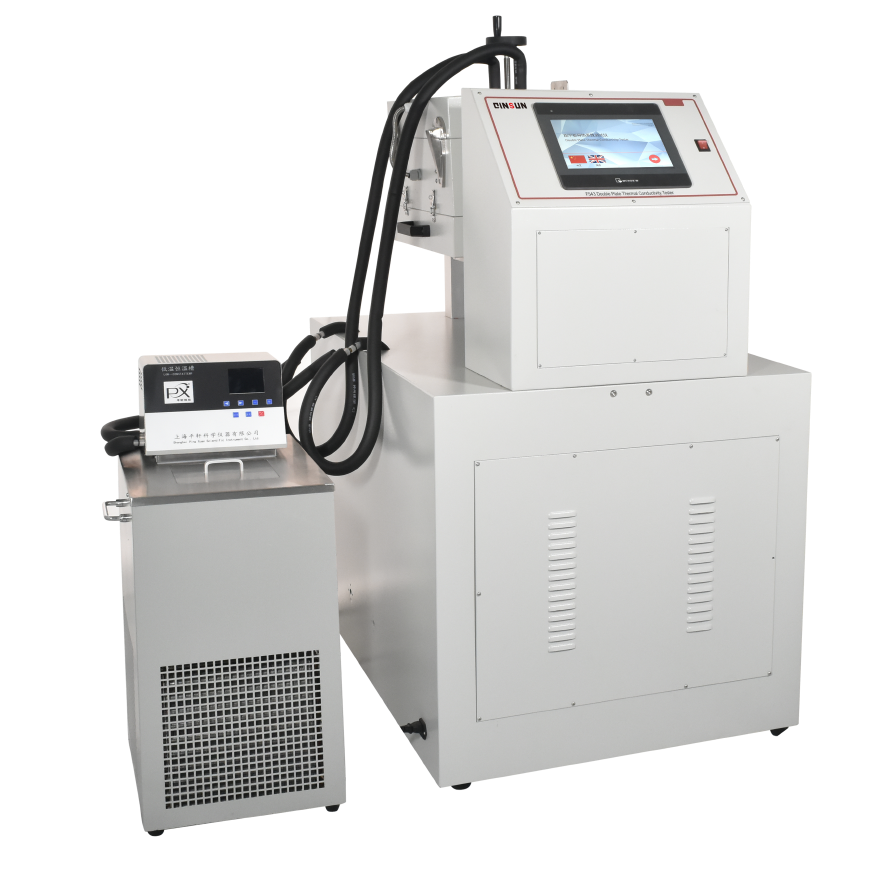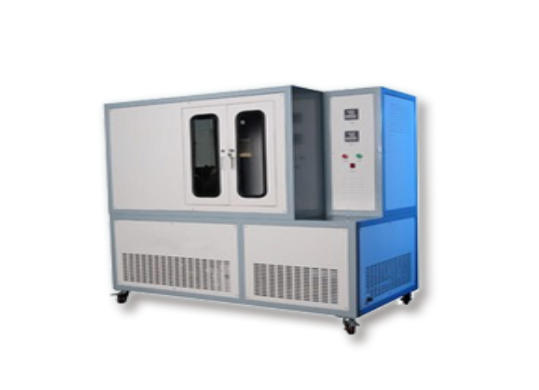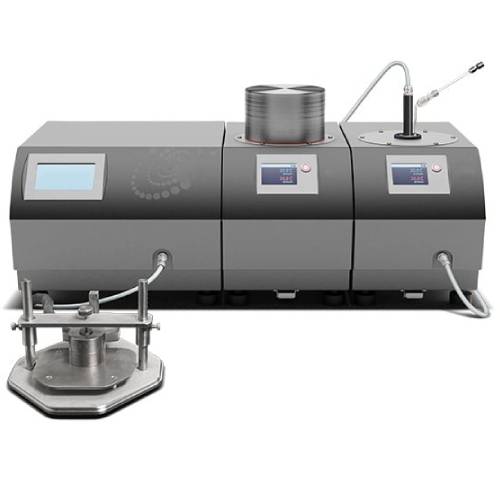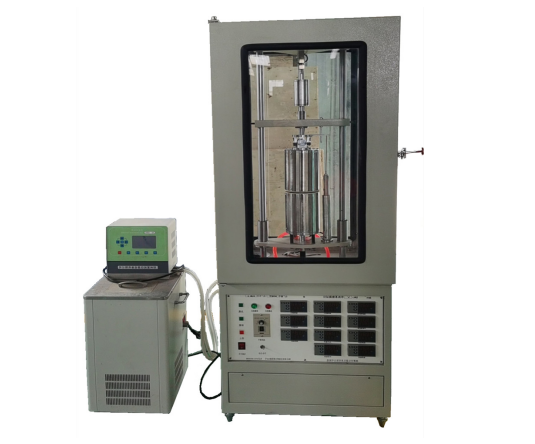
Multifunction Thermal Conductivity Tester (Heat Flow Method)
Category:Thermal Conductivity Tester
Factory Direct
Stable Performance
Intl. Standards
Tech Support
Fast Delivery
Global Shipping

Introduction
The Multifunction Thermal Conductivity Tester (Heat Flow Method) is a laboratory instrument used to measure thermal conductivity, thermal resistance, and interface contact thermal resistance of small solid materials. It is suitable for thin conductive materials, thermally conductive silicone sheets, thermally conductive resins, beryllium oxide ceramics, aluminum oxide ceramics, and similar materials. With optional sample holders, the instrument can also test powdered and paste-like materials under controlled pressure. Test samples are primarily solid sheets.
Application
The Multifunction Thermal Conductivity Tester is used for:
Thermal conductivity and thermal resistance measurement of solid materials
Interface contact thermal resistance evaluation between solid surfaces
Thermal insulation and heat dissipation characterization of electronic materials
Thermal performance analysis in universities, research institutes, quality inspection agencies, and industrial production laboratories
Applicable materials include thermally conductive polymers, ceramics, composite materials, electronic thermal interface materials, and aluminum-based composite structures.
Standards
MIL-I-49456A Thermal and Insulating Materials for Thin Sheets, Thermally Conductive Resins, and Glass Fiber Reinforced Composites
GB 5598-85 Method for Measuring Thermal Conductivity of Beryllium Oxide Ceramics
ASTM D5470-12 Standard Test Method for Thermal Transmission Properties of Thin Thermally Conductive Solid Electrical Insulation Materials
Parameters
| Parameter | Specification |
|---|---|
| Average sample temperature range | Option 1: 20–80 °C (Hot plate: RT–100 °C; Cold plate: 0–80 °C) Option 2: 20–140 °C (Hot plate: RT–200 °C; Cold plate: 0–80 °C) Option 3: 20–190 °C (Hot plate: RT–300 °C; Cold plate: 0–80 °C) |
| Thermal conductivity range | Standard mode: 0.1–45 W/m·K High-conductivity mode (optional): 5–500 W/m·K |
| Thermal resistance range | 0.05–500 cm²·K/W |
| Measurement accuracy | Thermal resistance: 10–500 cm²·K/W ≤ ±3%; 0.05–10 cm²·K/W ≤ ±5% Thermal conductivity: 0.1–5 W/m·K ≤ ±3%; 5–500 W/m·K ≤ ±5% Contact thermal resistance ≤ ±5% Aluminum-based composite thermal resistance ≤ ±5% ±0.1 |
| Test head diameter | Φ30 mm (standard); Φ50 mm (optional) |
| Sample size | 0.1–5 W/m·K or 10–500 cm²·K/W: Φ30 × 0.2–5 mm (layering allowed) 5–45 W/m·K or 2–10 cm²·K/W: Φ20–Φ30 × 0.2–15 mm 5–500 W/m·K: Φ10–Φ30 × 15–30 mm (high-conductivity mode) Aluminum-based composite: 15 × 15 mm |
| Pressure measurement range | 0–1000 N |
| Displacement measurement range | 0–40 mm |
| Pressure control | Electric |
| Test modes | Thermal resistance under varying pressure; material thermal conductivity; contact thermal resistance under varying media pressure; aluminum-based composite thermal resistance; aging and reliability testing; high-conductivity material testing (optional); sample-to-sample contact thermal resistance (optional); material compression property testing |
| Power supply | AC 220 V, < 1 kW |
Features
Automatic pressure application and automatic sample thickness measurement
Fully computer-controlled operation with real-time data acquisition
Heat protection structure around the test rod reduces environmental influence and extends temperature range
Thermocouple stack configuration improves heat flow resolution, accuracy, and repeatability
No ice-water mixture required for cold-side compensation
Supports advanced testing functions such as aging, reliability, high-conductivity materials, and interface contact resistance
Stable, repeatable, and automated measurement process
Accessories
Thermal conductivity tester main unit × 1
Test and control software with communication interface × 1
Constant temperature bath (water or oil, depending on temperature range) with controller × 1
Desktop computer for system control and data acquisition × 1
Maintenance Information
Keep test heads and contact surfaces clean and free from contamination.
Periodically verify pressure, displacement, and temperature sensors.
Maintain the constant temperature bath according to operating guidelines.
Perform calibration checks using reference materials at regular intervals.
FAQ
What is this product?
It is a laboratory instrument based on the heat flow method for measuring thermal conductivity, thermal resistance, and contact thermal resistance of solid and semi-solid materials.
What is this product used for?
It is used to evaluate heat transfer, insulation performance, and interface thermal behavior of materials and components.
Why is this product important?
Accurate thermal property data is essential for material selection, thermal design, reliability analysis, and performance optimization.
What industries is this product suitable for?
It is suitable for electronics, materials science, ceramics, polymers, composite materials, research laboratories, and quality inspection institutions.
What types of this product are available?
The product supports standard and optional configurations, including high-conductivity testing modules and extended interface thermal resistance measurement functions.
If you're ready to take the next step, Leave your message below and we'll reply soon. 20+ years of manufacturing & export experience, a partner you can trust.