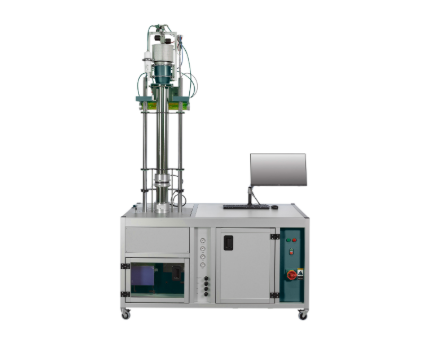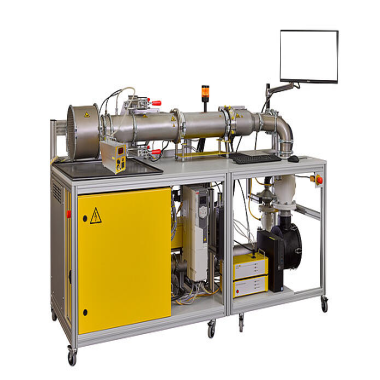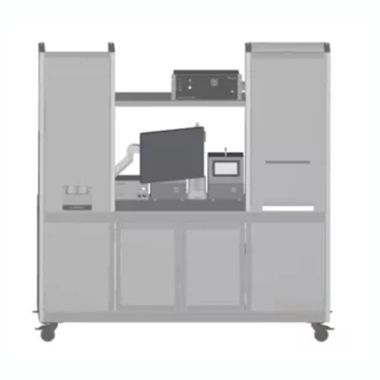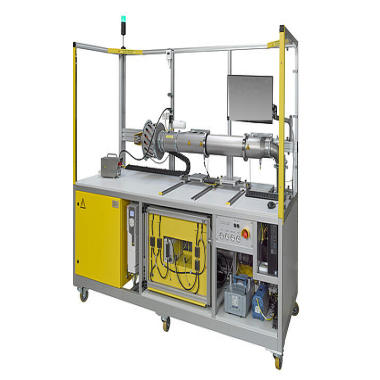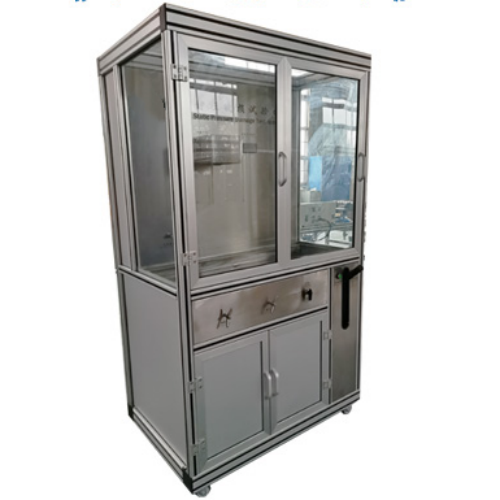
Oil Filter Hydrostatic Breakage Tester
Category:Filter Cartridge Filtration Tester
Introduction
The Oil Filter Hydrostatic Breakage Tester operates by using a liquid medium (typically hydraulic oil or a specified test fluid) to apply pressure to the filter component under evaluation. The test can be configured to assess different failure modes:
Filter Element Collapse/Burst: The filter element is placed in a test fixture, and a differential pressure is applied across the filter media from the outside-in (collapse) or inside-out (burst). The pressure is steadily increased at a controlled rate until the element’s structure fails (e.g., pleat collapse, seam rupture, end cap separation).
Filter Housing Burst: The filter housing is subjected to increasing internal hydrostatic pressure until it ruptures or permanently deforms beyond acceptable limits.
A high-pressure hydraulic pump or pressure source is used to generate the test pressure. The pressure is monitored by a transducer and typically displayed digitally. A failure detection system identifies when the structural integrity is compromised, often marked by a sudden pressure drop, audible event, or visual observation, and the maximum pressure reached is recorded as the collapse, burst, or rupture pressure. This test is a critical part of filter qualification and quality control processes to ensure filters meet their specified pressure ratings and can safely operate within a given system.
Applications
The Oil Filter Hydrostatic Breakage Tester is a test bench independently developed and manufactured by our company. It is used to determine the static pressure and rupture pressure values that the oil filter can withstand.
Standards
ISO 2941:2009:Hydraulic fluid power — Filter elements — Verification of collapse/burst pressure rating
ISO 4548-12:2017:Test methods for full-flow oil filters for internal combustion engines – Part 12: Particle counting method for filtration efficiency and ash holding capacity
Technical Parameters
| Main Parameters | Details |
|---|---|
| System pressure gauge range | 30bar |
| Working medium | SAE5W engine oil |
| Pressure rise accuracy | 0.5bar/times incremental point |
| Measuring temperature range | Room temperature |
| Protective cover | Transparent |
Features
High-pressure hydraulic power unit (pump) or pressure source capable of generating pressures up to the maximum required test pressure.
Pressure control system to increase the test pressure at a precise, controlled rate as specified by test standards.
Robust test stand or fixture designed to securely hold the filter element (for collapse/burst tests) or the filter housing (for burst tests) and withstand the applied pressure.
High-accuracy pressure transducer to measure the applied hydrostatic pressure.
Failure detection system that automatically identifies when the filter structure fails and records the pressure at failure. This may involve monitoring pressure drop, using acoustic sensors, or relying on visual confirmation in some cases (though automation is preferred for accuracy).
Safety enclosure or shielding constructed from strong materials to contain test fluid and debris in the event of a violent rupture.
Digital display showing the applied pressure, pressure rate, and the recorded failure pressure.
Controls for starting, stopping, and pausing the test.
System for filling the filter or housing with the test fluid and purging air.
Accessoriess
1. Core Testing Components
Filter Element Test Fixture (Compatible with different filter element specifications): Used to fix the filter element, allowing switching between “external pressure collapse” and “internal pressure rupture” pressure application directions.
Filter Housing Test Fixture (Compatible with different housing sizes): Seals and fixes the complete filter housing, supporting the housing rupture pressure test.
High-Pressure Hydraulic Line (High-Pressure Resistant Material): Transmits the test medium and withstands high-pressure conditions during the test.
2. Functional Auxiliary Components
High-Precision Pressure Sensor: Monitors test pressure in real time, synchronously feeds back data, and triggers fault detection (such as sudden pressure drop).
Explosion-Proof Transparent Protective Cover: Isolates the sample during testing, preventing media and fragments from splashing during rupture, ensuring operational safety.
High-Pressure Hydraulic Pump with Pressure Regulator Module: Provides stable and controllable pressure output, gradually increasing pressure at a set rate.
Digital Display Controller: Used to configure test parameters, display pressure data in real time, and record the maximum pressure value at the time of sample rupture.
3. Consumables and Auxiliary Components
Test Medium (Hydraulic Oil/Special Test Fluid): As the pressure transmission medium, it must match the requirements of the corresponding test standard. Oil-resistant/high-pressure sealing gaskets: ensure the sealing effect of test fixtures, samples and pipelines, and prevent pressure leakage from affecting test accuracy.
FAQ
1.What is this product?
It is a hydrostatic breakage tester for oil filters, designed to measure collapse, burst, and rupture pressures.
2.What is this product used for?
You use it to verify filter element and housing pressure resistance, ensure quality control, and validate filter safety margins.
3.How does this product work?
It gradually applies hydrostatic pressure to a filter element or housing while monitoring pressure and detecting structural failure.
4.Why is this product important?
It ensures filters can safely withstand system pressures, preventing premature failure and potential engine or hydraulic system damage.
5.Which industries is this product suitable for?
It is suitable for automotive, heavy machinery, hydraulic equipment, and engine manufacturing industries requiring filter qualification and high-pressure validation.