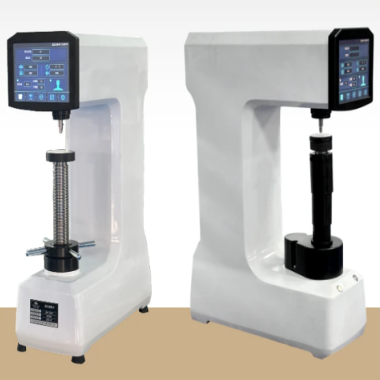
Plastic Ball Indentation Hardness Tester
Category:Textile Functional Tester
Factory Direct
Stable Performance
Intl. Standards
Tech Support
Fast Delivery
Global Shipping

Introduction
The Plastic Ball Indentation Hardness Tester is a precision instrument designed to evaluate the mechanical and hydraulic performance of plastic drainage plates under specified pressures and water flow conditions. It measures seepage characteristics while applying lateral pressure and a defined hydraulic gradient, providing critical data for material selection, quality control, and design validation in civil engineering, construction, and drainage systems.
Application
(1) Testing the plane-direction seepage characteristics of plastic drainage plates under lateral pressure.
(2) Evaluating the hydraulic performance of drainage materials for civil engineering and construction applications.
(3) Quality control of plastic core plates used in drainage boards, geocomposites, and waterproofing systems.
(4) Research and development of new plastic drainage materials with improved mechanical and seepage performance.
(5) Assessing the effect of lateral pressure and hydraulic gradient on water flow through drainage materials.
(6) Calibration and verification of design parameters for drainage structures in tunnels, roads, and landscaping projects.
Standards
(1) JTG E50 T1143-2006 — Technical specification for drainage plate testing in highways.
(2) SL/T 235-26-2012 — Laboratory method for measuring water permeability of drainage materials.
(3) JT/T 521 Appendix A-2004 — Standard for plastic core plates in drainage applications.
(4) JTS-206-1 Appendix B B.3-2009 — Test method for plastic geocomposite materials.
(5) JTS/T 245-2023 — Hydraulic performance testing of drainage plates.
(6) ISO 12958 — Determination of water permeability of geosynthetics (comparable international standard).
Technical Parameters
| Parameter | Specification |
|---|---|
| Test Chamber | Open-type structure |
| Effective Sample Length | 400 mm |
| Sample Width | 100 mm (customizable) |
| Side Pressure | 350 ± 20 kPa (gauge accuracy 0.4% FS) |
| Hydraulic Head Adjustment Range | 0–400 mm |
| Pressure Accuracy | ±0.4% |
| Host Dimensions | 715 × 300 × 260 mm (L×W×H) |
| Water Tower Dimensions | 440 × 440 × 860 mm (L×W×H) |
| Weight | 35 kg |
Features
(1) High-precision customized pressure gauge with imported diffused silicon sensor and 16-bit A/D converter for accurate pressure measurement.
(2) Lithium sub-battery provides continuous operation for more than 1.5 years.
(3) One-click zero adjustment for convenient calibration in various environments.
(4) Supports six pressure units: kPa, MPa, Psi, mmHg, Bar, Kgf/cm².
(5) Open-type hatch door design for easy sample loading and unloading.
(6) Cast aluminum integrated molding ensures sealing of the pressure chamber.
(7) Specially designed sample holding device prevents deformation and ensures airtight and watertight conditions.
(8) Hydraulic gradient adjustable via water tower height.
(9) Optimized waterway pipeline design reduces head loss for more accurate measurement.
(10) Pneumatic control system to regulate compressed air inlet/outlet and lateral pressure.
(11) Customizable pressure chamber and seal plate to accommodate different sample sizes.
Accessories
(1) Sample holders and sealing plates (customizable)
(2) Water tower with adjustable head mechanism
(3) Pneumatic control unit for side pressure regulation
(4) Calibration kit for pressure gauge
(5) Connection hoses and fittings
Maintenance Information
(1) Regularly clean the test chamber, water tower, and pipelines to prevent clogging.
(2) Inspect and calibrate the pressure gauge periodically for accurate measurement.
(3) Check pneumatic control valves and hoses for leaks.
(4) Store the instrument in a dry environment to prevent corrosion of the aluminum body.
(5) Replace the lithium sub-battery after 1.5 years or when low power is indicated.
(6) Ensure the hatch door and sealing components remain free of damage to maintain airtight and watertight integrity.
FAQ
1. What is the primary purpose of this tester?
It measures the hardness of plastic materials by determining their resistance to indentation from a spherical ball under controlled load.
2. Which materials can be tested using this device?
The tester is suitable for rigid and semi-rigid plastics, polymers, composites, and coated materials.
3. How does the tester operate?
It applies a specified load to a steel or tungsten ball that indents the plastic surface. The depth or diameter of the indentation is measured to calculate the material’s hardness.
4. Which standards does this tester comply with?
It supports international standards for plastic hardness testing, including ISO 2039-1. ASTM D785. and relevant national testing protocols.
5. Who typically uses this equipment?
Plastic manufacturers, quality control laboratories, and R&D teams use it to evaluate material properties, ensure consistency, and optimize formulations for performance.
If you're ready to take the next step, Leave your message below and we'll reply soon. 20+ years of manufacturing & export experience, a partner you can trust.