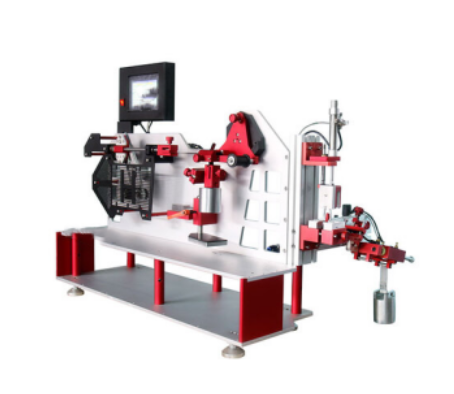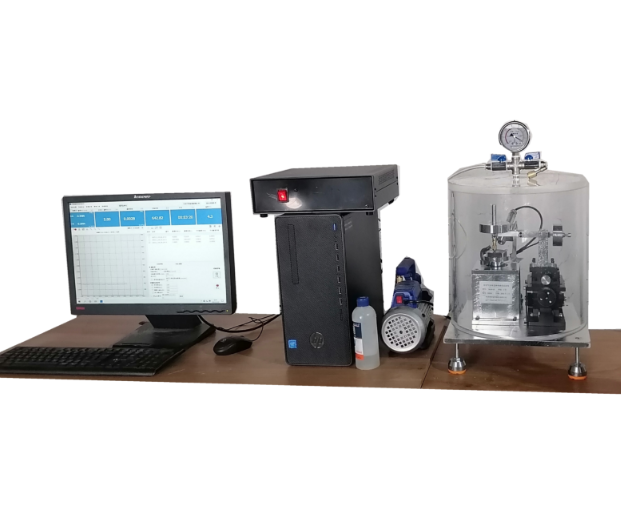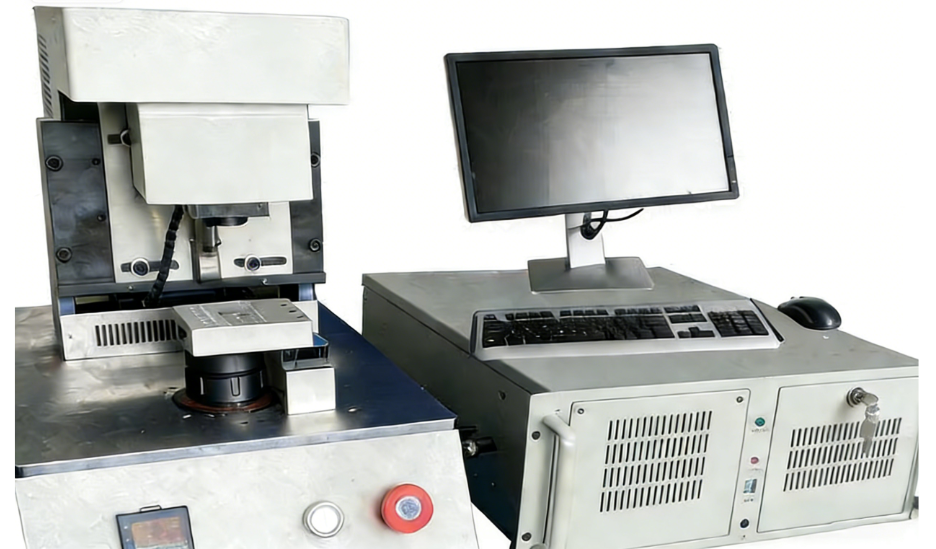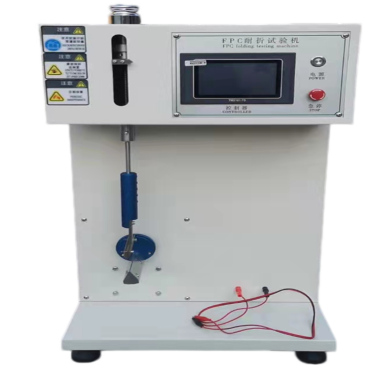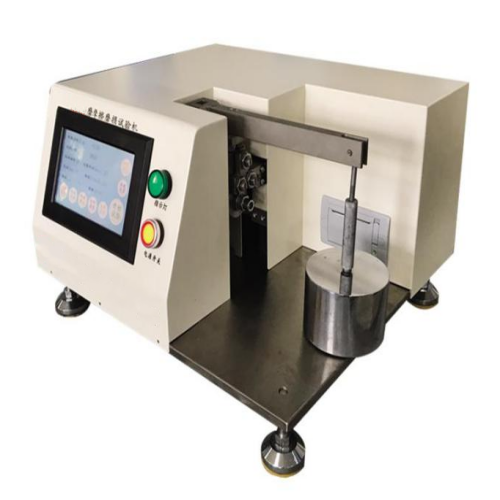
Plastic Friction and Wear Testing Machine
Category:Abrasion Tester

Introduction
This Plastic Friction and Wear Testing Machine complies with the standard GB/T3960-2016: Methods for Testing Sliding Friction and Wear of Plastics. It is suitable for determining the sliding friction and wear performance of plastics and plastic-based composites, and can also measure frictional force and coefficient of friction of the test samples. The instrument features a color touch screen for control, data processing, and a micro-printer.
Application
Evaluate friction and wear properties of plastic materials under various loads and speeds.
Test plastic components used in automotive, electronics, and industrial machinery.
Support material development, quality control, and durability assessment.
Simulate real-world mechanical contact conditions to predict performance and lifespan.
Parameters
| Parameter | Specification |
|---|---|
| Sample Size | (30 × 7 × 6 ± 0.5) mm |
| Drive Speed | 200 rpm ± 5% |
| Load | 20 kg ± 1% |
| Friction Ring | φ40 × 10 mm, HRC 40–45. chamfer 0.5 × 45°, concentricity deviation < 0.01 mm |
| Friction Torque | 0–4 N·m ± 2% |
| Equipment Weight | 52 kg |
| Packed Weight | 82 kg |
| Equipment Dimensions (L × W × H) | 500 × 460 × 320 mm |
| Packed Dimensions (L × W × H) | 650 × 600 × 550 mm |
Features
(1)Wide Load Range: Can test plastics under low to high loads for versatile applications.
(2)Adjustable Speed and Stroke: Allows precise control of sliding speed and motion distance.
(3)High-Precision Sensors: Measures friction force and wear accurately.
(4)Versatile Test Modes: Supports reciprocating, rotational, and block-on-ring testing configurations.
(5)Data Acquisition System: Real-time monitoring and recording of friction and wear data.
(6)Durable Construction: Rigid frame minimizes vibration and ensures repeatable results.
Basic Configuration
(1)Main Unit
a. Torque sensor × 1
b. Control system × 1 set
c. Micro-printer × 1
d. Lever
e. Pulley
(2)Set of Weights
Friction Ring × 1
FAQ
1. What is the purpose of this machine?
It evaluates the friction and wear properties of plastic materials to predict durability and performance in real-world applications.
2. Which types of plastic materials can be tested?
Suitable for thermoplastics, thermosetting plastics, composites, and polymer-based materials.
3. What test modes are available?
Supports reciprocating, rotational, and block-on-ring configurations to simulate different wear conditions.
4. How is data collected?
High-precision sensors and data acquisition systems record friction forces, wear volume, and surface changes in real time.
5. How should the machine be maintained?
Clean fixtures and sliding surfaces after each test, lubricate moving parts, calibrate sensors regularly, and store in a dry, dust-free environment.
If you're ready to take the next step, Leave your message below and we’ll reply soon. 20+ years of manufacturing & export experience, a partner you can trust.