Reciprocating Friction and Wear Tester
Category:Abrasion Tester

Introduction
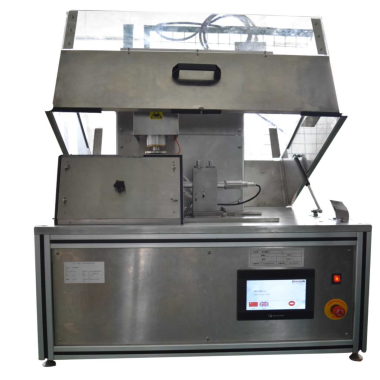
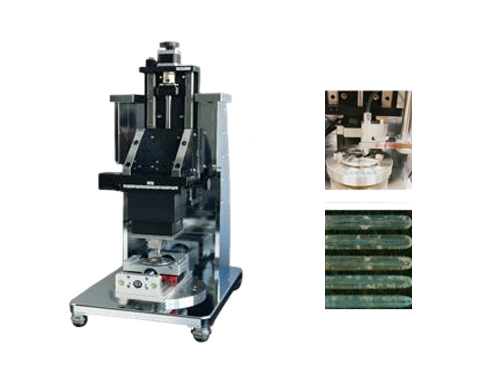
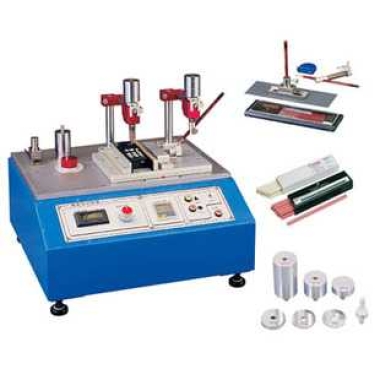
The Reciprocating Friction and Wear Tester operates by applying a specified normal contact load while the specimen performs a linear reciprocating motion over a set stroke length. It features a stepless speed adjustment system, allowing testing at low or high speeds. The tester evaluates the friction and wear performance of lubricants, metals, plastics, coatings, rubber, ceramics, and other materials. Typical test configurations include pin-on-disk, ball-on-disk, and similar forms.
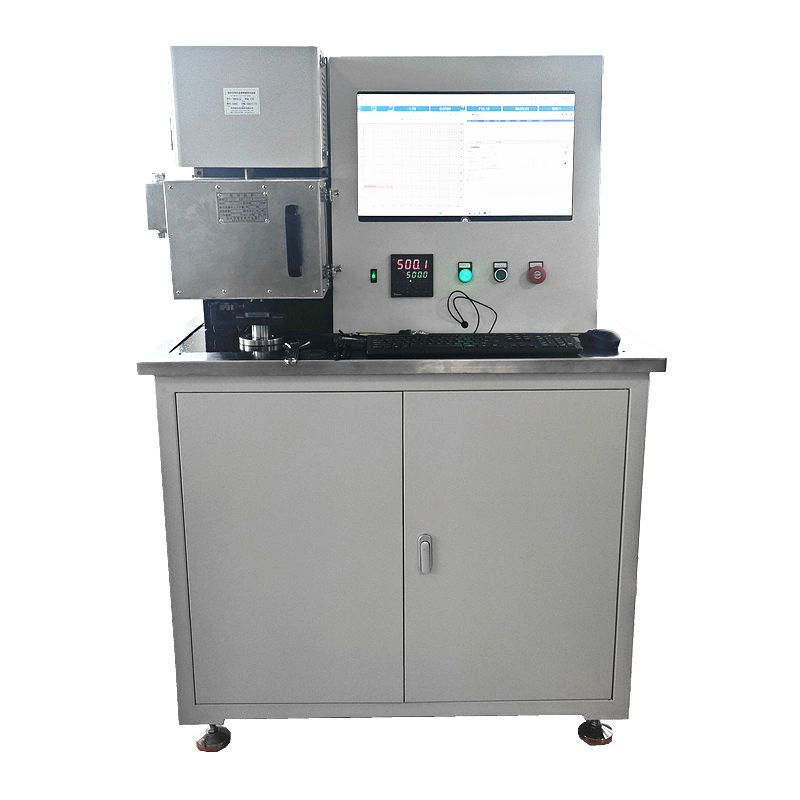
The tester consists of the main frame, axial loading module, linear reciprocating module, specimen fixtures, heating device, and measurement system. The loading system employs precision ball screws, linear ball bearings, and a loading shaft, resulting in low friction and minimal influence on test force accuracy. A load sensor is installed between the loading shaft and piston, providing high sensitivity and accurate test force measurement. The test force is precisely controlled by a high-accuracy servo motor, offering fast response, high control precision, and minimal impact on test results.
The measurement and control software is Windows-based and supports XP, Win7. Win8. and Win10 systems. Test force application is controlled via a servo system, ensuring stable and reliable force. All test parameters—including spindle speed, rotation count, applied force, friction force, friction component temperature, and test duration—are computer-controlled. Real-time data acquisition enables plotting of friction force vs. time, friction coefficient vs. time, and temperature vs. time curves.
Applications
Material Performance Evaluation: Measure friction and wear behavior of metals, polymers, composites, and coatings.
Lubricant Testing: Assess effectiveness of oils, greases, and solid lubricants under reciprocating motion.
Surface Coating and Treatment Analysis: Evaluate durability and adhesion of coatings, films, and surface-hardened layers.
Component Simulation: Test mechanical parts like pistons, seals, bearings, and sliding elements under realistic reciprocating conditions.
Research and Development: Support tribology studies, material optimization, and wear mechanism analysis.
Quality Control: Ensure consistent material and component performance during production.
Extreme Condition Testing: Examine behavior under varying load, speed, temperature, and environmental conditions.
Technical Specifications
| No. | Parameter | Specification |
|---|---|---|
| 1 | Test Force Range | 0–2000 N |
| 2 | Test Force Working Range (Stepless) | 0.5%–100% |
| 3 | Test Force Relative Error | ≤ ±1% |
| 4 | Test Force Accuracy | ±0.05 N |
| 5 | Automatic Load Rate | 1–200 N/s |
| 6 | Long-term Test Force Error | ≤ ±1% |
| 7 | Friction Force Measurement Range | 0–500 N |
| 8 | Friction Force Relative Error | ±1% |
| 9 | Friction Force Resolution | 0.01 N |
| 10 | Specimen Size Range | 0–70 mm (circular or square) |
| 11 | Friction Type | Linear reciprocating |
| 12 | Reciprocating Stroke | 0–30 mm |
| 13 | Reciprocating Frequency | 0–10 Hz |
| 14 | Electric Furnace Heating Temperature | Room temperature – 1200 ℃ |
| 15 | Temperature Control Accuracy | ±2 ℃ |
| 16 | Pin Specimen Diameter | 4–8 mm |
| 17 | Maximum Distance Between Spindle and Lower Disk | ≥ 70 mm |
| 18 | Spindle Control | Time control, rotation control, automatic load maintenance; real-time display of parameters, record test curves, and output reports |
| 19 | Test Duration Display & Control | 0 s – 9999 min |
| 20 | Test Rotation Count & Control | 0 – 999.999 r |
| 21 | Spindle Motor Rated Power | 2 kW |
| 22 | Specimen Fixtures | Pin-disk, ball-disk, thrust ring, or customized |
| 23 | Machine Dimensions | Approx. 1100 × 650 × 1600 mm |
| 24 | Machine Weight | Approx. 300 kg |
Features
Reciprocating Motion Control: Simulates real-life sliding and reciprocating conditions accurately.
Adjustable Load: Can apply a wide range of normal forces for diverse material tests.
Variable Speed: Supports low to high reciprocating speeds to replicate different operating conditions.
Temperature Control: Optional heating or cooling to test materials under extreme conditions.
Lubrication Capability: Can test under dry or lubricated conditions.
High-Precision Sensors: Real-time measurement of friction force, wear, and displacement.
Automated Data Acquisition: Collects and records friction coefficient, wear rate, and other parameters.
User-Friendly Software: Configures test parameters, monitors progress, and generates reports.
Modular Design: Easy to install, replace, or upgrade test modules and accessories.
Compliance with Standards: Supports international testing standards like ASTM, ISO, and GB/T.
Compact and Stable Structure: Minimizes vibration for accurate and repeatable results.
Versatile Material Compatibility: Suitable for metals, polymers, composites, and coatings.
Accessories
(1)Specimen Holders: Secure test materials such as blocks, pins, or discs.
(2)Load Application Devices: Weights or spring systems to apply controlled normal force.
(3)Sensors and Data Acquisition: Torque or force sensors for real-time friction and wear measurement.
(4)Lubrication and Heating Units: Optional modules for testing under lubricated or temperature-controlled conditions.
FAQ
1. What materials can be tested with this instrument?
It is suitable for metals, polymers, composites, coatings, and other solid materials. Both dry and lubricated conditions can be evaluated.
2. Can the tester simulate different operating conditions?
Yes. It supports adjustable load, stroke length, reciprocating speed, and optional temperature control to replicate real-world conditions.
3. How is friction and wear measured?
Friction is recorded in real time using torque or force sensors, while wear is determined through mass loss, dimensional change, or surface profiling after testing.
4. What accessories are included or optional?
Standard accessories include specimen holders, load application devices, and sensors. Optional modules include lubrication systems, heating/cooling units, and advanced data acquisition software.
5. How should the instrument be maintained?
Daily cleaning of contact surfaces, regular sensor calibration, lubrication of moving parts, and inspection for wear or damage are recommended to ensure accuracy and longevity.
If you're ready to take the next step, Leave your message below and we’ll reply soon. 20+ years of manufacturing & export experience, a partner you can trust.