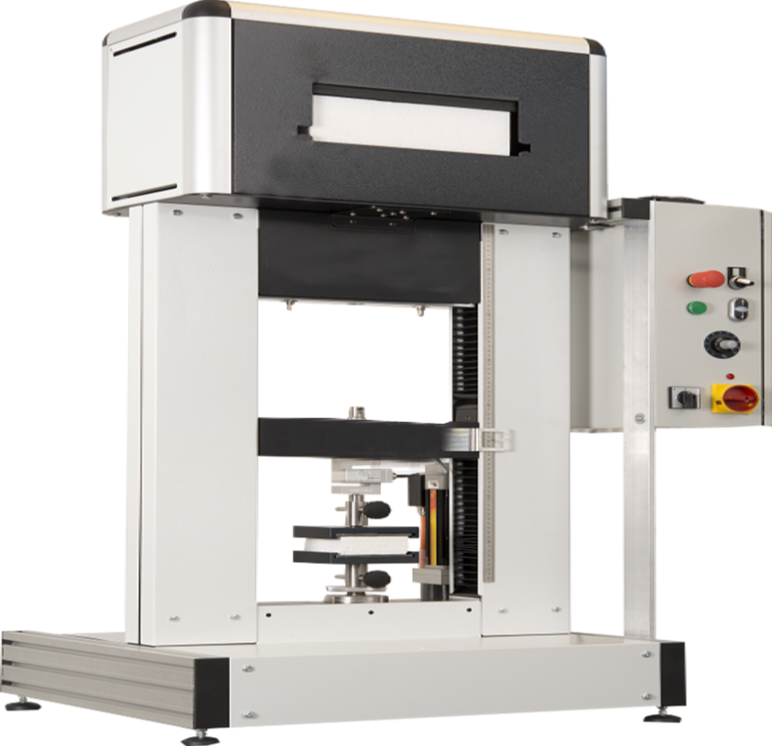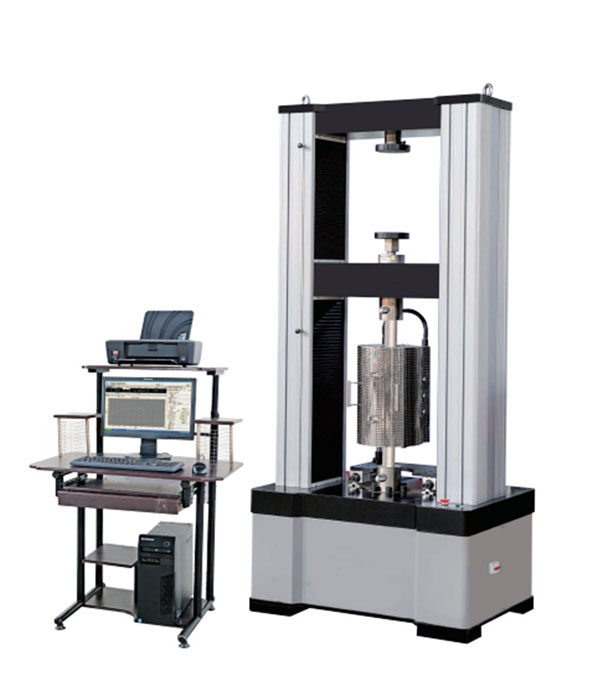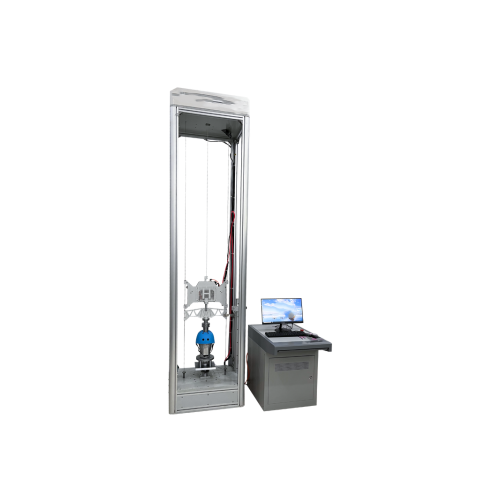
Safety Helmet Impact and Penetration Tester
Category:Universal Strength Tester
Factory Direct
Stable Performance
Intl. Standards
Tech Support
Fast Delivery
Global Shipping

Introduction
The Safety Helmet Acceleration Impact and Penetration Tester is a specialized testing machine designed to evaluate the protective performance of safety helmets. It measures a helmet’s resistance to impact and penetration under controlled conditions, recording parameters such as peak acceleration and force to ensure compliance with safety standards.
Application
The Safety Helmet Acceleration Impact and Penetration Tester is used to evaluate the impact resistance performance of safety helmets and to assess their protective capabilities.
Standards
Complies with the latest GB/T 2812-XXXX standard testing requirements.
Impact Test Technical Specifications
| Parameter | Specification |
|---|---|
| Base | Made of reinforced concrete with a mass not less than 500 kg |
| Numerical analysis system | Composed of a force sensor, single-axis acceleration sensor, data processing, display, and recording units; capable of force measurement impact tests |
| Overall machine height | Approximately 4.2 meters |
| Impact hammer | Weight 5.0 ± 0.1 kg, hemispherical impact surface, radius 50 ± 1 mm, material stainless steel |
| Impact height | 1000 ± 5 mm |
| Force sensor (specification) | Measurement range 0–20000 N, minimum frequency response 5 kHz |
| Force sensor inclusion | Force sensor included |
| Impact anvil | Flat anvil (diameter 130 ± 3 mm, thickness ≥ 15 mm), hemispherical anvil radius 48 ± 1 mm, hardness not less than HRC50 |
Impact Test Procedure
a) Determine the headform to be used according to the appendix requirements.
b) Mount the sample helmet on the headform as per manufacturer instructions.
c) Install the acceleration sensor inside the ball head and connect it via the ball arm to the sliding arm.
d) Install the flat anvil and ensure the helmet just contacts the anvil.
e) Adjust the contact point so that the free-fall distance to the flat anvil is 1380 ± 5 mm.
f) Release the headform and record the peak acceleration and cumulative time.
g) Select another point on the helmet for contact with the flat anvil.
h) Repeat steps (e)–(f).
i) Install the hemispherical anvil and ensure the helmet just contacts the hemispherical anvil.
j) Adjust the contact point so that the free-fall distance to the hemispherical anvil is 1020 ± 5 mm.
k) Release the headform and record the peak acceleration and cumulative time.
l) Select another point on the helmet for contact with the hemispherical anvil.
m) Repeat steps (j)–(k).
Technical Specifications
| Parameter | Specification |
|---|---|
| Penetration hammer weight | 3.0 ± 0.05 kg |
| Hammer tip angle | 60 ± 0.5° |
| Penetration cone length | 40 mm |
| Penetration cone diameter | 28 mm |
| Cone tip radius | 0.5 mm |
| Hardness | HRC 45–50 |
| Penetration height | 1000 ± 5 mm |
Main Machine Features
Uses a servo motor, servo controller, and matching control unit as the drive component; long motor lifespan.
Hollow gear reduction system with low power consumption, low noise, high efficiency, and high reliability.
Zhongtai data acquisition card ensures long-term testing accuracy.
Direct-insert transmission device provides high positioning accuracy, long lifespan, low friction, capable of high-speed operation and reversible rotation; greatly improves machine displacement and speed accuracy.
Position limit function enhances safety and convenience for tests requiring restricted travel.
Wide measurement range suitable for multiple international standards.
Integrated design: Regardless of machine configuration, computer parameters can be modified and permanently saved without circuit adjustments.
High-precision return positioning ensures accurate return to the start position regardless of return speed, improving testing efficiency.
Common parameter memory function (e.g., test speed), allowing the machine to start with preset parameters.
Flexible operation: Supports continuous and jog modes for user convenience in different situations.
Multiple safety protections: Adjustable upper and lower limit protection, emergency stop, etc.
Accessories
(1)Impact Anvils and Strikers: Different shapes and weights to simulate various impact scenarios.
(2)Pendulum or Drop Weight System: For controlled impact energy delivery during tests.
(3)Helmet Holders and Fixtures: Secure helmets in a standard orientation for repeatable testing.
(4)Penetration Test Needles or Probes: Used for sharp-object penetration resistance evaluation.
(5)Data Acquisition Sensors: Force, acceleration, or displacement sensors to record impact responses.
(6)Calibration Tools: Weights, gauges, and level instruments for ensuring accurate testing.
FAQ
1. What types of helmets can be tested?
This tester can evaluate safety helmets for construction, industrial, sports, and motorcycle use, including hard hats and protective headgear.
2. What tests does the instrument perform?
It performs impact tests, penetration resistance tests, and sometimes combined tests to assess helmet energy absorption and structural integrity.
3. How is impact measured?
Sensors record acceleration, force, or energy transfer during impact to quantify protection performance.
4. Are there adjustable test parameters?
Yes, users can select impact energy, striker weight, drop height, and penetration probe type to meet different safety standards.
5. How should the tester be maintained?
Regular calibration of sensors, inspection of strikers and fixtures, cleaning of test surfaces, and proper storage are recommended for accuracy and longevity.
If you're ready to take the next step, Leave your message below and we'll reply soon. 20+ years of manufacturing & export experience, a partner you can trust.