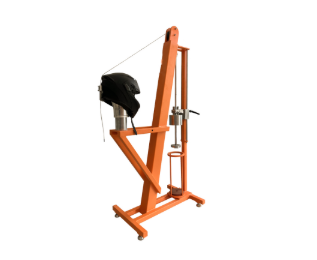
Safety Helmets Wearing Stability Tester
Category:Universal Strength Tester
Factory Direct
Stable Performance
Intl. Standards
Tech Support
Fast Delivery
Global Shipping

Introduction
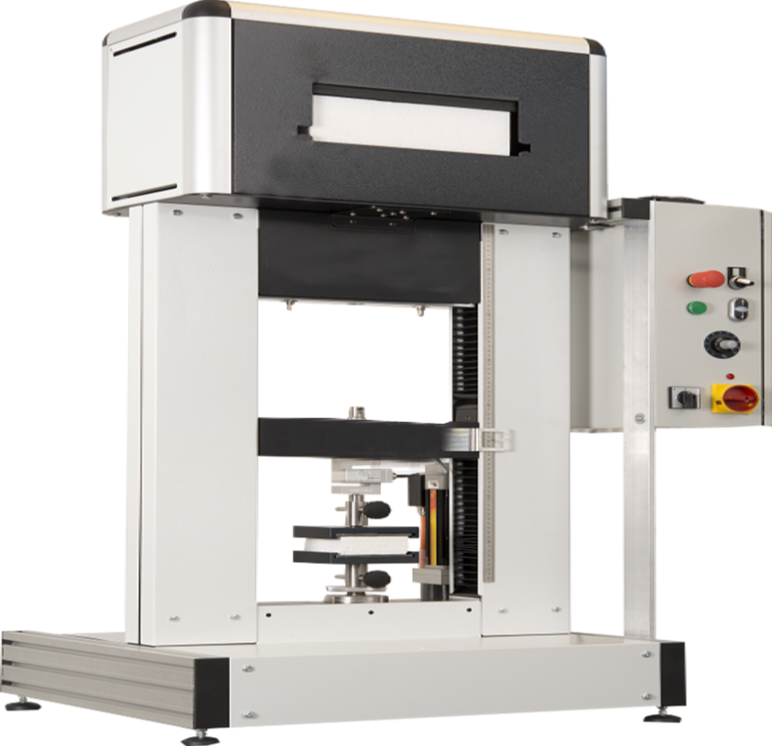
The Safety Helmets Wearing Stability Tester is designed to evaluate helmet retention and fit under dynamic conditions, simulating real-world head movements and impact scenarios. It provides precise measurement of helmet stability, retention forces, and deformation, ensuring compliance with international and national safety standards. The instrument is suitable for production quality control, R&D, and certification testing of industrial, sports, and cycling helmets.
Application
This tester is suitable for assessing helmet fit stability and retention performance for:
(1) Industrial helmets used in construction, manufacturing, and mining
(2) Cycling helmets for road, mountain, and urban riding
(3) Sports helmets for skating, climbing, skiing, and other high-mobility activities
(4) Motorcycle and E-bike helmets for rider safety certification
(5) R&D of custom helmet designs with adjustable retention systems
Standards
The tester complies with the following standards:
(1) GB 811-2022 – Safety Helmets: General Technical Requirements
(2) GB 24429-2009 – Sports Helmets: Requirements and Test Methods
(3) GB/T 2812 – Safety Helmets: Test Methods
(4) ISO 6220-2 – Industrial Safety Helmets: Fit Stability
(5) CE Certification (Conformité Européenne)
Parameters
| Parameter | Specification |
|---|---|
| Impact Weight | 10.0kg ±0.1kg (stainless steel) |
| Initial Load | 3.0kg ±0.1kg (adjustable) |
| Release Method | Manual lever with safety interlock |
| Tilt Range | 0–360° (1° resolution) |
| Force Sensor | 0–500N range, 0.1N resolution |
| Data Acquisition | 16-bit resolution, 1,000Hz sampling |
| Power Supply | 220V AC, 50/60Hz (single-phase) |
| Dimensions | 800mm (W) × 600mm (D) × 1,500mm (H) |
| Weight | 150 kg (net) |
Features
Multi-Standard Compliance: Simulates extreme lateral forces and evaluates retention system integrity.
High-Precision Measurement: 0.1kg load resolution and 0.1N force sensor accuracy for repeatable results.
Dynamic Tilt Testing: 360° tilt mechanism reproduces real-world head movements.
User-Friendly Operation: 7” touchscreen HMI with preloaded GB/T 2812 sequences and real-time force graphs.
Quick-Swap Helmet Clamp: Rapid replacement of helmets for high-throughput labs.
Safety Systems: Dual interlocks and overload protection prevent accidental activation and sensor damage.
Self-Calibrating System: Auto-tare and linearity checks before each test.
Durable Construction: Aircraft-grade aluminum frame and corrosion-resistant sensors ensure long-term reliability.
Accessories
(1) Testing Kit: 2x universal helmet clamps (adjustable for 50–65 cm heads), 5x calibration grade load cells (10N–500N)
(2) Software Suite: License key for StabilityTest Pro (Windows/macOS), 1-year free access to cloud-based fit analysis tools
(3) Calibration & Safety: NIST-traceable force gauge, 2x safety glasses (EN 166 rated), 1x face shield
(4) Maintenance Kit: Spare accelerometers and load cells, machine cleaning solution (non-corrosive)
(5) Documentation: Multilingual quick-start guide (printed + digital), compliance certificates for GB/ISO standards
Maintenance Information
Inspect helmet clamps, tilt mechanism, and load cells regularly; replace worn parts.
Verify calibration of force sensors every six months using NIST-traceable instruments.
Clean frame, clamps, and sensors with non-corrosive solutions to maintain accuracy.
Store the tester in a dry, temperature-controlled environment to prevent corrosion.
Follow standard electrical safety procedures during operation and maintenance.
FAQ
1. What is a Safety Helmets Wearing Stability Tester?
This device evaluates the stability and secure fit of safety helmets when worn, ensuring they remain properly positioned during movement, impacts, or vibrations.
2. How does the wearing stability test work?
The helmet is mounted on a headform or test rig and subjected to tilting, shaking, or rotational motions. Sensors or displacement measurements assess how much the helmet shifts or tilts under simulated conditions.
3. What types of helmets can be tested?
It can test industrial safety helmets, construction helmets, bicycle helmets, motorcycle helmets, and other protective headgear designed for personal safety.
4. What parameters are measured during testing?
The tester measures displacement, tilt angle, rotation, slippage, and sometimes retention force of the helmet. Data is used to evaluate the helmet’s stability and proper fit.
5. Why is wearing stability testing important?
Testing ensures helmets stay securely on the wearer’s head during work or accidents, maximizing protection, comfort, and compliance with safety standards such as EN 397. ANSI Z89.1. or ISO.
If you're ready to take the next step, Leave your message below and we'll reply soon. 20+ years of manufacturing & export experience, a partner you can trust.