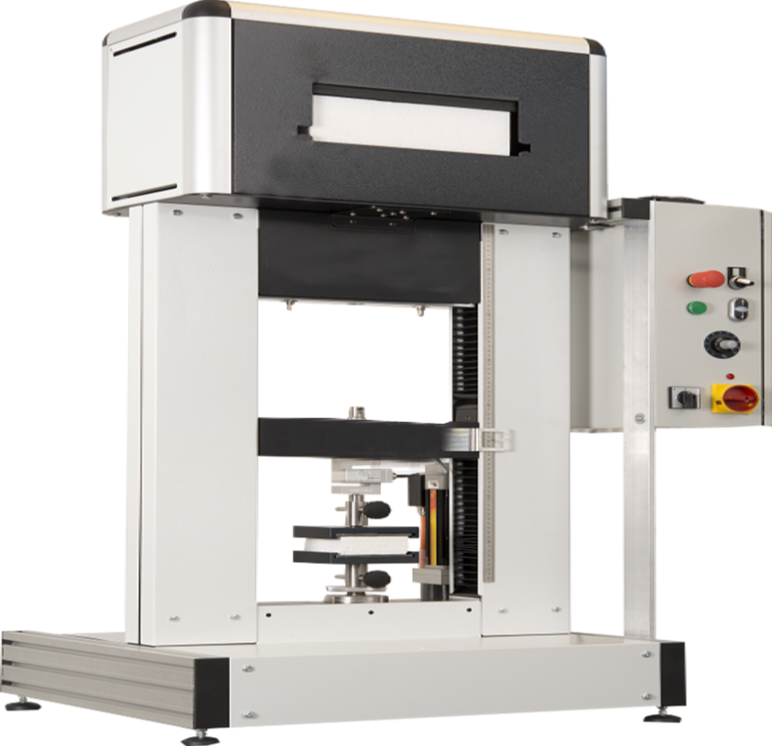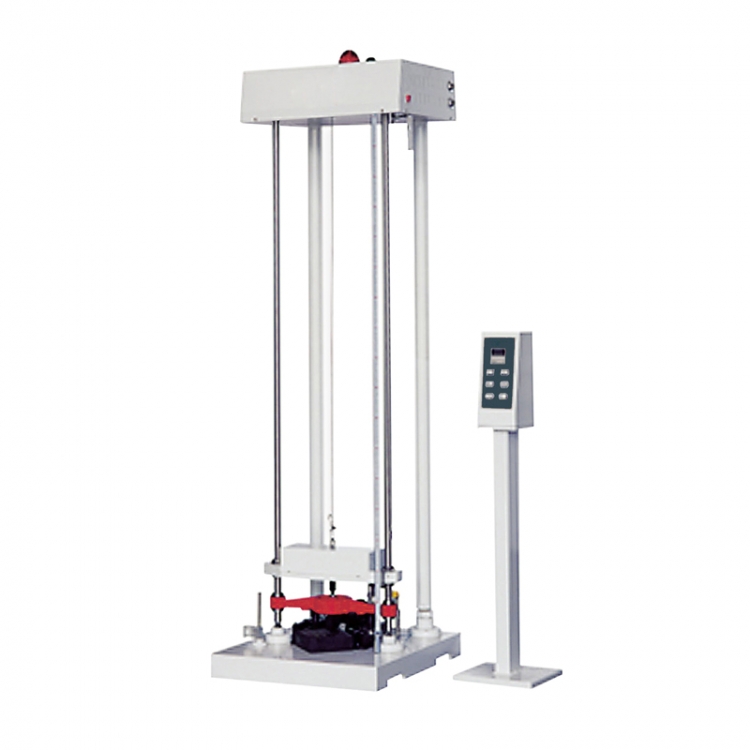
Safety Shoe Impact Tester
Category:Universal Strength Tester
Factory Direct
Stable Performance
Intl. Standards
Tech Support
Fast Delivery
Global Shipping

Introduction
The Safety Shoe Impact Testing Machine is designed to evaluate the impact resistance of protective toecaps in safety footwear by simulating the effect of falling objects under controlled and repeatable conditions. By applying a specified impact energy through a standardized drop hammer, the tester measures the protective performance of the shoe toe area and verifies compliance with international and national safety footwear standards. The equipment is essential for certification testing, quality control, and product development in the safety footwear industry.
Application
The testing machine is suitable for impact resistance evaluation of a wide range of protective footwear and components. Typical application scenarios and products include:
(1) Industrial Safety Shoes – steel toe shoes, composite toe shoes, aluminum toe shoes used in construction, manufacturing, and heavy industry.
(2) Protective Work Boots – mining boots, oil and gas safety boots, logistics and warehouse safety footwear.
(3) Electrical Safety Footwear – electrically insulating safety shoes with impact-resistant toecaps.
(4) Military and Police Footwear – combat boots and tactical safety footwear with reinforced toe protection.
(5) Occupational Footwear for Utilities – power grid, telecommunications, and municipal service safety shoes.
(6) Safety Footwear Components – steel toe caps, composite toe caps, plastic toe caps tested independently before assembly.
(7) Footwear R&D and Design Validation – comparative testing of new materials and toecap structures.
(8) Quality Inspection and Certification – factory quality control, third-party laboratories, and government inspection agencies.
Standards
The Safety Shoe Impact Testing Machine complies with and supports testing according to the following international and national standards:
(1) EN ISO 20344 – Personal protective equipment – Test methods for footwear
(2) EN ISO 20345 – Safety footwear
(3) EN ISO 20346 – Protective footwear
(4) EN ISO 20347 – Occupational footwear
(5) EN 12568 – Foot and leg protectors – Requirements and test methods for toecaps
(6) BS EN 344 – Safety, protective and occupational footwear for professional use – Test methods
(7) BS 953 – Specification for steel toe caps for safety footwear
(8) ANSI Z41 – Personal protection – Protective footwear (superseded but still referenced)
(9) ASTM F2412 – Standard test methods for foot protection
(10) ASTM F2413 – Standard specification for performance requirements for protective footwear
(11) CSA Z195 – Protective footwear (Canada)
(12) AS/NZS 2210.2 – Occupational protective footwear – Test methods (Australia/New Zealand)
(13) JIS T8101 – Safety shoes (Japan)
(14) CNS 6863 – Safety footwear
(15) GB/T 20991 – Personal protective equipment – Safety footwear (China)
(16) GB 4014-1983 – Steel toe caps for safety footwear (China)
(17) LD 50 – Labor protection footwear standards (China, historical reference)
Technical Parameters
| Parameter | Specification |
|---|---|
| Drop Hammer Weight | (EN) 20 ± 0.2 kg; (BS / ANSI) 22.7 kg |
| Falling Height | (EN) 0 – 1100 mm |
| Impact Energy | (EN) 200 J; (BS / ANSI) 100 ± 2 J |
| Impact Edge | (EN) R 3 ± 0.1 mm; (ANSI) Ø 25.4 mm |
| Motor Power | DC 1/4 HP |
| Machine Dimensions | 58.5 × 69.5 × 181.5 cm |
| Machine Weight | Approx. 227 kg |
| Power Supply | Single phase, AC 220 V |
Advantages
(1) Measures critical safety properties by quantifying the impact resistance of safety shoe toecaps.
(2) Simulates real-world impact hazards caused by falling or dropped objects.
(3) Complies with multiple international standards through configurable hammer weights and drop heights.
(4) Provides objective and repeatable test results based on residual internal height and deformation.
(5) Supports both finished footwear and separate toe cap testing.
(6) Robust mechanical structure ensures long-term stability under repeated high-energy impacts.
(7) Essential equipment for product certification, factory inspection, and laboratory testing.
Accessories
(1) Standard drop hammer set (EN / BS / ANSI) – 1 set
(2) Shoe holding fixture – 1 set
(3) Residual height measuring device – 1 set
(4) Power cable – 1 piece
(5) User operation manual – 1 copy
FAQ
1. What is a Safety Shoe Impact Testing Machine?
This machine evaluates the impact resistance of safety shoes, ensuring that toes and other critical areas can withstand heavy falling objects or compressive forces.
2. How does the impact test work?
A standardized weight or striker is dropped onto the shoe’s toe or other impact zones. Sensors measure the force transmitted through the shoe to the internal area, simulating real-world impacts.
3. What types of safety shoes can be tested?
It can test steel-toe shoes, composite-toe shoes, industrial footwear, construction boots, and other protective shoes designed to prevent foot injuries.
4. What parameters are measured during testing?
The tester measures transmitted force, deformation, energy absorption, and sometimes the height or weight of the impacting object. Results are used for compliance with safety standards.
5. Why is impact testing important for safety shoes?
Testing ensures shoes can protect wearers from falling objects, crushing accidents, or industrial hazards, maintaining safety and compliance with standards such as ASTM F2413. EN ISO 20345. or CSA Z195.
If you're ready to take the next step, Leave your message below and we'll reply soon. 20+ years of manufacturing & export experience, a partner you can trust.