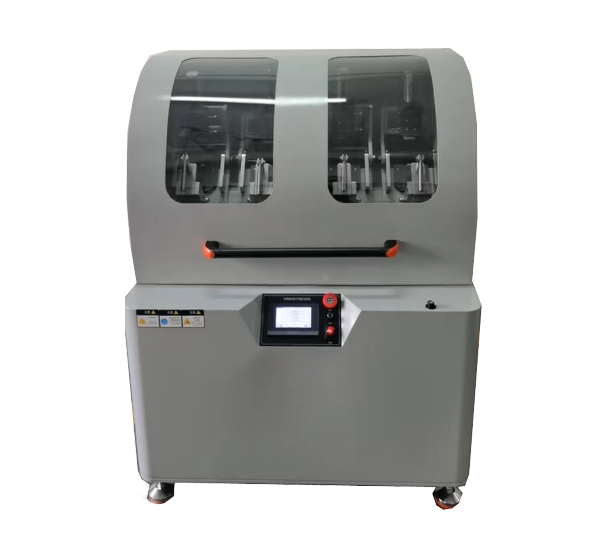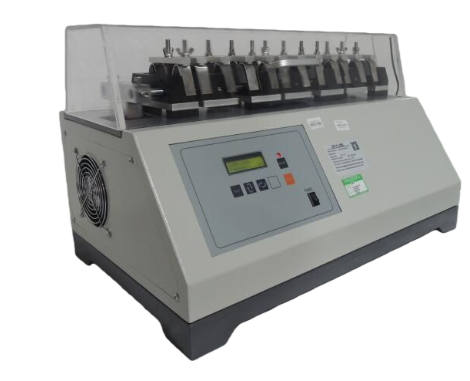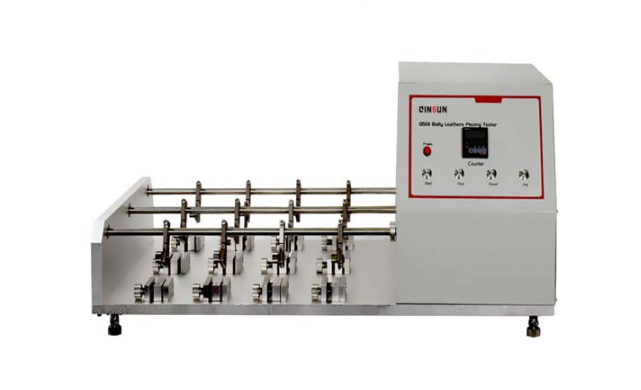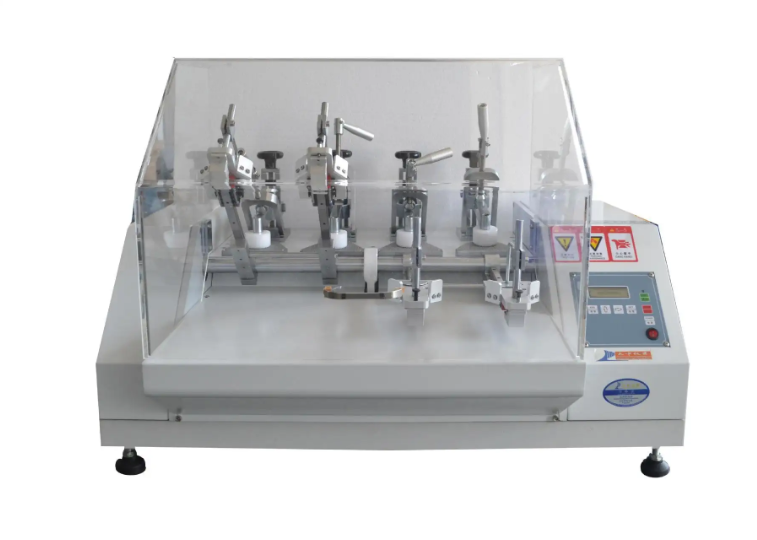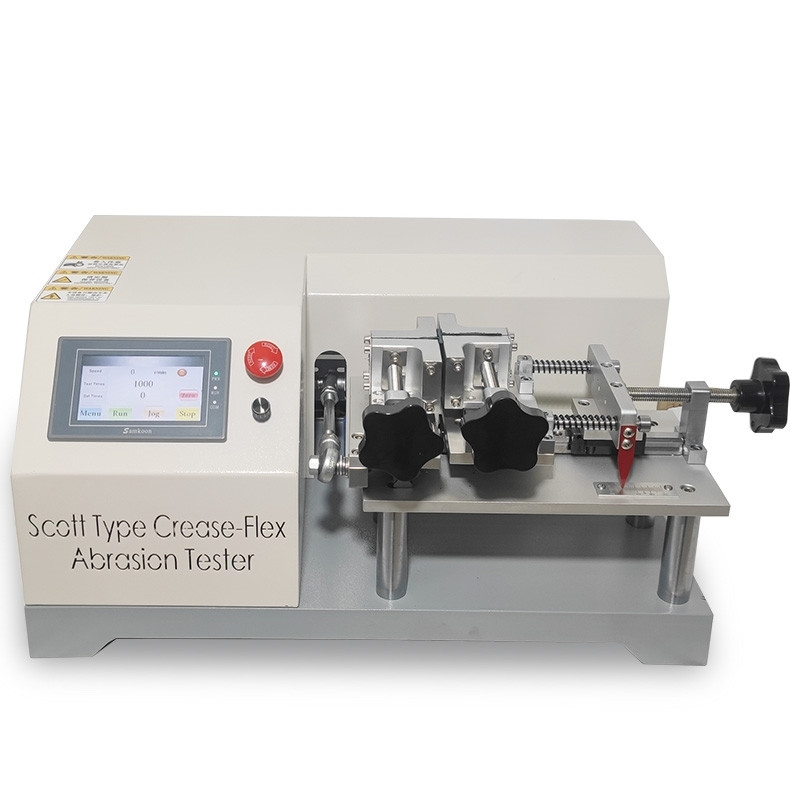
Scott Flex Tester
Category:Flexing & Fatigue Tester
Factory Direct
Stable Performance
Intl. Standards
Tech Support
Fast Delivery
Global Shipping

Introduction
The Scott Flex Tester is designed to evaluate the flexing and kneading resistance of leather, artificial leather, woven fabrics, and other flexible sheet materials. By repeatedly bending or kneading samples under controlled pressure and stroke, the instrument quantitatively assesses material durability and fatigue resistance. It is widely used in quality control, material development, and research applications for the leather and textile industries.
Application
The Scott Flex Tester is suitable for:
(1) Leather Industry: Testing durability of natural and synthetic leather for shoes, garments, bags, and upholstery.
(2) Textile and Woven Materials: Evaluating wear resistance of fabrics used in clothing, furniture, automotive interiors, and industrial applications.
(3) Quality Control: Ensuring materials meet flexing and bending resistance requirements before production or sale.
(4) R&D: Assisting in the development of new flexible materials with optimized durability.
Specific products tested include: leather shoes, leather bags, synthetic leather upholstery, denim, woven textiles, and composite flexible materials.
Standards
The instrument complies with the following international and national standards:
(1) GB/T 8948-2008 – Test method for flexing of leather
(2) JIS L1096 – Leather testing methods (Japan)
(3) K6404/ASO M403 – Flexing test for leather and flexible materials
Technical Parameters
| Parameter | Specification |
|---|---|
| Specimen Load | 200 – 2000 g |
| Clamp Width | 45 mm |
| Clamp Spacing | ~50 mm (adjustable) |
| Test Speed | 120 cycles/min |
| Test Stroke | ~60 mm (adjustable) |
| Power Supply | 220 V, 50 Hz |
| Machine Dimensions (L × W × H) | 450 × 370 × 500 mm |
| Machine Weight | 60 kg |
Features
(1) Controlled Flexing Motion: Both ends of the sample are held in clamping fixtures and flexed back and forth under adjustable stroke and pressure.
(2) Customizable Test Parameters: Stroke length, number of cycles, and applied pressure can be precisely controlled.
(3) Multiple Sample Testing: Supports testing of several samples simultaneously for efficiency.
(4) Objective Assessment: Evaluates damage after a set number of cycles or determines cycles to failure.
(5) Robust Construction: Suitable for repetitive testing with long-term durability.
(6) Cycle Counter: Built-in counter records the number of flexing cycles performed.
Accessories
(1) Standard specimen laser cutter – 1 set
(2) Product manuals – 1 set
(3) CNAS-accredited calibration report – 1 set
Maintenance Information
(1) Regularly clean the clamps and flexing mechanism to remove dust and debris.
(2) Check the alignment and condition of clamping fixtures before each test.
(3) Lubricate moving parts periodically according to manufacturer guidelines.
(4) Store the machine in a dry, dust-free environment to prevent corrosion.
(5) Perform periodic calibration to ensure compliance with testing standards.
If you're ready to take the next step, Leave your message below and we'll reply soon. 20+ years of manufacturing & export experience, a partner you can trust.