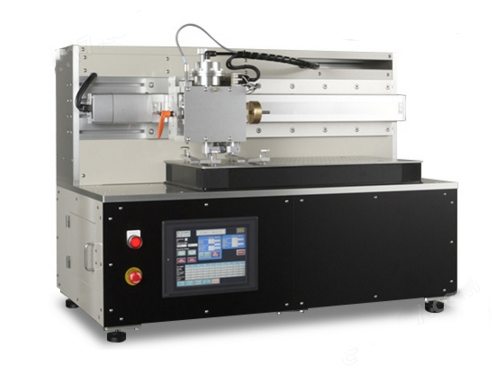
Scratch Resistance Testing Instrument
Category:Scratch Tester
Introduction
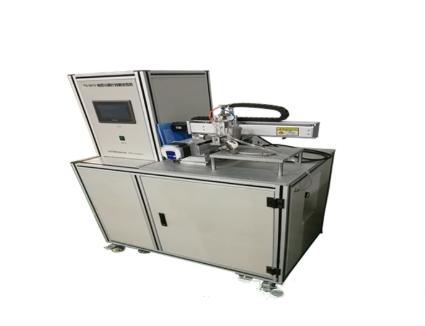
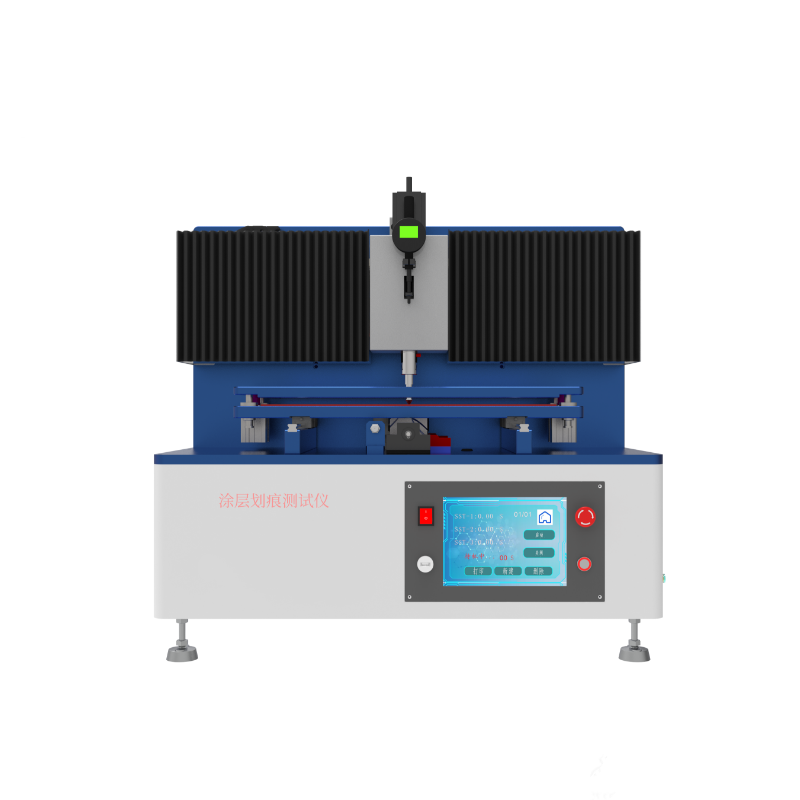
The Scratch Resistance Testing Instrument is a precision device designed to evaluate the scratch resistance of solid insulation components, printed circuit boards, and other accessible parts in household appliances and similar products. The instrument ensures that tested materials possess sufficient mechanical strength and surface durability to resist penetration or damage by sharp objects. It provides reproducible, quantitative, and reliable data for product development, quality control, and safety verification.
Application
The Scratch Resistance Testing Instrument is widely used for:
Scratch testing on solid insulation components of household appliances
Evaluation of printed circuit boards (PCBs) and accessible parts for mechanical durability
Testing enclosures and surfaces for resistance against sharp tools
Comparative assessment of material formulations and surface treatments
Specific testing product: Scratch Resistance Testing Instrument
Standards
The instrument complies with key international and national safety and mechanical standards:
GB 4943.1‑2011 – Information technology equipment – Safety, Part 1 (Clause 2.10.6.6: mechanical strength, drop, impact)
GB 4706.1‑2014 – Household and similar electrical appliances – Safety, Part 1 (Clause 21.2: mechanical strength, scratch resistance of enclosures)
IEC 60950‑1 – Information technology equipment – Safety, Part 1 (Clause 2.10.6.6: mechanical strength, drop, impact)
IEC 60335‑1 – Household and similar electrical appliances – Safety, Part 1 (Clause 21.2: mechanical strength, scratch resistance of enclosures)
Parameters
| Item | Details |
|---|---|
| Input Voltage | AC 220V / 50Hz |
| Control System | PLC + Touch Screen |
| Drive Type | Stepper motor drive |
| Scratch Speed | 0 – 25 mm/s, adjustable |
| Number of Tests | 0 – 9999. programmable |
| Scratch Spacing (General) | Adjustable |
| Rotating Table | 360° rotation for longitudinal and transverse tests |
| Scratch Pressure | 10 N ±0.5 N |
| Scratch Needle | Hardened steel, conical tip, 40° apex angle, rounded radius R0.25 ±0.02 mm, replaceable |
| Scratch Angle | Needle movement plane perpendicular to sample surface; forward scratching angle 80°–85°, adjustable |
| Scratch Length | Max 200 mm, adjustable |
| Translation Distance | Max 200 mm, adjustable |
| Scratch Spacing (Specific Range) | 1 – 19 mm, adjustable |
| Scratch Speed (Specific) | 20 mm/s ±5 mm/s, adjustable |
Features
Hardened Steel Needle: Conical tip with polished rounded radius ensures consistent, precise scratches.
Controlled Vertical Load: 10 N ±0.5 N ensures reproducible results; adjustable for different testing requirements.
High Precision Movement: Stepper motor drive allows smooth, accurate scratching across the sample surface.
PLC + Touchscreen Control: Provides intuitive operation, real-time monitoring, and programmable test cycles.
Adjustable Parameters: Scratch spacing, length, angle, and speed can be customized for various applications.
360° Rotating Worktable: Enables longitudinal and transverse scratch testing easily.
Reliable and Repeatable: Designed to ensure accurate evaluation of scratch resistance for safety-critical components.
Accessories
Hardened steel scratch needles (standard R0.25 mm, replaceable)
Additional force weights (optional for higher load testing)
Rotating worktable
Calibration and maintenance tools
PLC + touchscreen interface
FAQ
1. What is the core advantage of this product?
Provides accurate, reproducible scratch testing for solid insulation components and PCBs in household appliances.
2. Are the test results reliable?
Yes. The combination of PLC control, stepper motor precision, and adjustable loads ensures highly reproducible results.
3. Which international or industry standards does it comply with?
GB 4943.1‑2011. GB 4706.1‑2014. IEC 60950‑1. IEC 60335‑1.
4. Why is this product important?
It ensures safety-critical components have sufficient mechanical strength and surface durability to resist scratches, supporting regulatory compliance and quality control.
5. Which industries or applications is it suitable for?
Household appliance manufacturing, electronics assembly, PCB production, and testing of enclosures and solid insulation components.