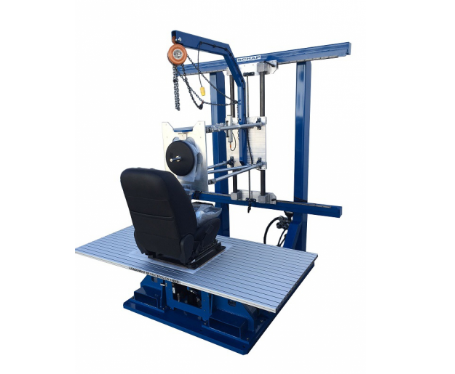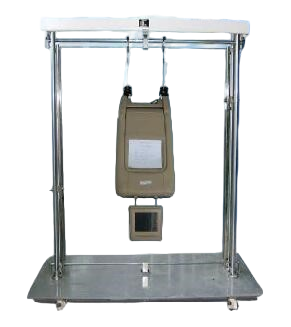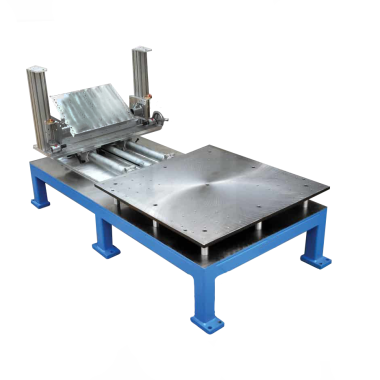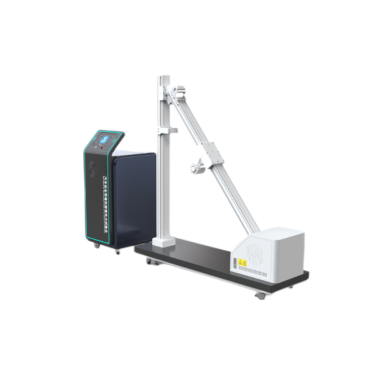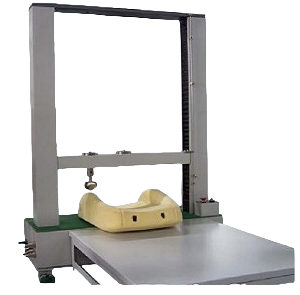
Seat Foam Compression Hardness Tester
Category:Seating Testers

Introduction
The Seat Foam Compression Hardness Tester is a professional testing system designed to evaluate the mechanical properties of automotive seat foam, including tensile strength, compression, resilience, and compressive hardness. It accurately simulates real-world conditions, ensuring compliance with national and international standards. The tester is widely used by automotive OEMs, seat manufacturers, safety laboratories, and research institutions to verify foam performance and ensure occupant comfort and durability.
Application
(1) Measurement of tensile strength, compression, rebound, and collapsible hardness of automotive seat foam.
(2) Verification of seat foam resilience and comfort for OEMs and suppliers.
(3) Quality control in seat manufacturing and material verification.
(4) Research and development of polyurethane and other foam materials.
(5) Compliance testing according to national and international foam performance standards.
Standards
(1) GB/T 6670-2008 — Determination of falling ball resilience of soft foam polymeric materials.
(2) ASTM D3574 — Standard Test Methods for Flexible Cellular Materials – Slab, Bonded, and Molded Urethane Foams.
(3) ISO 3385 — Standard for testing resilience and compression characteristics of foam materials.
Technical Parameters
| Parameter | Specification |
|---|---|
| Control & Display | Computer-controlled |
| Sensor | High-precision load cell |
| Load Capacity | 200 kg |
| Unit | kg, N, lb |
| Upper Plate | Diameter 200 mm, bottom fillet R1 mm |
| Lower Plate | 400 × 400 mm, hole diameter 6 mm, spacing 20 mm |
| Maximum Stroke | 500 mm |
| Test Speed | 0–500 mm/min, adjustable |
| Motor | Servo motor |
| Drive | Taiwan high-precision ball screw |
| Power Supply | Single phase, 220 V, 50 Hz |
| Machine Weight | 160 kg |
| Dimensions | 790 × 590 × 1010 mm |
Features
(1) Supports multiple test types: tensile, compression, rebound, and collapsible hardness.
(2) Adjustable test speed and stroke to simulate diverse real-world usage conditions.
(3) High-precision load cells and sensors ensure accurate measurement of tensile strength, elongation, compression, resilience, and hardness.
(4) Advanced data acquisition system for real-time recording, processing, and analysis.
(5) Accommodates various sample sizes and shapes to meet different test protocols.
(6) Safety features include overload protection and emergency stop for reliable operation.
(7) Durable mechanical structure with servo motor and high-precision ball screw for stable long-term performance.
Optional Accessories
(1) Industrial computer with dedicated software for test control and data analysis.
(2) Protective covers and anti-vibration mounting base.
(3) Additional load cells for extended measurement range.
(4) Calibration kits for sensors and load cells.
Maintenance
(1) Inspect mechanical components and moving parts regularly for wear or loosening.
(2) Calibrate sensors and load cells periodically to maintain measurement accuracy.
(3) Keep control computer and electrical components clean and dry.
(4) Check all cables and connectors for secure attachment.
(5) Ensure emergency stop and overload protection systems are functional before operation.
(6) Lubricate moving parts according to the maintenance schedule.
If you're ready to take the next step, Leave your message below and we’ll reply soon. 20+ years of manufacturing & export experience, a partner you can trust.