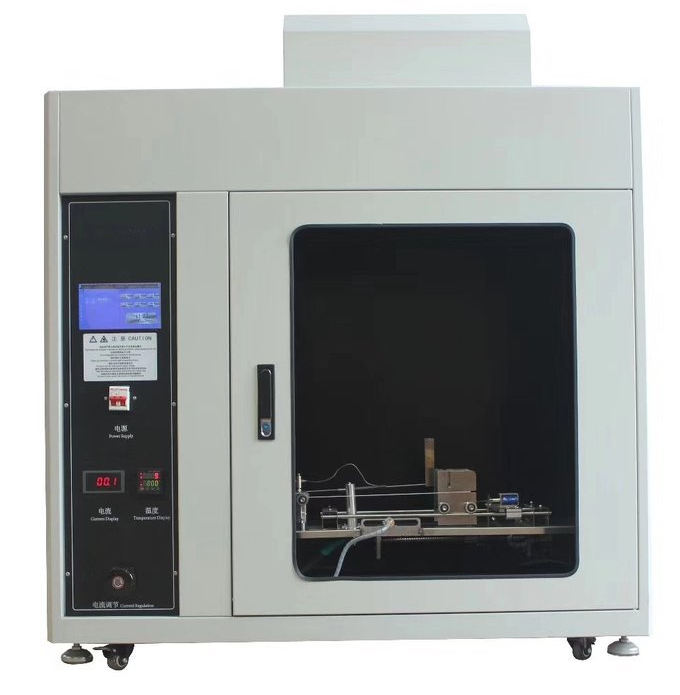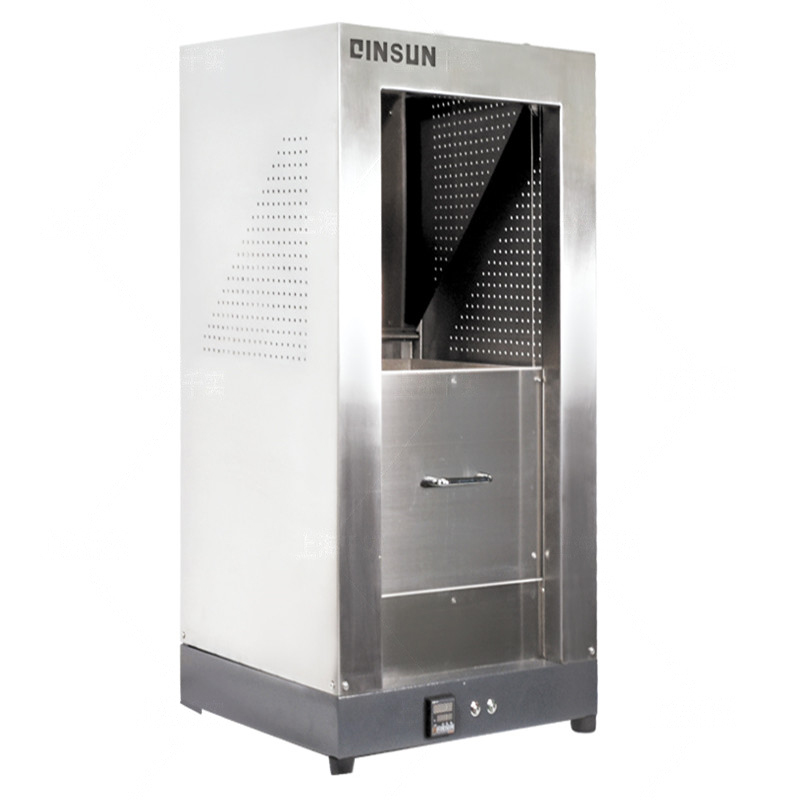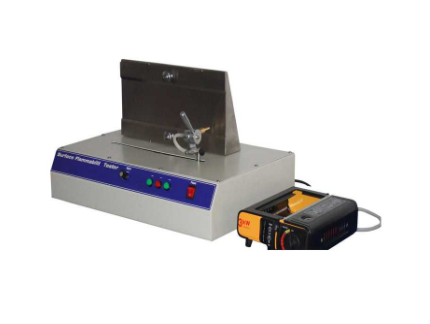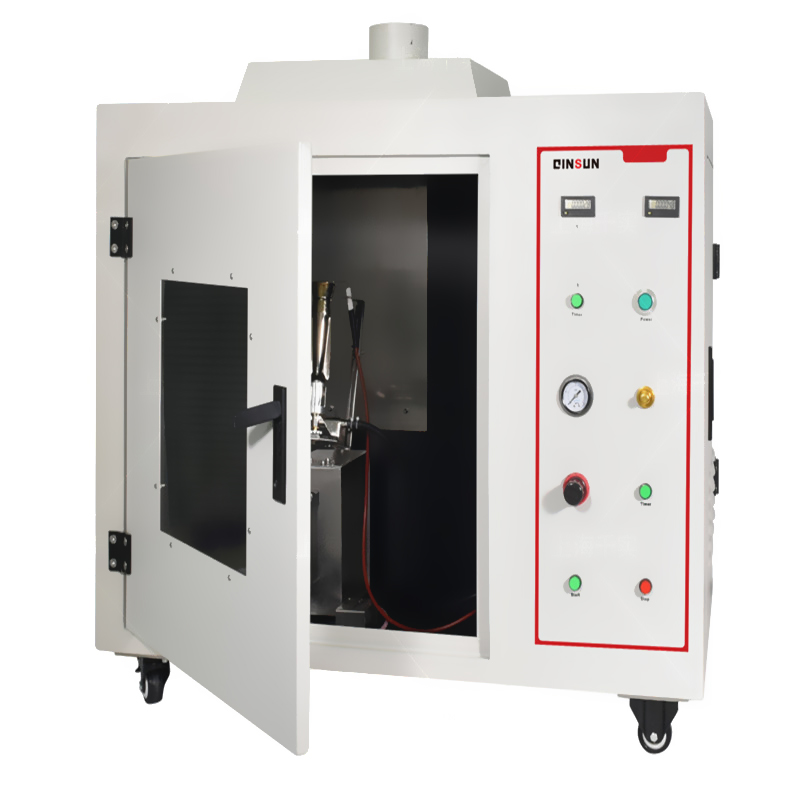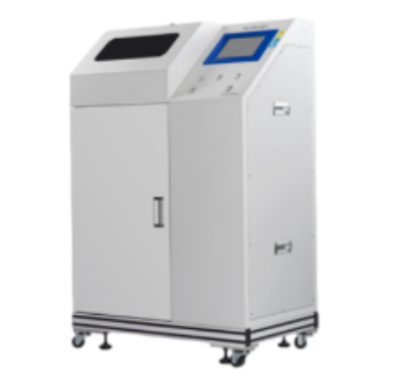
Solids Spontaneously Igniting Tester
Category:Flammability Tester
Factory Direct
Stable Performance
Intl. Standards
Tech Support
Fast Delivery
Global Shipping

Introduction
Conforms to the UN Recommendations on the Transport of Dangerous Goods – Manual of Tests and Criteria 33.3.1.4 Test N.2: Test Methods for Pyrophoric Solids and GB/T 21611-2008 Test Methods for Spontaneous Combustion of Flammable Solids for Dangerous Goods.
Applications
This Solids Spontaneously Igniting Tester is a professional instrument used to test whether solid substances can burn when in contact with air, which greatly facilitates the supervision of the production and transportation of shipped solid substances.
Standards
(1)GB/T 21756-2008: Chemical products for industrial use – Determination of the relative autoignition temperature of solid substances
(2)NF T20-036-1985: Determination of the autoignition temperature of solid substances
(3)NY/T 1860: Guidelines on the determination of physico-chemical properties of pesticides
Technical Parameters
| Operating environment | (5~40)℃,<85%RH |
| Timing range | (0~999)s |
| Timing display resolution | 1s |
| Drop height | 1m |
| Flame detection response time | ≤6ms |
Features
(1)It adopts an embedded processor and the Windows CE operating system.
(2)With an 8 – inch liquid – crystal touch screen, it can display the test status in real – time.
(3)It is equipped with a nanosecond – level photosensitive sensor detection module to detect light intensity changes.
(4)The instrument is mainly composed of a test stand and a control part, which can automatically determine whether the test substance is burning.
(5)During the test, if the substance burns, or when the test time is up and the substance has not burned, the device will automatically alarm to remind the operator that the test is over.
(6)It is equipped with an automatic shaking and dropping device for quick and thorough sample loading.
(7)It is equipped with a low – thermal – conductivity marble experimental base, which has a long service life and is easy to clean.
(8)The test process is fully automated, requiring no manual intervention. It supports functions such as parameter setting, data storage, and report viewing.
Accessoriess
(1)Core Operating Components
Test Environment Components: Sealed test chamber (provides a spontaneous combustion test environment for solid samples in contact with air, conforming to UN Test N.2/GB/T 21611-2008 requirements);
Sample Carrier: Standard sample placement device (suitable for loading samples for spontaneous combustion tests, ensuring full contact between the sample and air);
Detection Module: Nanosecond-level photosensitive sensor detection module (accurately captures changes in light intensity and identifies spontaneous combustion phenomena in samples);
Control and Display Components: Embedded processor (equipped with Windows CE system), 8-inch LCD touchscreen (real-time display of test status);
System Unit: Automatic control module (supports fully automated operation of the test process).
(2)Auxiliary Components
Sample Processing Components: Analytical balance (quantitatively weighs the solid sample to be tested), grinder + standard sieve (processes sample particle size to match test standard requirements);
Calibration and Maintenance Components: Standard spontaneously combustible solid sample (calibrates instrument detection accuracy), cleaning brush/cotton swab (cleans residue from the test chamber);
Data Management Components: USB flash drive (exports test data, status records, and reports).
Maintenance Information
(1)Routine Inspection: Check the ignition chamber, temperature sensors, and sample holders for wear, damage, or residue buildup before each test.
(2)Cleaning: After each test, thoroughly clean the ignition chamber, probes, and surrounding surfaces to prevent contamination and ensure accurate results.
(3)Calibration and Safety Checks: Periodically calibrate temperature sensors and timers; verify that all safety interlocks, ventilation systems, and emergency shutdown features are functional.
FAQ
1. What is the Solids Spontaneously Igniting Tester used for?
It is used to determine whether solid materials can ignite spontaneously under controlled temperature and environmental conditions.
2. Which types of solids can be tested?
The tester is suitable for powders, fibers, granules, and other solid materials with potential self-ignition hazards.
3. How does the tester work?
A sample is placed in a controlled ignition chamber where temperature and environmental conditions are monitored to detect spontaneous combustion events.
4. What safety features does it include?
The tester is equipped with ventilation systems, emergency shutdowns, and heat-resistant chambers to prevent accidents during testing.
5. How should the tester be maintained?
Maintenance includes cleaning the ignition chamber and sample holders, inspecting sensors and interlocks, and calibrating temperature and timing systems regularly.
If you're ready to take the next step, Leave your message below and we'll reply soon. 20+ years of manufacturing & export experience, a partner you can trust.