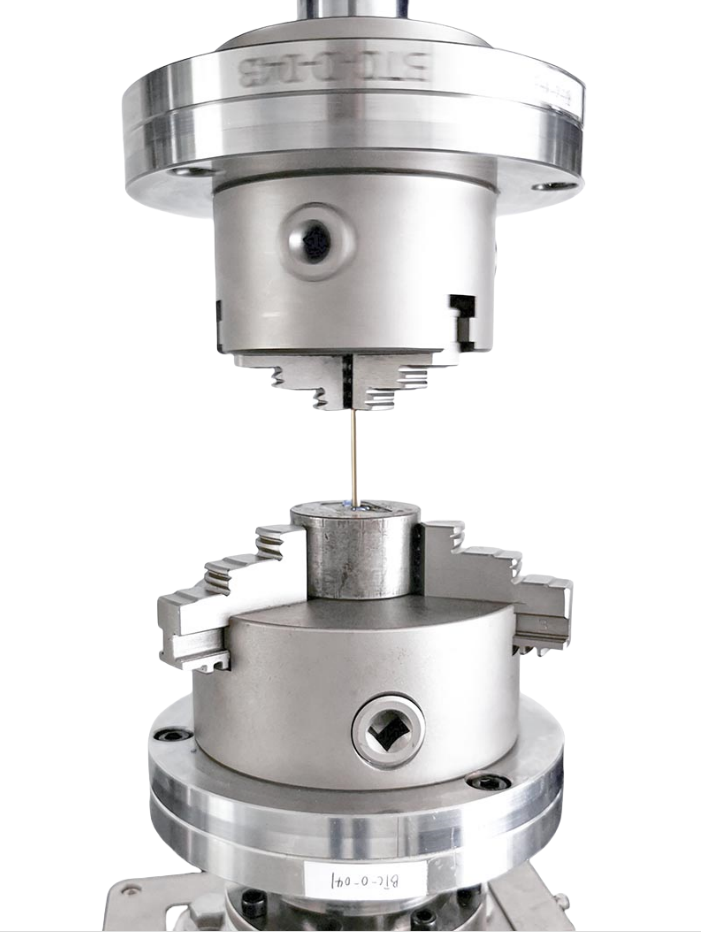
Spinal Internal Fixation System Assembly Testing Machine
Category:Medical Device Tester
Factory Direct
Stable Performance
Intl. Standards
Tech Support
Fast Delivery
Global Shipping

Introduction
The Spinal Internal Fixation System Assembly Testing Machine is a specialized device used to evaluate the mechanical performance of spinal fixation assemblies, including screws, rods, plates, and connectors. It simulates physiological loads such as compression, tension, bending, and torsion to assess the strength, fatigue resistance, and durability of spinal implant systems under realistic conditions.
Standards
(1)YY/T 0961
(2)ASTM F1798
These standards specify test methods for evaluating the uniaxial static and fatigue strength of spinal internal fixation systems, as well as the resistance to loosening of assembly connection devices. The purpose is to provide a mechanical performance evaluation method for spinal implant connection devices of different designs.
Application
The Spinal Internal Fixation System Assembly Testing Machine is designed to evaluate the mechanical performance, stability, and assembly integrity of spinal implants. Typical applications include:
Orthopedic implant testing: Assess the strength, stiffness, and fixation stability of assembled pedicle screws, rods, plates, and cages.
Quality control: Ensure consistent performance and proper assembly of spinal fixation devices during manufacturing.
Research and development: Optimize implant design, materials, and connection mechanisms for improved biomechanical performance.
Standards compliance: Conduct tests in accordance with ISO 12189. ASTM F1717. and other relevant international guidelines to verify assembly reliability.
This machine ensures spinal fixation systems meet mechanical and structural requirements for safe clinical use.
Specifications
| Parameter | Specification |
|---|---|
| Maximum Load Peak | 4400 N |
| Dynamic Load Peak | 3000 N |
| Static Load Peak | 2100 N |
| Testing Machine Accuracy Class | 0.5 |
| Load Measurement Range | 0.4% – 100% F.S. |
| Load Measurement Accuracy | Better than ±0.2% of indicated value (within the load measurement range) |
| Maximum Fatigue Loading Frequency | 100 Hz |
| Axial Stroke | 30 mm |
| Displacement Resolution | 0.1 μm |
| Test Space (upper-lower fixture spacing) | 0 – 950 mm |
| Net Weight | Approx. 900 kg |
| Dimensions | Approx. 1000 × 700 × 1800 mm |
| Optional Environmental Accessories | Water bath environment, high-temperature environment, low-temperature environment, humidity control environment, etc. |
| Applicable Scenarios | Fatigue, fracture, and static testing of metals, polymers, composites, and other materials; Static and dynamic testing of surgical implants (e.g., trauma, joint, spinal, dental applications); Tensile fatigue testing of polymer materials; Crack propagation testing of rubber materials |
| Optional Fixtures | Mechanical tensile fixtures, compression fixtures, bending fixtures; Femoral stem-specific fixtures, four-point bending fixtures; Spinal rod/screw-specific fixtures, tibial plateau-specific fixtures; Vertebral resection model system compression/tension fixtures; Dental implant fixtures, and other specialized testing fixtures |
Accessories
(1)Specimen Fixtures: Securely hold pedicle screws, rods, plates, and other implant components.
(2)Load Frame/Actuator: Applies controlled axial, torsional, or bending loads to the assembly.
(3)Data Acquisition System: Records forces, displacements, and deformation during testing.
(4)Calibration Tools: Ensure accuracy of sensors and measurement devices.
Maintenance Information
Daily Cleaning: Wipe fixtures, load frames, and sensors to remove debris or residues.
Calibration: Regularly calibrate force and displacement sensors for accurate results.
Inspection: Check for wear or damage on mechanical components and electrical connections.
Lubrication & Storage: Lubricate moving parts if required and store in a clean, dry environment.
FAQ
1. What is the main purpose of this machine?
It evaluates the mechanical stability, assembly integrity, and performance of spinal internal fixation systems under simulated physiological loads.
2. What types of implants can be tested?
Pedicle screws, rods, plates, cages, and other spinal fixation components assembled as a complete system.
3. How does it simulate real-life conditions?
The machine applies axial, bending, or torsional loads to mimic the stresses and movements experienced by spinal implants in the human body.
4. Which standards does it comply with?
Supports ISO 12189. ASTM F1717. and other international standards for spinal implant assembly testing.
5. How is maintenance performed?
Routine cleaning of fixtures and load frames, calibration of sensors, inspection of mechanical parts, lubrication of moving components, and proper storage in a dry environment.
If you're ready to take the next step, Leave your message below and we'll reply soon. 20+ years of manufacturing & export experience, a partner you can trust.