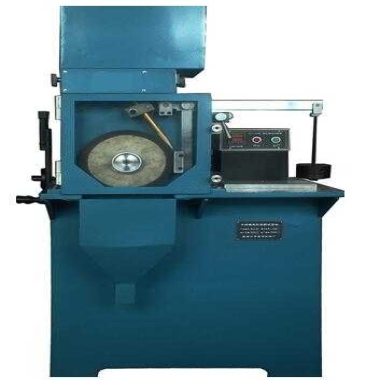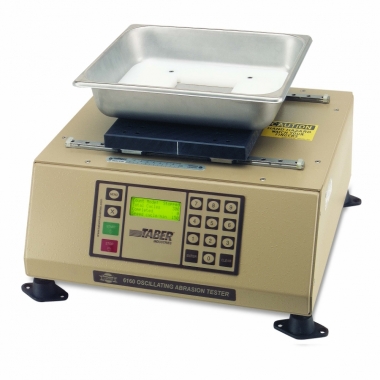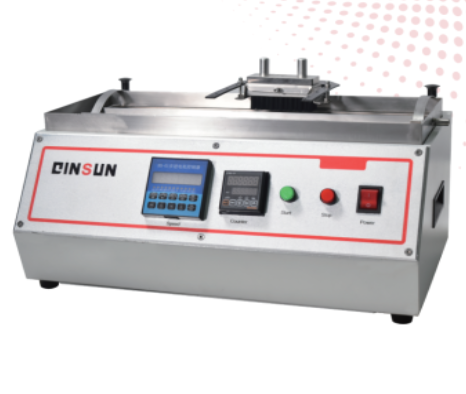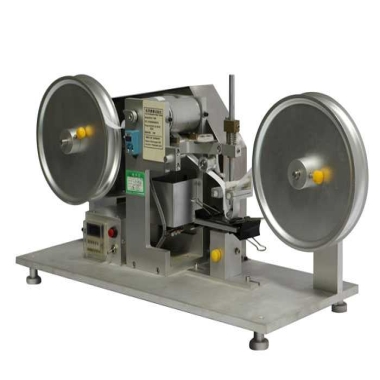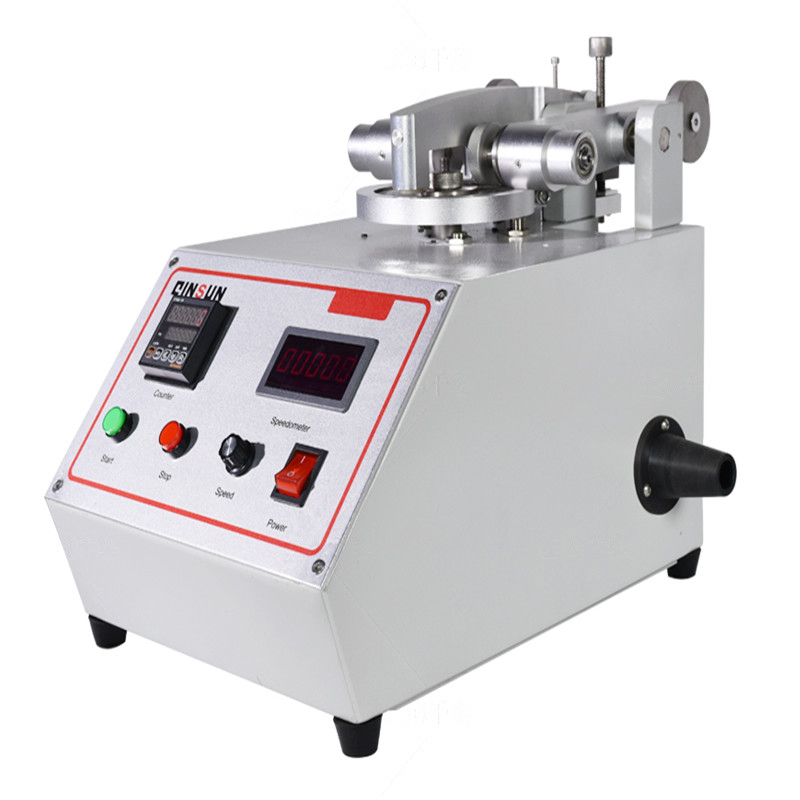
Taber Abrasion Testing Equipment
Category:Abrasion Tester
Factory Direct
Stable Performance
Intl. Standards
Tech Support
Fast Delivery
Global Shipping

Introduction
Taber Abrasion Tester is also referred to as Taber abraser or Taber abrader, which is used to evaluate the wear resistance of materials or finished products.
The machine features a rotary platform, allowing two abrading wheels to slide against the test piece at a constant speed.
This single platform Taber Abrasion Tester owns an elaborate design and adopts a precise drive system and a transmission device to ensure it runs smoothly, reliably and with low noise during use, providing a reliable and comfortable testing experience.
It is widely applicable to the determination of abrasion resistance of the leather, fabrics, textiles, coatings, paint, glass, ceramics, paper, high-pressure decorative laminates, natural rubbers, plastics, etc.
Application
The Taber Abrasion Resistance Tester is designed to evaluate the wear resistance of a wide variety of materials and finished products. It is widely used in testing laboratories across multiple industries, including textiles, coatings, paint, leather, tiles, glass, natural rubber, plastics, paper, and high-pressure decorative laminates. This tester is applicable for both dry and wet conditions, as well as samples immersed in liquids such as water or oil. It is suitable for quality control, research and development, production monitoring, and third-party product performance verification.
Standards
ISO 9352: Plastics — Determination of resistance to wear by abrasive wheels
ISO 5470: Rubber- or plastics-coated fabrics — Determination of abrasion resistance
ISO 7784: Paints and varnishes — Determination of resistance to abrasion by abrasion wheels
ASTM D1044: Standard Test Method for Resistance of Transparent Plastics to Surface Abrasion
ASTM D3884: Standard Guide for Abrasion Resistance of Textile Fabrics (Rotary Platform, Double-Head Method)
ASTM D4060: Standard Test Method for Abrasion Resistance of Organic Coatings by the Taber Abraser
ASTM D4685: Standard Test Method for Abrasion Resistance of Textile Fabrics (Oscillatory Cylinder Method)
ASTM D1175: Standard Test Method for Scratch Hardness of Plastics
GB/T 5137.1: Coating — Determination of abrasion resistance — Taber method
QB/T 2726: Coating — Test method for abrasion resistance of surface coatings
JIS K7204: Testing method for abrasion resistance of coatings
JIS A1453: Testing method for abrasion resistance of plastics
JIS K6902: Testing method for laminated thermosetting high-pressure decorative sheets
JIS L1096: Testing method for leather — Resistance to abrasion
JIS K6964: Testing method for rubber — Resistance to abrasion
DIN 52347: Determination of abrasion resistance of coatings and plastics
DIN 53109: Testing of abrasion resistance of plastics
DIN 53754: Determination of abrasion of rubbers
DIN 53799: Determination of wear resistance of plastics
SATRA TM163: Test method for abrasion resistance of leather and coated fabrics
TAPPI T476: Abrasion resistance of paper and paperboard
Parameters
| Parameter | Specification |
|---|---|
| Rotational Speed | Adjustable: 30–75 RPM (digital control) |
| Sample Diameter | 100 mm |
| Test Platform Diameter | 113 mm |
| Cycle Range | 1–999,999 revolutions (presettable) |
| Air Pressure | 250 g (standard) |
| Weight Options | 250 g, 500 g, 750 g, 1000 g (included); 125 g optional |
| Wheel Pressure Range | 125 g, 250 g, 500 g, 750 g, 1000 g, 1250 g |
| Vacuum Arm Adjustment | Height-adjustable |
| Power Supply | 220 V, 50 Hz |
| Dimensions (W×D×H) | 220 × 380 × 300 mm |
| Net Weight | 20 kg |
Basic Configuration:
G270 Taber Abrasion Resistance Tester
Weights: 250 g, 500 g, 1000 g (one pair each)
Optional Accessories:
125 g balance weights with fixed screw
Import original abrasion wheels CS-10 & H-18
Decorative sandpaper discs S-11 (100 pieces/package)
Sample stickers S-36 (50 pieces/package)
Diamond wheel polisher
Vacuum cleaner set
FAQ
What is a Taber Abrasion Resistance Tester?
It is an instrument designed to evaluate the wear resistance of materials and finished products using rotating abrasive wheels under controlled pressure and speed.
What materials can it test?
Leather, fabrics, textiles, coatings, paint, glass, ceramics, paper, natural rubber, plastics, tiles, and high-pressure decorative laminates.
Why is it important?
It ensures product durability, verifies manufacturing quality, aids in R&D, and supports compliance with international abrasion resistance standards.
How does it work?
The test specimen is mounted on a rotating platform. Two abrasive wheels rub against the sample under specified pressure while the turntable rotates. Wear resistance is evaluated by mass/volume loss or cycles to end-point.
What standards does it meet?
ISO 9352, ISO 5470, ISO 7784; ASTM D1044, D3884, D4060, D4685, D1175; GB/T 5137.1; QB/T 2726; JIS K7204, A1453, K6902, L1096, K6964; DIN 52347, 53109, 53754, 53799; SATRA TM163; TAPPI T476.
Can it handle different sample sizes and thicknesses?
Yes, the vacuum arm and sample platform adapt to various thicknesses, and counterweights can be adjusted to maintain proper pressure.
How are results ensured consistent and reliable?
Pre-grinding of abrasion wheels standardizes the surface, and the precision balance arm ensures accurate, repeatable pressure. The digital control panel allows preset cycle numbers and real-time monitoring.
If you're ready to take the next step, Leave your message below and we'll reply soon. 20+ years of manufacturing & export experience, a partner you can trust.