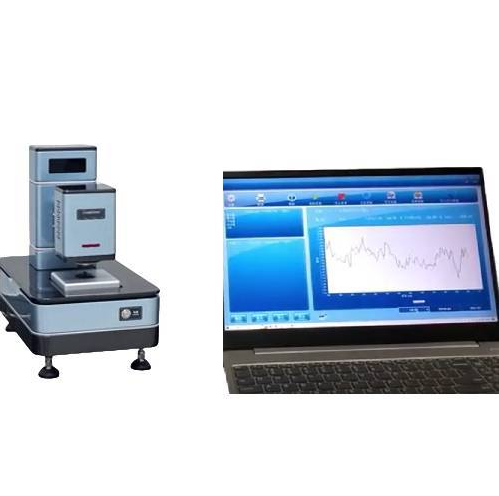
Textile UV Protection Performance Tester
Category:Fabric & Textile Tester
Factory Direct
Stable Performance
Intl. Standards
Tech Support
Fast Delivery
Global Shipping

Introduction
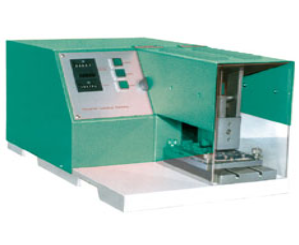
The Textile UV Protection Performance Tester is a high-precision optical instrument designed to evaluate the solar ultraviolet radiation protection properties of various materials under standardized conditions. By utilizing a stabilized xenon arc lamp and a high-sensitivity photomultiplier tube (PMT),
Applications
Textile UV Protection Performance Tester is used to evaluate the ability of textiles, fabrics, and other materials to protect against ultraviolet radiation from sunlight under specified conditions.
Standards
GB/T 18830 Textiles – Evaluation of Ultraviolet Protection
AATCC 183 Transmission or Blocking of Erythema-Weighted Ultraviolet Radiation Through Textiles
BS 7914 Standard Test Method for Ultraviolet Protection of Textiles
EN 13758-1 Test Methods for Ultraviolet Protection of Apparel Fabrics
AS/NZS 4399 Sun Protection Clothing: Evaluation and Classification – Textile UV Protection Performance Test
JIS L1925 Determination of Ultraviolet Shielding Factor of Textile Products
Parameters
| No. | Item | Specifications |
|---|---|---|
| 1 | Detection Wavelength Range | (290 ~ 400) nm, accuracy: 0.2% |
| 2 | Wavelength Repeatability | 0.25 nm |
| 3 | SPF Test Range | 1–50+ |
| 4 | Wavelength Interval | 1 nm, 2 nm, 5 nm |
| 5 | Sample Positioning | Fully automatic X-Y positioning |
| 6 | Test Results | COLIPA/ISO in vitro method for UVA-PF/SPF ratio |
| 7 | Power Supply | 220V, 50Hz, 125W |
| 8 | Weight | Approximately 40 kg |
Features
1. Utilizes xenon arc lamps as light sources with high-sensitivity PMT processing
2. Fully computer-controlled with automatic data processing and storage
3. Multiple graphical representations, statistical reports, and analysis capabilities
4. Application software incorporates pre-programmed solar spectral radiation factors and CIE spectral red spot response factors for precise calculation of sample UPF values
Accessories
1. Host computer 1 unit
2. Computer 1 unit
3. Inkjet printer 1 unit
4. Connection software 1 set
5. USB communication cable 1 piece
6. Product certificate of conformity 1 copy
7. Product user manual 1 copy
8. Delivery note 1 copy
9. Acceptance form 1 copy
FAQ
1.How does the erythema response factor affect the final UPF calculation?
The erythema response factor weights the UV wavelengths based on how much damage they cause to human skin. Since the skin is more sensitive to certain wavelengths (primarily in the UVB range), the software applies these weights to the measured transmittance to provide a UPF value that accurately reflects biological protection.
2.Why is it necessary to measure multiple points on a single piece of fabric?
Fabric density and pore size can vary slightly across a roll of material. By using the automatic X-Y stage to measure at least four different points, you obtain a statistically significant average that accounts for the inherent non-uniformity of woven or knitted structures.
3.Can this instrument measure the UV protection of wet or stretched fabrics?
Yes. While standard tests are performed in a dry, relaxed state, many international standards (like AS/NZS 4399) recommend testing under “stretched” or “wet” conditions to simulate real-world use. You can adapt your sample preparation to meet these specific requirements before placing them in the holder.
4.What is the difference between SPF and UPF in the context of this tester?
SPF (Sun Protection Factor) is traditionally used for sunscreens applied to the skin, while UPF (Ultraviolet Protection Factor) is the standard term for fabrics. This tester calculates the UPF of the fabric, which indicates how much longer it takes for skin under the fabric to burn compared to unprotected skin.
5.How often should the wavelength accuracy be calibrated?
Wavelength accuracy is critical for the precision of the UV protective rating. It is recommended that you perform a wavelength verification every six months or after the lamp is replaced, using a standard reference material with known transmittance peaks.
6.Does the color of the fabric influence the results of the UV test?
Absolutely. Darker colors and certain dyes act as UV absorbers. This instrument will allow you to quantify exactly how much protection a specific color-dye combination provides, assisting you in the selection of pigments for high-protection garment lines.
If you're ready to take the next step, Leave your message below and we'll reply soon. 20+ years of manufacturing & export experience, a partner you can trust.