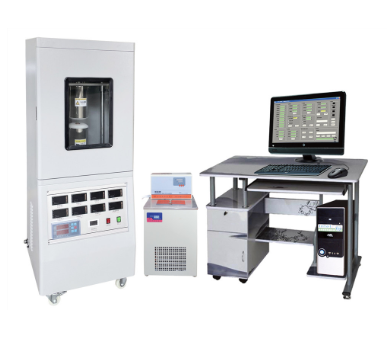
Thermal Conductivity Tester for Silicone and Ceramic Substrates
Category:Thermal Conductivity Tester

Introduction
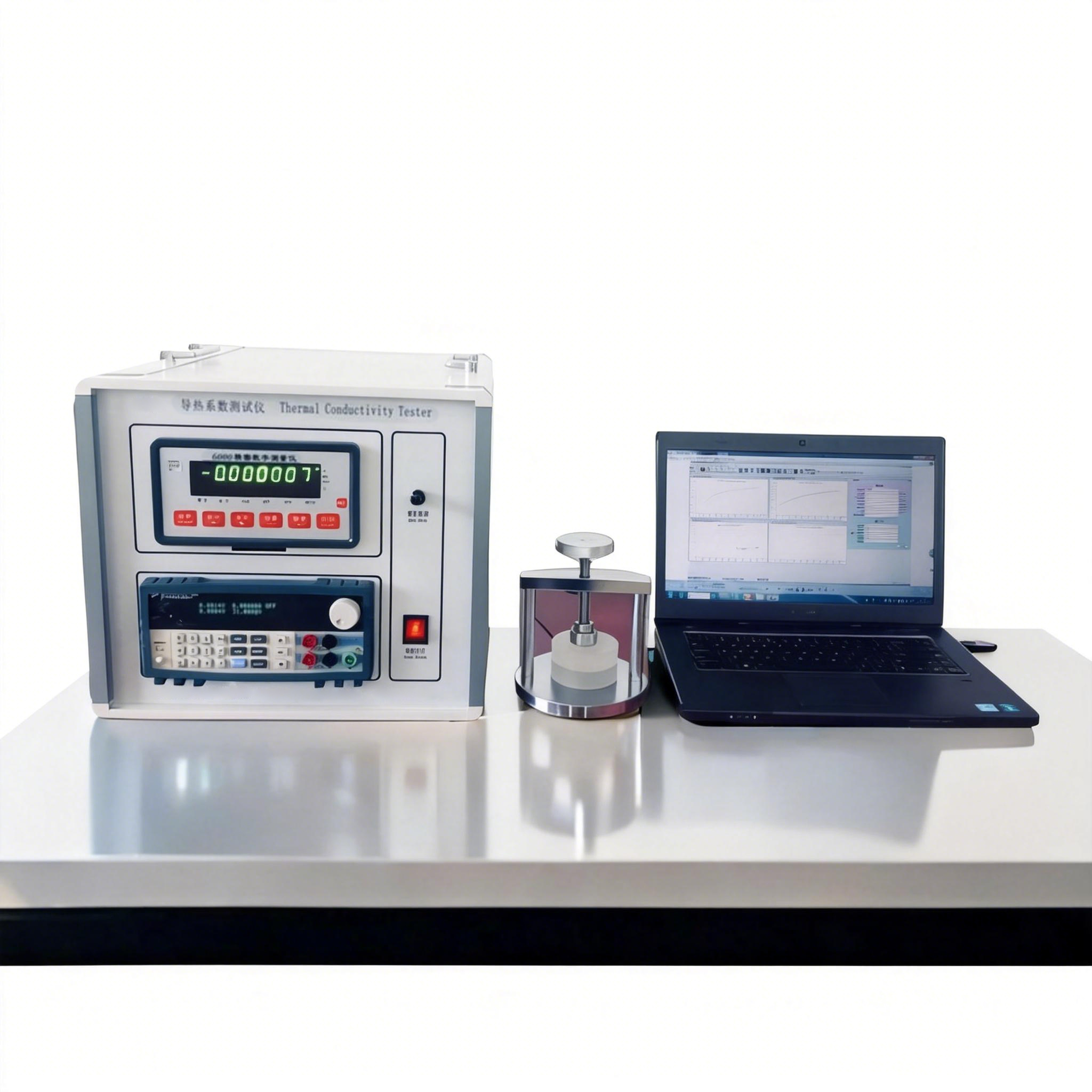
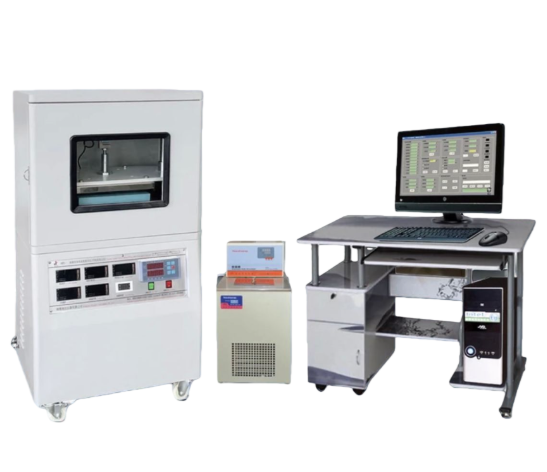
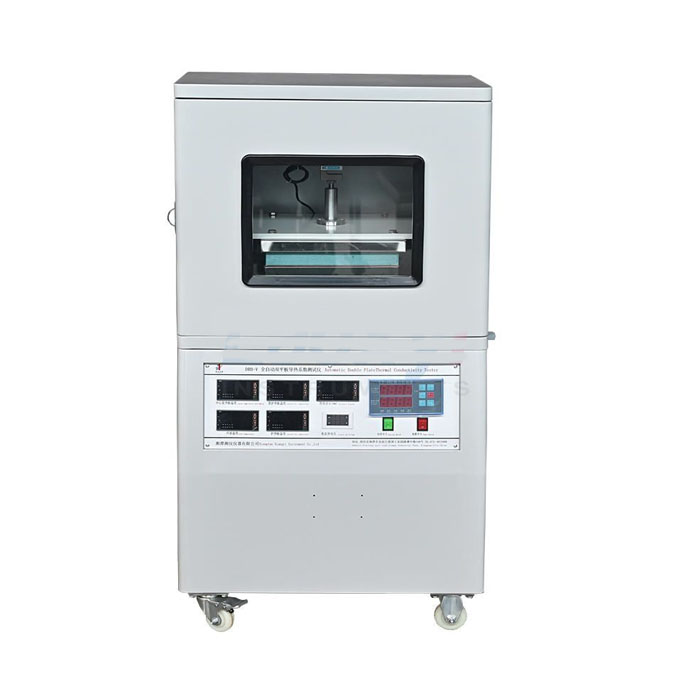
Thermal Conductivity Tester for Silicone and Ceramic Substrates is a high-precision instrument designed to measure thermal resistance, thermal conductivity, and interface contact thermal resistance of thin heat conductors, solid electrical insulation materials, thermal grease, resins, rubber, beryllium oxide ceramics, and aluminum oxide ceramics. The instrument can test solid sheet materials directly, and with the use of a sample frame, it can measure powdered and paste materials.
Designed and manufactured in full compliance with ASTM D5470-2017 standards, tester incorporates over a decade of production experience and user feedback to provide mature and reliable performance. The instrument features servo-controlled precise automatic pressing, automatic thickness measurement, 6-point temperature gradient detection, and computer-controlled fully automatic operation. Built-in thermal protection around the test rod reduces environmental influence, enabling precise measurement of materials under varying pressures. This tester also includes automatic cold-end temperature compensation, eliminating the need for ice-water compensation.
Users can select standard or compact models according to laboratory space constraints without compromising performance. The instrument is widely applied in universities, research institutes, quality inspection laboratories, and industrial production plants.
Application
This tester is suitable for testing:
Thin heat conductors and metals
Solid electrical insulation materials
Thermal greases and thermal silicone pads
Resins, rubber, and engineering plastics
Beryllium oxide ceramics and aluminum oxide ceramics
Aluminum substrates, copper-clad laminates, and composite ceramics
Foam copper, graphite sheets, and other novel thermal interface materials
Typical applications include:
Academic research: Thermal property analysis of materials
Industrial quality control: Verifying thermal performance of production materials
R&D labs: Testing thermal interface materials (TIMs) and adhesives
Production sites: Evaluating aging, reliability, and compression performance of materials
Standards
The instrument complies with:
MIL-I-49456A – Insulating Sheet Materials, Thermally Conductive Resins, Glass-Fiber Reinforced Thermal Materials
GB 5598-2015 – Method for Determining Thermal Conductivity of Beryllium Oxide Ceramics
ASTM D5470-2017 – Test Method for Thermal Transmission Properties of Thin Thermally Conductive Solid Electrical Insulation Materials
GB/T 29313-2012 – Test Methods for Thermal Conductivity of Electrical Insulation Materials
Parameters
| Item | Specification |
|---|---|
| Sample size | Φ30 mm or 20×20 mm (standard); custom sizes available |
| Sample thickness | 0.001–50 mm; typical 0.02–20 mm |
| Hot plate temperature range | Room temperature–100 °C (standard); optional 300 °C or 500 °C |
| Cold plate temperature range | 0–99 °C; precision 0.01 °C (with high-precision low-temperature water bath) |
| Thermal conductivity range | 0.01–50 W/m·K; 0.1–300 W/m·K, software auto-switching |
| Thermal resistance range | 0.05–0.000005 m²·K/W |
| Pressure range | 0–1000 N; servo-controlled; precision 1 N |
| Thickness measurement range | 0–50 mm; resolution 0.1 μm; automatic |
| Sample quantity | 1 piece (thin film, multiple layers) |
| Measurement accuracy | Better than 3% |
| Test modes | Thermal resistance under varying pressures; material thermal conductivity; contact thermal resistance; aging reliability; compression performance; inter-sample contact thermal resistance |
| Automation | Computer-controlled fully automatic measurement and report output |
| Power supply | 220 V / 50 Hz; 500 W |
Features
Measures thermal conductivity, thermal resistance, and interface contact thermal resistance of silicone, ceramic, and insulating materials
Servo-controlled automatic pressing and thickness measurement
6-point temperature gradient detection for high-precision results
Built-in thermal protection reduces environmental influence
Automatic cold-end temperature compensation eliminates ice-water requirements
Can measure both solid sheets and powder/paste materials
Fully computer-controlled with data recording, printing, and reporting
Available in standard and compact models to save laboratory space
Accessories
Main instrument
Analysis software (Chinese & English versions)
Precision low-temperature constant temperature water bath (high-precision, large-capacity)
Calibration reference samples (2 pieces)
Sample accessories set (thermal grease, paste, powder test boxes, stamping molds for sheet samples)
Maintenance Information
Keep hot and cold plates clean and free from residue.
Regularly calibrate using reference samples.
Inspect thermal protection devices and pressure mechanisms for proper operation.
Maintain stable laboratory conditions to ensure consistent measurements.
Ensure proper operation of water bath for cold plate stability.
FAQ
1. What types of materials can tester test?
This tester can measure thin heat conductors, solid electrical insulation materials, thermal greases, silicone pads, resins, rubber, beryllium oxide ceramics, aluminum oxide ceramics, aluminum substrates, copper-clad laminates, composite ceramics, foam copper, graphite sheets, and other novel thermal interface materials. Powder and paste materials can also be measured with the use of a sample frame.
2. How accurate are the measurements?
The tester achieves better than 3% accuracy for thermal conductivity and thermal resistance measurements. This precision is ensured through 6-point temperature gradient detection, built-in thermal protection, and computer-controlled servo pressing. Even under varying pressures and environmental conditions, the instrument provides reliable, reproducible results.
3. Can this tester measure contact thermal resistance?
Yes. The instrument can measure contact thermal resistance at the interface of solid materials under different pressures. Optimized mathematical models are used to calculate contact resistance accurately. This allows evaluation of materials’ interface performance in practical applications.
4. What sample sizes and thicknesses are supported?
Standard sample sizes are Φ30 mm or 20×20 mm, and thickness ranges from 0.001–50 mm, with typical thickness of 0.02–20 mm. Custom sample sizes are available upon request.
If you're ready to take the next step, Leave your message below and we’ll reply soon. 20+ years of manufacturing & export experience, a partner you can trust.