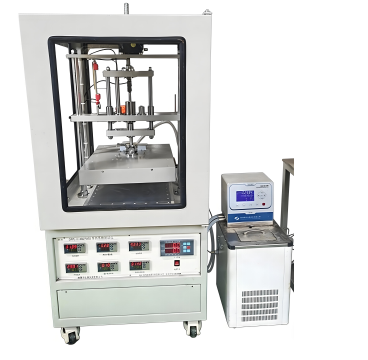
Thermal Conductivity Tester (Guarded Hot Plate Method)
Category:Building Materials Tester
Introduction
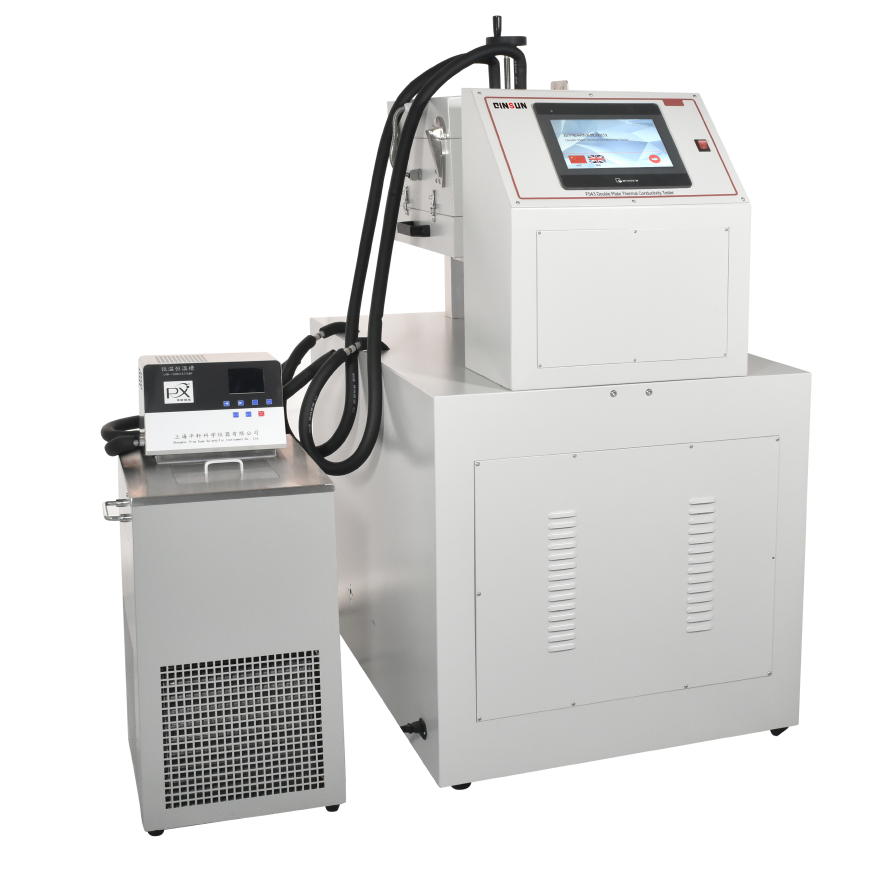
Thermal Conductivity Tester adopts the internationally recognized hot plate method for measuring thermal conductivity and thermal resistance. It features computer-controlled fully automatic testing, generating comprehensive experimental reports. The instrument is suitable for testing the thermal performance of low-thermal-conductivity materials such as insulation materials and refractory materials. With an additional sample frame, it can also test powder materials. It is widely used in universities, research institutes, quality inspection centers, and industrial enterprises.
Standards
The instrument is designed in accordance with the following standards:
(1) GB/T 10295-2008 and ISO 8301-1991 – Determination of steady-state thermal resistance and related properties of insulating materials by the guarded hot plate method.
(2) ASTM C518-04 – Test method for steady-state thermal flux and thermal transmission characteristics using a heat flow meter.
(3) EN 12667-2001 and EN 12939-2001 – Thermal performance of building materials and products; determination of thermal resistance using the guarded hot plate and heat flow meter method.
System Composition
(1) Hot Plate Heater
High-precision programmable temperature control.
Temperature measurement resolution on the hot surface: 0.01°C.
(2) Cold Plate
Temperature-controlled constant-temperature water bath.
Temperature fluctuation: <0.05°C.
Temperature measurement resolution: 0.01°C.
(3) Protective Control Device
Effectively eliminates environmental influences on the test.
Ensures measurement accuracy and repeatability.
(4) Optional Imported Heat Flow Meter
High stability and reliable performance.
Main Specifications
(1) Thermal Conductivity Testing Range: 0.0010–1.0 W/m·K,Resolution: 0.0005 W/m·K
(2) Hot Plate Temperature Range: Room temperature – 100°C,Resolution: 0.01°C
(3) Cold Plate Temperature Range: 0–99.99°C,Resolution: 0.01°C
(4) Sample Size: 600 × 600 × (10–100) mm
(5) Testing Accuracy: ±3%
(6) Repeatability: ±1%
(7) Automatic Thickness and Pressure Functions,Supports automatic thickness measurement and reading.
Automatic pressure application and reading.Electric loading and unloading with adjustable speed.
Measured material pressure can be set.
(8) Transparent Acrylic Protective Cover.Side-opening door allows observation of the testing process.
(9) Optional Sample Frame,Enables measurement of powder materials.
(10) The pressure application is smooth, allowing measurement of thermal conductivity under different pressure conditions.Equipped with a geared motor for automatic loading.High-precision pressure sensor automatically measures applied pressure.Pressure measurement range: 0–1000 N.
(11) Thickness Measurement.High-precision displacement sensor.Measurement range: 0–100.00 mm.
(12) Hot and Cold Plate Heat Transfer Area: 600 × 600 mm
(13) Power Supply: 220 V, 50 Hz
Instrument Configuration
(1) DRPL-III-600 Thermal Conductivity Tester Main Unit: 1 set
(2) Testing Software (with communication interface): 1 set
(3) Constant-Temperature Water Bath and Controller: 1 set
(4) User-Provided Computer
FAQ
1.What is a Thermal Conductivity Tester?
A Thermal Conductivity Tester is an instrument used to measure the thermal conductivity of materials. Thermal conductivity is a material’s ability to conduct heat, which is crucial in various industries such as construction, textiles, and manufacturing. These testers can evaluate the thermal properties of solids, liquids, and gases, helping engineers and scientists understand how materials will perform in different temperature conditions.
2.Why is thermal conductivity important?
Thermal conductivity is a vital parameter in material selection for applications involving heat transfer, insulation, and energy efficiency. In construction, for example, materials with low thermal conductivity are preferred for insulation purposes, as they help maintain building temperatures, reduce energy costs, and enhance comfort. Understanding a material’s thermal conductivity can also influence the design and safety of thermal systems.
3.How does a Thermal Conductivity Tester work?
A Thermal Conductivity Tester typically operates by applying a controlled heat source to one side of a material sample and measuring the temperature gradient across it. By observing how fast the heat travels through the material, the tester calculates the thermal conductivity using Fourier’s law of heat conduction. Various methods are used, such as guarded hot plate, laser flash analysis, or transient plane source to obtain accurate readings.
4.What types of materials can be tested?
Thermal Conductivity Testers can evaluate a wide range of materials, including metals, ceramics, polymers, and composites. They can also test liquids and gases, making them versatile tools in various fields. The specific method used may vary based on the material type and desired accuracy, but overall, these testers are essential for characterizing thermal properties across different industries.
5.How do I choose the right Thermal Conductivity Tester?
Choosing the right Thermal Conductivity Tester depends on several factors, including the type of material you will be testing, the required accuracy, and the measurement range. It’s essential to consider the operational principles of different testers, such as steady-state versus transient testing methods, and select a tester that aligns with your specific applications and budget.
6.What are the applications of Thermal Conductivity Testers?
Thermal Conductivity Testers are used in numerous applications, including building materials testing, aerospace engineering, electronic component evaluation, and research and development in material science. They help ensure products meet regulatory standards, improve energy efficiency in designs, and aid in the development of new materials with desired thermal properties.