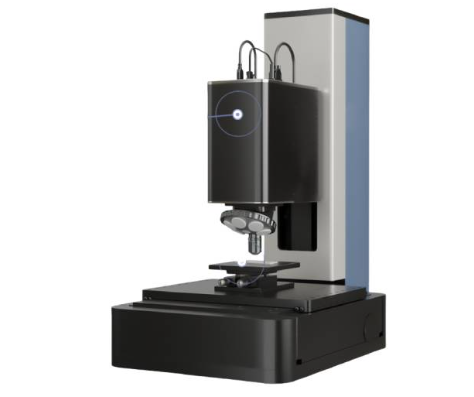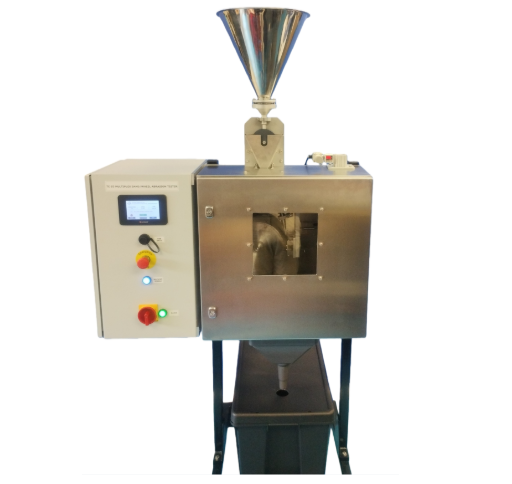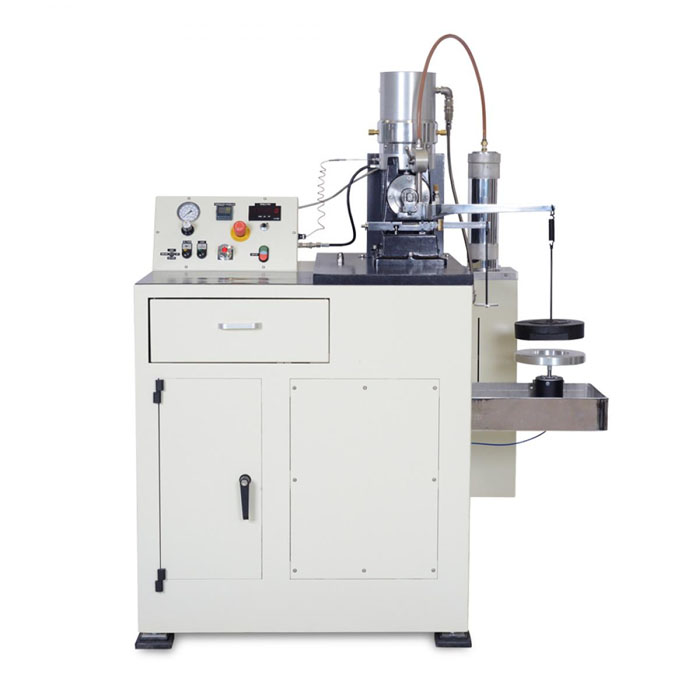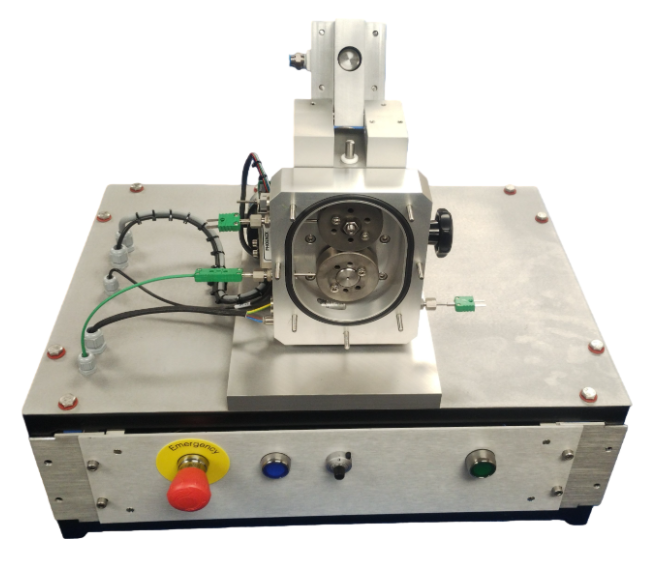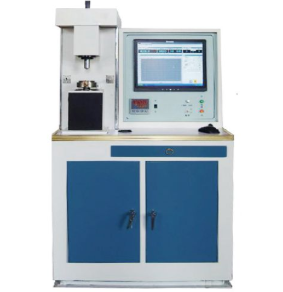
Thrust Bearing Rolling Friction and Wear Tester
Category:Abrasion Tester

Introduction
The Thrust Bearing Rolling Friction and Wear Testing Machine is a laboratory device designed to evaluate the friction, wear, and load-bearing performance of thrust bearings under controlled conditions. It simulates real operational environments by applying axial loads and rotating motion to the bearing, allowing measurement of friction torque, wear rate, temperature, and lubrication efficiency to ensure bearing reliability and durability.
Standards
(1)ASTM D3702
(2)ASTM G99
(3)ASTM G77
(4)ISO 18535
Technical data
| Parameter | Value |
|---|---|
| Maximum radial load | 5 kN |
| Maximum spindle diameter | 5 to 30 mm |
| Spindle taper | DIN 69871A, ISO 50 taper |
| Rotary motion | |
| Speed | 0 to 2000 rpm |
| Continuous torque | 56.4 Nm |
| Peak torque | 136 Nm |
| Oscillating motion | |
| Ranges | variable 0 to +/-20° |
| Frequency | 0.001 to 1 Hz |
| Axial motion | |
| Maximum thrust | 5 kN |
| Stroke | 0 to 30 mm |
| Frequency | 0.001 to 1 Hz |
Advantages
Simulates Real-World Conditions: Allows testing under controlled load, speed, temperature, and lubrication conditions relevant to actual thrust bearing operation.
Quantifies Friction and Wear: Provides objective, measurable data on key performance indicators.
Enables Material and Lubricant Comparison: Facilitates the evaluation and selection of the best materials and lubricants for specific applications.
Predicts Bearing Life: Wear rate data can be used to estimate the expected lifespan of thrust bearings.
Supports Design Optimization: Provides critical feedback for improving bearing designs to reduce friction and wear.
Standardized Testing: Allows for testing according to recognized industry standards.
FAQ
1. What is a Thrust Bearing Rolling Friction and Wear Testing Machine?
This machine evaluates the rolling friction, wear, and load-bearing performance of thrust bearings under controlled load, speed, and lubrication conditions, simulating real operational environments.
2. How does the rolling friction and wear test work?
The tester applies a specified axial load to a thrust bearing while rotating the shaft at controlled speeds. Friction torque, wear depth, and bearing temperature are measured over a set duration or number of cycles.
3. What types of thrust bearings can be tested?
It can test metallic, polymer, and composite thrust bearings used in automotive, aerospace, turbines, and industrial machinery applications.
4. What parameters are measured during testing?
The machine measures friction torque, coefficient of friction, wear rate or volume loss, temperature rise, and lubrication efficiency. Some models provide real-time data logging and automated analysis of rolling contact performance.
5. Why is thrust bearing rolling friction and wear testing important?
Testing ensures thrust bearings can operate reliably under load without excessive friction or wear, preventing mechanical failure, overheating, and downtime. It helps engineers optimize materials, lubrication, and bearing design for longer service life.
If you're ready to take the next step, Leave your message below and we’ll reply soon. 20+ years of manufacturing & export experience, a partner you can trust.