Wyzenbeek or Oscillatory Abrasion Tester
Category:Interior Material Tester
Introduction
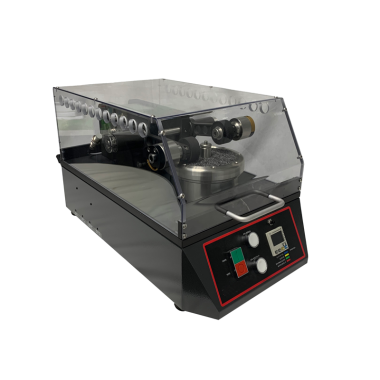
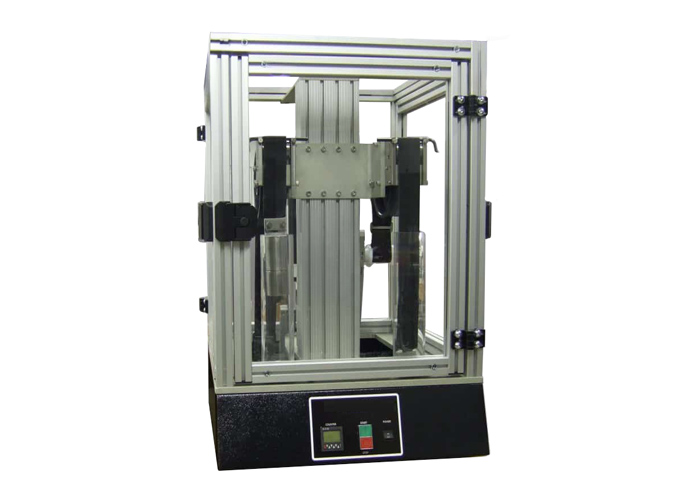
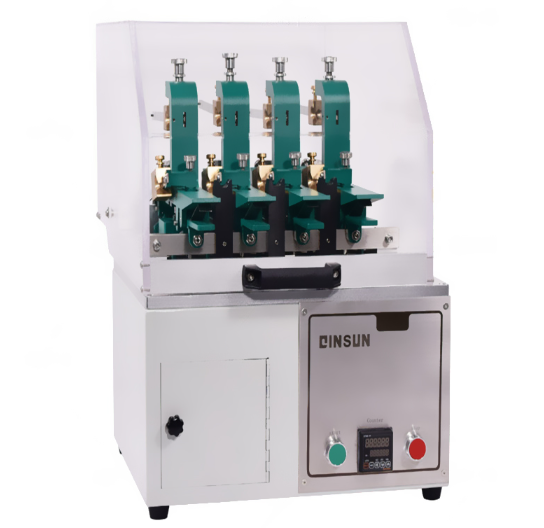
Wyzenbeek wear resistance tester, also known as Oscillatory wear resistance tester, is used to test the wear resistance of fabrics against standard friction media or metal mesh surface friction movement, especially suitable for automotive decoration and furniture textile product. Instrument regulations American standard. There are 4 friction heads and electronic counter to control the running cycle.
Application
1. Automotive Industry
Testing the abrasion resistance of seat fabrics and steering wheel leather to evaluate durability during long-term use.
Simulating the friction between seats and passenger clothing to optimize material selection and reduce wear rate.
Testing the abrasion resistance of aircraft interior materials under extreme conditions such as high altitude and low temperature.
2. Furniture Industry
Testing the abrasion resistance of textiles used in sofas, chairs, and other furniture to ensure product lifespan meets standards.
Comparing the abrasion resistance of different fabric structures to guide product improvement.
3. Materials Research and Development
Providing abrasion resistance data support for new fiber materials and coating processes.
Comparing the impact of different treatment processes (such as waterproofing and fire resistance) on abrasion resistance.
4. Third-Party Testing
Serving as a third-party testing device to verify whether materials meet international standards (such as ASTM D4157. BS EN ISO 12402-7. FTMS 191A 5304. etc.).
5. Electronics Industry
Verifying the friction resistance lifespan of mobile phone screen protectors, touch panels, and keyboard coatings.
6. Packaging Industry
Testing the abrasion resistance of labels and packaging films to prevent information blurring, coating peeling, or damage due to friction during transportation or storage.
Standard Test
ASTM D3597:Standard Test Method for Resistance to Yarn Slippage in Woven Fabrics Using a Fixed Load
ASTM D4157:Standard Test Method for Abrasion Resistance of Textile Fabrics (Oscillatory Cylinder Method)
CFFA-1A:Standard Test Method for Seam Slippage of Upholstery Fabrics
FED-STD-191 / Method 5304:Textile Test Methods – Method 5304: Seam Slippage
GM2756M:Abrasion Resistance of Interior Trim Materials
LP-463KB-06-01:Abrasion Resistance Test for Interior Trim Materials
LP-463KC-04-01:Seam Slippage Resistance Test for Interior Trim Fabrics
SAE J948:Abrasion Resistance of Upholstery Materials
SAE J1530:Seam Slippage Resistance of Upholstery Fabrics
Toyota TSL 5101G – 3.9.4:Abrasion Resistance Test for Interior Trim Materials
Parameters
| Technical Parameter | Specification |
|---|---|
| 1. Design Style | Modern ergonomic design |
| 2. Suction Device | Connected to the auxiliary vacuum cleaner |
| 3. Transmission Feature | Sealed transmission (ensures quiet operation) |
| 4. Test Position | 4 heads |
| 5. Friction Table | Curve surface-R100mm, length-400mm |
| 6. Swing Radian | 76±2mm |
| 7. Friction Rate | 90±1/min (double friction) |
| 8. Tension Adjustment Weight | 340g (tension adjustment range: 8.9N-22.25N) |
| 9. Load Adjustment Weight | 150g (load adjustment range: 8.9N-17.8N) |
| 10. Sample Tension | 17.8N (adjustable) |
| 11. Sample Load | 13.4N (adjustable) |
| 12. Sponge Rubber Pressure Pad | 50×50mm (±1mm) |
| 13. Instrument Material | Stainless (steel) |
| 14. Surface Finishing | Painting |
| 15. Sample Dimension | 245×73mm |
| 16. Product Dimension (L×W×H) | 50×50×60 |
Feature
Easy to control due to the precision electronic digital counter.
The protective cover provides protection and thus more safety.
Four abrasion heads to test samples simultaneously, thus greater efficiency.
Accessoriess
Standard accessories: Abrasion media (e.g., standard abrasive paper/cloth), sample fixing clamps, standard weights, digital counter, power cord, user manual, certificate of conformity, and calibration tools (for some models).
Optional accessories: Additional abrasion media, specialized abrasive heads, temperature/humidity control modules, pre-tension adjustment fixtures, and result evaluation auxiliary tools (e.g., light boxes).
FAQ
1.What is the Wyzenbeek abrasion test method?
A Wyzenbeek machine is used for this test allowing sample of the test fabric to be pulled tight in a frame and help stationary. Individual test specimens cut from the warp and weft direction are then rubbed back and forth using an approved fabric as the abradant.
2.What is the difference between Wyzenbeek and Martindale?
They are however different tests which test different properties and success in one test does not infer success in the other. Wyzenbeek involves rubbing along the warp and weft of the fabric whereas Martindale is a figure-8 rub. The Wyzenbeek and Martindale tests are the two methods commonly used to predict durability.
3. What is it used for?
It is used to predict how long a fabric or material will last before it shows signs of wear, pilling, or structural failure when subjected to constant friction, such as a person sitting on a sofa or car seat.
4.What is a good Wyzenbeek rating?
Following the Wyzenbeek test, a fabric score of 15.000 double rubs should be reserved for designs with low-traffic use. Those with a score of 30.000 double rubs and above are recommended for heavy traffic use. Schumacher’s supremely durable Rocky Performance Velvet, for example, has a Wyzenbeek score of 150.000.
5.Is there a device to test diamonds?
A diamond tester is a portable, pocket-sized machine that has a small, needle-like tip that is placed on the stone to test it. It can accurately indicate if the stone is a real diamond based on the gem’s physical properties. If the diamond is authentic, the device indicates that on its display or with a sound.