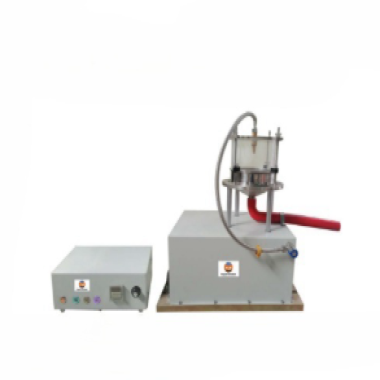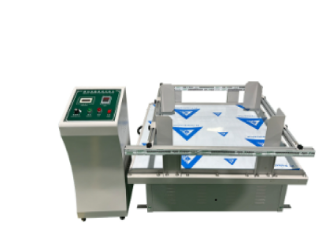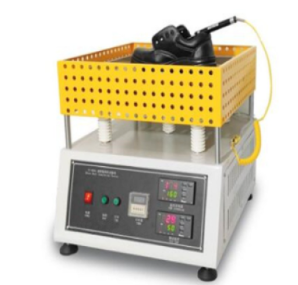
Protective Clothing Resistance Tester
Category:Other
Introduction
Introduction
The Protective Clothing Resistance Tester is designed to evaluate the electrostatic properties of anti-static workwear and fabrics. It accurately measures surface resistivity and resistance through the material, ensuring compliance with national, European, and international standards. The instrument is equipped with the TEST V1.6 dedicated software, which enables online operation, automatic testing according to standard protocols, data processing, and report generation.
This tester is widely used in textile quality control, safety garment manufacturing, research institutions, and laboratories to ensure anti-static clothing meets safety and performance requirements.
Standards Compliance
Chinese Standards (GB/T):
GB/T 22042-2008 Clothing – Anti-static Performance – Test Method for Surface Resistivity
GB/T 22043-2008 Clothing – Anti-static Performance – Test Method for Resistance Through the Material (Vertical Resistance)
GB 12014-2009 Anti-static Clothing
GB/T 12703.4-2010 Textiles – Evaluation of Electrostatic Properties – Part 4: Resistivity
European Standards (EN):
EN 1149-1:2006 Protective Clothing – Electrostatic Properties – Surface Resistivity Test Method
EN 1149-2:1997 Protective Clothing – Electrostatic Properties – Resistance Through the Material – Vertical Resistance Test
American Standards:
AATCC 76 Fabric Surface Resistivity
ANSI/ESD STM2.1 Anti-static Clothing Resistance Test Method
Scope of Application
This tester is suitable for:
Anti-static work clothing
Protective fabrics
Quality control for textile manufacturing
Laboratory testing and research
Compliance verification with national and international anti-static standards
It supports automatic testing, online operation, data analysis, report editing, and printing when connected with TEST V1.6 software.
Instrument Configuration
Standard Configuration:
Computer operating system software
Main tester unit
Standard point-to-point heavy hammer electrodes
Standard ring combination electrodes
2 measurement cables and 1 power cord
User manual
Certificate of conformity
Packing list
Optional Electrode Types:
Type A: Heavy hammer electrode – point-to-point resistance test of fabric surface
Type B: Ring combination electrode – surface resistivity and vertical resistance test
Technical Parameters
| Parameter | Specification |
|---|---|
| Resistance Measurement Range | 10⁴ Ω – 10¹⁶ Ω |
| Display | LCD showing surface resistance, temperature, current, voltage, test time, and sample data; unit switching (mm, cm, m) |
| Test Voltage | Built-in adjustable 0–1000V; internal test voltages: 10/50/100/250/500/1000V |
| Accuracy | < 1G: ±1%; ≥ 1G: ±3%; ≥ 1T: ±10% |
| Operating Environment | Temperature 0–40℃, Relative Humidity < 80% |
| Power Supply | AC 220V, 50Hz, ~5W |
| Measurement Mode | Manual/Automatic range; PC software support for synchronous data display, analysis, storage, and printing |
| Dimensions (Main Unit) | 330 × 340 × 120 mm |
FAQ
1. What types of clothing can be tested with this instrument?
It is suitable for anti-static workwear, laboratory coats, protective fabrics, and any textile materials requiring electrostatic performance evaluation.
2. Can the tester measure both surface and vertical resistance?
Yes. With optional electrodes, it can measure surface resistivity (point-to-point) and vertical resistance through the material.
3. Does it support automatic testing?
Yes. When connected to TEST V1.6 software, the instrument can automatically complete tests, process results, and generate reports.
4. What is the measurement range and accuracy?
Resistance range: 10⁴ Ω – 10¹⁶ Ω. Accuracy depends on the range: <1G ±1%, ≥1G ±3%, ≥1T ±10%.
5. What standards does this tester comply with?
It meets major Chinese (GB/T), European (EN 1149), and American (AATCC 76, ANSI/ESD STM2.1) anti-static clothing standards.