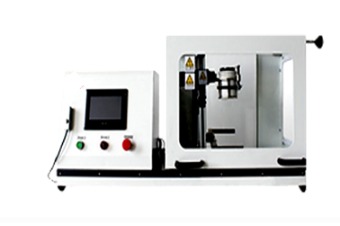
The resistance tester for protective clothing materials against metal molten liquid penetration
Category:Other
Introduction
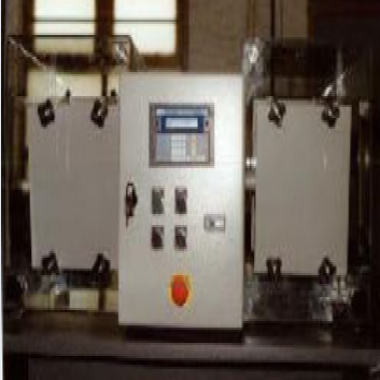
The Resistance Tester for Protective Clothing Materials Against Metal Molten Liquid Penetration is designed to evaluate the protective performance of fabrics and composite materials against burns caused by molten metal splashes. The instrument is developed in accordance with international and national standards including ISO 9150, EN 348, GB/T 17599, AQ6103, and GB 8965.2.
During testing, a controlled amount of molten metal is poured onto a sample placed at a specific angle. A PVC film attached to the back of the sample records the damage caused by the metal splash. The process can be repeated with different molten metal quantities to determine the material’s resistance. Temperature control, sample tilting, and splash collection are fully automated for precise, reproducible results.
This tester is widely used in protective clothing manufacturing, textile testing labs, research institutes, and safety compliance evaluations.
Standards Compliance
BS EN 348:1992 — Protective clothing. Heat-resistant and fire-resistant. Determination of heat transfer in proximity to fire.
ISO 9185:2011 — Protective clothing. Evaluation of material resistance to metal molten liquid penetration.
AQ 6103:2007 — Welder’s protective gloves.
GB 8965.2:2009 — Protective clothing. Flame retardant protection. Part 2: Welding clothes.
Performance Features
System Components: Control box, test frame, and crucible.
Crucible Specifications: Height 97mm, top diameter 80mm, bottom diameter 56mm, capacity 190ml.
Temperature Measurement: Thermocouple measures 0–1800°C molten metal temperature.
Automatic Flipping: Test frame equipped with stepper motor-controlled automatic flipping device; adjustable tilting speed and angle.
Sample Installation: Adjustable angle with rulers and clamps for precise positioning.
Pouring Adjustment: Height adjustment device ensures accurate molten metal application.
Splash Collection: Integrated metal splash collection tray at the bottom of the test frame.
High-Frequency Furnace (Optional): Melting temperature up to 1800–2000°C.
Human-Machine Interface: 7-inch touch screen, intuitive and user-friendly interface.
Automation: Fully controlled by programmable logic controller (PLC) for precision testing.
Technical Parameters
| Specification | Details |
|---|---|
| Electrical Requirements | 220V, 50Hz |
| Heating Principle | High-frequency furnace |
| Test Environment | –30°C to 75°C |
| Crucible Capacity | 190 ml |
| Crucible Dimensions | Height 97 mm, Top Diameter 80 mm, Bottom Diameter 56 mm |
| Temperature Measurement Range | 0–1800°C |
| Test Frame Dimensions | 850 × 650 × 600 mm (W × H × D) |
| Weight | 57 kg |
| Sample Tilt Control | Stepper motor adjustable speed and angle |
| Touch Screen | 7-inch human-machine interface |
| Automation | PLC control |
FAQ
1. What types of materials can be tested?
It is suitable for protective clothing fabrics, composite materials, and welding garments designed to resist molten metal splashes.
2. How is the molten metal temperature controlled?
The tester uses a high-performance optical fiber dual-color pyrometer and a temperature controller, adjustable between 700°C and 1800°C, to ensure precise molten metal temperature.
3. Is the tilting angle of the sample adjustable?
Yes. The sample installation angle and tilting speed are adjustable via the stepper motor-controlled test frame.
4. Does it include safety features for operators?
Yes. The equipment has an enclosed design with splash collection, clamps for safe handling of crucibles, and automated PLC control for precise and safe operation.
5. Can the furnace melt different types of metals?
Yes. The optional high-frequency melting furnace can melt metals at temperatures up to 1800–2000°C for various testing applications.