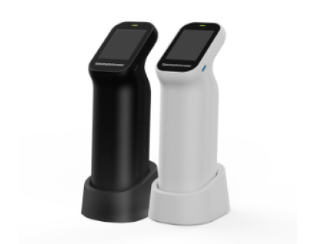
Spectrophotometer
Category:Other
Introduction
Introduction
The Spectrophotometer is a precision instrument designed for accurate color measurement and analysis across textiles, coatings, paints, plastics, and other materials. Equipped with a dual-mode CMOS sensor and a full-spectrum LED light source, it ensures repeatable, reliable color data for quality control, R&D, and production monitoring.
The device is compact, ergonomic, and durable, suitable for laboratory, factory floor, and field applications. It integrates with software solutions for color management, reporting, and data connectivity.
Standards Compliance
CIE No.15, ISO 7724-1 — International colorimetry and spectral measurement standards.
ASTM E1164, DIN 5033 — Industrial color difference evaluation protocols.
GB/T 3978, GB 2893 — Chinese national standards for color accuracy.
Product Advantages
Dual-Mode Precision
CMOS Dual-Path Sensor for simultaneous SCI/SCE measurement.
10nm optical resolution covering 400–700nm spectrum, ideal for fluorescent material analysis.
Ergonomic Excellence
Ultra-light 410g design for comfortable one-handed operation.
2.8” touchscreen with intuitive navigation and real-time pass/fail indicators.
Industrial Durability
10-year LED lifespan with over 1.2 million measurements.
IP54-rated dust- and splash-proof housing.
Smart Calibration
Auto-whiteboard validation with R%≥95% reference tile.
Self-diagnostics with error alerts for misalignment or low battery.
Connected Workflow
SQCX software integration for ISO-compliant reports and SPC statistics.
Optional Bluetooth printing and cloud backup support.
Product Features
Optical System
D/8 geometry: SCI (specular included) for coatings, SCE (specular excluded) for textiles.
400–700nm full-spectrum LED eliminates spectral gaps in critical wavelengths.
Measurement Modes
9 color spaces including CIE Lab, HunterLab, Munsell conversions.
21 color difference formulas: ΔE*00, CMC(2:1), and custom tolerances.
Connectivity
USB and Bluetooth for PC and mobile data transfer.
Optional cloud synchronization for backup and analysis.
Safety & Ergonomics
Overcurrent protection for charging.
Auto-shutdown after 10 minutes of inactivity.
Adjustable tilt stand (0°–90°) for horizontal or vertical measurements.
Non-slip textured grip for wet/dry conditions.
Accessories & Options
Standard: 8mm aperture adapter, SQCX software license, NIST-traceable calibration certificate.
Optional: Micro printer, powder test kit, UV cure module for fluorescent materials.
Consumables: 10 calibration tiles, 1L optical cleaning solution.
Warranty: 24 months standard (extendable to 60 months), lifetime technical support.
Technical Parameters
| Specification | Details |
|---|---|
| Illumination | D/8 geometry (diffuse/8°) |
| Sensors | CMOS dual-path array |
| Wavelength Range | 400–700nm (10nm intervals) |
| Repeatability | ΔE*ab ≤ 0.04 (MAV/SCI) |
| Inter-Instrument Agreement | ΔE*ab ≤ 0.4 (BCRA II tiles) |
| Measurement Time | 1 second |
| Battery Life | 8 hours (8,000 measurements) |
| Dimensions | 94mm × 68mm × 188mm |
| Weight | 410g (without calibration base) |
| Operating Conditions | 0–40°C, <85% RH (non-condensing) |
FAQ
1. What materials can be tested with this spectrophotometer?
It can measure colors of textiles, coatings, paints, plastics, and fluorescent materials.
2. What is the difference between SCI and SCE modes?
SCI (Specular Component Included) measures gloss and color, while SCE (Specular Component Excluded) measures color independent of gloss.
3. How is calibration performed?
The device uses auto-whiteboard calibration with a reference tile (R%≥95%) and provides self-diagnostics to ensure accuracy.
4. Can the spectrophotometer connect to software for reporting?
Yes. It integrates with SQCX software for ISO-compliant reports, SPC analysis, and optional cloud backup.
5. How portable is the device?
Weighing only 410g and with an ergonomic grip and compact design, it is suitable for both lab and field operations.