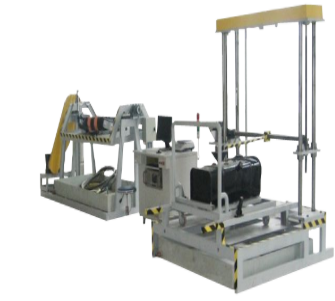
Fuel Tank Comprehensive Testing Platform
Category:Other
Introduction
Product Introduction
The Fuel Tank Comprehensive Testing Platform is designed to evaluate the safety, durability, and performance of automotive fuel tanks, including both plastic and metal types. It supports testing under various conditions such as low-temperature impact, pressure resistance, valve opening performance, angle hammer impact, and fire resistance. This platform provides reliable, standardized, and repeatable results for R&D, quality control, and regulatory compliance testing.
Application Scope
Automotive plastic and metal fuel tanks
Gasoline and diesel fuel tanks
Safety performance evaluation, durability testing, and quality assurance laboratories
Applicable for R&D, production inspection, and certification purposes
Applicable Standards
GB/T 18296-2001: Automotive fuel tank safety performance requirements and test methods
9C/T 644-2000: Technical conditions for automotive metal fuel tanks
Test Items
Plastic Fuel Tanks:
Tightness
Low-temperature impact resistance
Safety valve opening pressure
Intake valve opening pressure
Angle hammer impact resistance
Pressure resistance
Fire resistance test
Metal Fuel Tanks:
Safety valve opening pressure
Intake valve opening pressure
Pressure resistance
Product Advantages
Comprehensive Testing Capability: Supports multiple safety and durability tests for both plastic and metal fuel tanks.
High Reliability: Rigid steel frame structure and aviation-joint connections ensure stable, precise testing conditions.
Corrosion & Wear Resistance: Components exposed to water, oil, or fuel are made of stainless steel or treated for corrosion resistance.
Mobility & Flexibility: Brake-equipped rollers allow easy relocation of the platform within the laboratory or testing site.
User-Friendly Design: Compact layout with an intuitive control cabinet simplifies operation while maintaining high safety standards.
Product Features
Water tank with supply and drainage system for hydrostatic and tightness tests
Drive device for mechanical actuation of tests
Angle hammer impact test device for evaluating impact resistance
Integrated control cabinet for automated testing and data acquisition
Steel frame construction with aviation-joint and cable connections for modular assembly
Compact, ergonomic layout with corrosion-resistant surfaces
Technical Parameters
| Parameter | Specification |
|---|---|
| Test Tank Types | Plastic / Metal |
| Maximum Test Pressure | As per standard (GB/T 18296-2001) |
| Angle Hammer Impact Energy | Configurable per test requirements |
| Temperature Range | Ambient to low-temperature impact conditions |
| Drive System | Mechanical and hydraulic actuation |
| Frame Material | Steel with corrosion-resistant or stainless steel components |
| Dimensions (L×W×H) | 3,200 × 1,500 × 1,800 mm (typical, customizable) |
| Power Supply | AC 220V ±10%, 50Hz |
| Mobility | Roller-mounted with brake for repositioning |
| Control | Integrated PLC + HMI touchscreen |
| Weight | Approx. 1,200 kg |
Accessories & Optional Modules
Hydraulic or pneumatic pressure calibration kit
High-speed data acquisition module for valve and impact tests
Safety enclosure for fire resistance testing
Remote monitoring and report generation software
Spare parts pack: valves, sensors, cables
FAQ
Q1: Can this platform test both gasoline and diesel tanks?
A1: Yes, the system supports both fuel types with material-specific testing protocols.
Q2: What safety tests are included for plastic fuel tanks?
A2: Tightness, low-temperature impact, valve opening pressures, angle hammer impact, pressure resistance, and fire resistance.
Q3: Are metal fuel tanks tested differently?
A3: Yes, primarily safety valve opening pressure, intake valve opening pressure, and pressure resistance.
Q4: Can the platform be moved within the lab?
A4: Yes, the platform is equipped with brake rollers for easy relocation.
Q5: Is the system compliant with Chinese automotive fuel tank standards?
A5: Yes, it meets GB/T 18296-2001 and 9C/T 644-2000 requirements.